Ek Din (2026): Sai Pallavi’s Grace Can’t Rescue This Tepid Romance
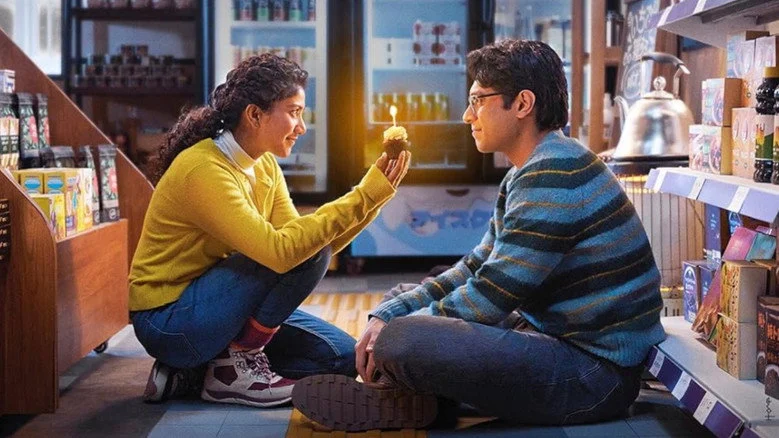
Sai Pallavi’s eyes do the heavy lifting in a quiet hotel-room confrontation, her voice cracking just enough to suggest a woman holding back a decade of unsaid things, and for a fleeting moment, Ek Din feels like the tender, character-driven romance it desperately wants to be. Then the scene cuts away, the momentum dissolves, and we’re left with a film that can’t decide if it’s a gentle meditation on love or a half-written draft waiting for a second pass.
Sai Pallavi’s Emotional Scenes Are the Only Pulse This Film Has
There is no contest here: Pallavi is the reason to sit through Ek Din at all. Her key emotional sequences, repeatedly singled out by early viewers and critics alike, carry a lived-in quality that the rest of the film simply cannot match.
She finds truth in moments where the writing gives her almost nothing, turning thin dialogue into something resembling genuine heartbreak. It’s a performance that belongs in a better movie, one that trusts its lead instead of burying her under a limp screenplay.
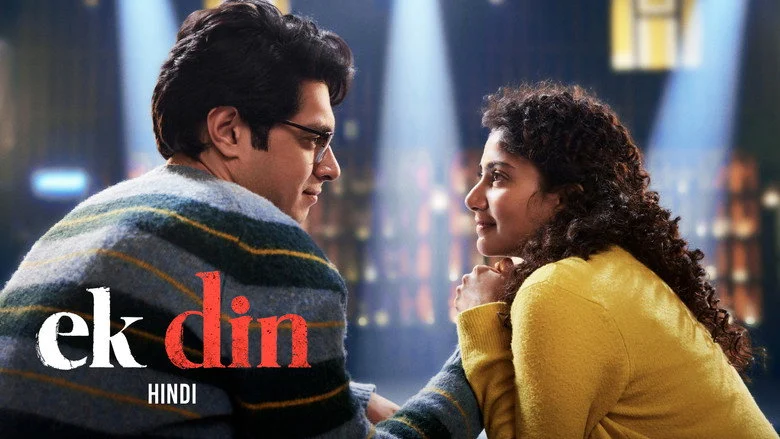
Junaid Khan’s Stiff Arc Leaves the Romance Feeling One-Sided
Junaid Khan’s Dino is a problem the film never solves. Critics have described his performance as stiff and under-energized, and watching him share screen with Pallavi only amplifies the gap.
His arc barely moves, he’s introduced as a man carrying emotional baggage and essentially remains that same man when the credits roll. The restraint might have read as subtle in a tighter script, but here it just registers as flatness, leaving the central relationship feeling profoundly unbalanced.
The Romantic-Drama Execution Collapses Under Its Own Weight
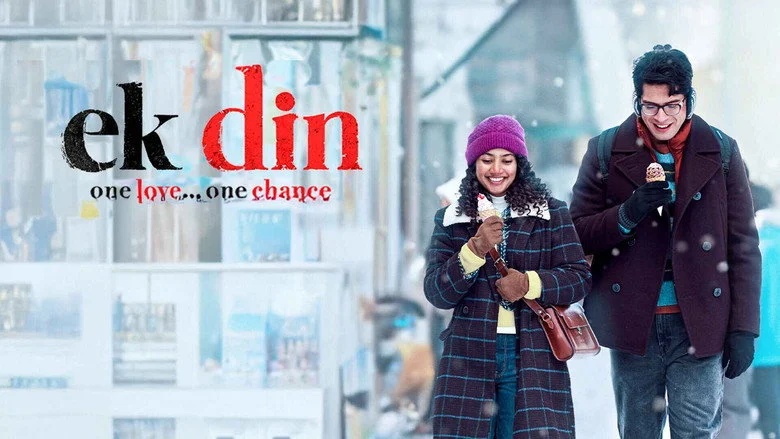
Ek Din operates in a subdued, character-led register that initially feels promising. The film’s soft framing of love as something fragile and unspoken is a choice, and for the first stretch, it works, the Japan visuals, specifically called out by viewers, give the romance a texture that the dialogue never earns.
But the emotional writing is uneven from the start, and the screenplay’s linear structure offers no surprises, no complications, just a slow drift toward a payoff that never arrives. The premise, as The Quint put it bluntly, is “impossible to take seriously, or the film at large, despite its blue-chip backing by Aamir Khan.”
The second half is where the film genuinely loses its footing. Multiple reactions describe the later emotional stretch as slow and thin, and the sentiment feels underdeveloped rather than earned. Pallavi’s scenes remain the only moments of genuine dramatic pull, but they’re islands in a sea of inertia.
Kunal Kapoor and the Supporting Cast Are Left Adrift
Kunal Kapoor’s presence in the cast list suggests a certain dramatic weight, yet the available material gives him little to do beyond occupying space. His role never crystallizes into a defined antagonist or even a meaningful foil, he simply exists, a wasted resource in a film that needed all the help it could get.
Kavin Dave and Reshma Shetty round out the periphery, but neither registers with any scene-specific impact in the early discourse. The casting signals ambition, this is a producer-backed project with a serious ensemble, but the screenplay never gives these actors a reason to exist beyond filling frames.
A Commercial Flop With No Controversy, Just Apathy
There are no political firestorms or censorship battles here, just the quiet thud of a film that failed to connect. The opening day collection of ₹1.15 crore (India net, per Times of India/Sacnilk reports) against a reported ₹25 crore budget tells the story that no review can: this was a disaster, commercially speaking.
Trade coverage described it as a slow-burn release banking on word of mouth, but that momentum never materialized. The IMDb score of 5.6/10 reflects the audience’s lukewarm shrug, a film that neither enraged nor excited, just disappointed quietly.
Subhash K Jha offered a more generous read, calling it “a gentle and heartfelt portrayal of love, ” and Rajiv Vijaykar of Koimoi reportedly went as high as 4.5 stars. But the early critic consensus sits closer to 2.5/5, and that feels about right, a film with genuine intentions and a lead performance worth celebrating, undermined by a screenplay that never finds its footing.
If you’re a Sai Pallavi completist, you’ll want to see what she does with material this thin, it’s a testament to her craft that she emerges intact. For everyone else, this is a skip, best watched on a lazy afternoon when you’re willing to forgive a lot for one actor’s grace. Also, check out more Hindi Drama reviews for better romantic options.
Ek Din is a film that mistakes stillness for depth and restraint for meaning, leaving its strongest asset stranded in a narrative that never learns to walk. I found myself checking the runtime more than once, which is never a good sign for a 125-minute romance.
Watch it for Pallavi, skip it for everything else, this one earns a modest 2.5 out of 5, and even that feels generous.
For a more emotionally resonant take on fractured love, Storm Calm review handles similar themes with sharper writing.
If you’re drawn to films where atmosphere outweighs plot, Songs Djinns verdict offers a more adventurous trade-off.
Ek Din (2026): Sai Pallavi’s Grace Can’t Rescue This Tepid Romance
Visually captivating cinematography, stellar sound design, and commanding performances.
Slight pacing drag in the second act before the climactic resolution.