Dharpakad (2026): A timely cyber-thriller that preaches to the choir
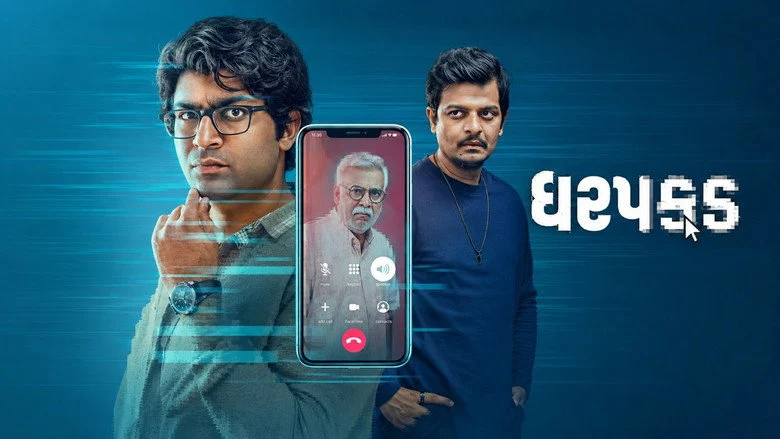
The phone rings in a quiet Ahmedabad home, and within minutes, a father’s world collapses under the weight of an authoritative voice claiming he is under digital arrest. It is a chilling, painfully recognizable opening gambit, one that immediately signals this Gujarati thriller knows exactly which real-world nerve it wants to press.
Malhar Thakar steps in as Arjun Shah, the son who must untangle this web of cyber-extortion before his family’s savings, and sanity, evaporate. The setup is urgent, the threat is modern, and the stakes could not be more personal.
Malhar Thakar Anchors the Chaos with Earnest Resolve
Thakar carries the procedural weight of Dharpakad on his shoulders, shifting from a bewildered son to a determined investigator as the narrative demands. His strength lies in the quieter moments, the restrained panic when he realizes the scam’s reach, the clenched-jaw resolve as he follows digital breadcrumbs into darker corners.
He does not have the flashy arc of a typical action hero, but his groundedness keeps the film’s emotional core intact. When the family’s savings are threatened, his desperation feels lived-in, not performed.

Anish Shah’s Direction Finds a Timely Hook but Stumbles on Execution
Director Anish Shah deserves credit for recognizing the dramatic potential in the digital arrest scam, a crime so insidious it weaponizes a family’s fear against itself. The screenplay, co-written with Himalay Dave and Ankit Gor, wisely keeps the focus on the family’s psychological unraveling rather than the technical jargon of the fraud.
However, the linear structure leaves little room for surprise. The investigation beats are predictable, and the film’s middle stretch, where Arjun traces the network, lacks the narrative friction needed to sustain genuine suspense.
The Thriller Mechanics: Suspense Built on Impersonation and Fear
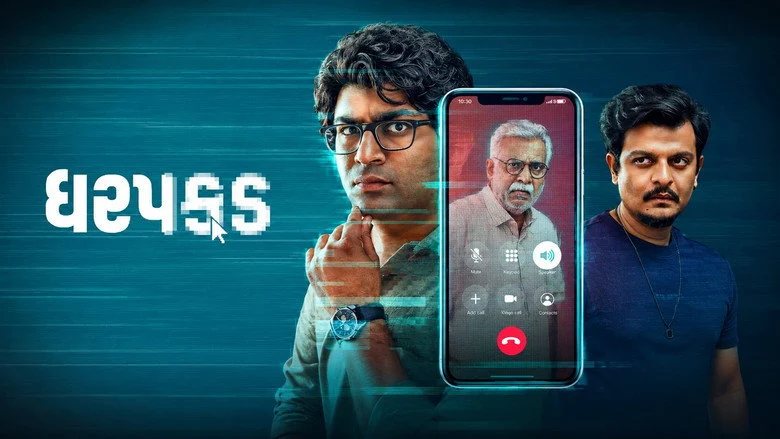
The most effective sequence remains the inciting incident: the fake law officer trapping the father in a digital arrest. It is a masterfully tense scene that captures the disorienting power of institutional impersonation, making the audience feel the same helplessness as the victim.
The son’s pursuit of the scam network through cybercrime leads offers a procedural backbone, but the film leans too heavily on convenience. Every clue seems to land exactly where Arjun needs it, which undercuts the realism the premise promises.
Dharpakad works best as a cautionary tale rather than a puzzle box. The suspense is derived from the looming threat of financial ruin, not from the mechanics of the investigation itself, which keeps the stakes emotional even when the plotting feels thin.
Prashant Barot and Shruhad Goswami Provide Familial Weight
Prashant Barot, as Bhadresh Shah, embodies the trauma of the scam’s primary victim with a palpable sense of shame and confusion. His reaction to the initial accusation, the disbelief turning into compliance, is the film’s most affecting performance, grounding the high-concept crime in a very human vulnerability.
Shruhad Goswami, featured prominently in promotional material, adds texture to the family dynamic, even if the character’s specific contours remain underdeveloped in the final cut. Their collective presence reinforces the film’s central argument: that cybercrime is not a victimless digital abstraction but a violent invasion of the domestic sphere.
Audience Reception and the Political Silence
With a modest budget of $317K reported by Plex, Dharpakad is clearly not aiming for blockbuster spectacle. Instead, its value proposition rests on the timeliness of its subject matter and the pre-release buzz generated by Thakar’s casting.
The film notably avoids any overt political or social commentary, choosing to frame the scam as a purely criminal enterprise rather than a systemic failure. This keeps the narrative clean but also prevents it from engaging with the broader questions of digital literacy and institutional accountability that such stories inevitably raise.
For audiences familiar with the wave of digital arrest scams sweeping India, the film will feel like a familiar warning. For those seeking a deeper critique of the phenomenon, however, it remains frustratingly surface-level.
If you are looking for a primer on the dangers of digital coercion, delivered with earnest performances and a clear moral compass, this is a serviceable entry point. For a more intricate dissection of the genre’s possibilities, you might want to explore other GU Thriller reviews on our site.
Dharpakad is a film that understands its subject matter better than it understands its craft. It is a watch for those who want a straightforward, cautionary drama, but it lacks the narrative sophistication to truly elevate the genre. I found myself wishing the screenplay had trusted its audience enough to complicate the investigation.
The film’s heart is in the right place, and its timing is impeccable, but its execution is too safe to leave a lasting scar. If the subject is new to you, it is an effective wake-up call; if you are a genre veteran, it will feel like a lecture you have already heard.
Watch it for Thakar’s earnest performance and the chilling accuracy of the opening scam sequence. Skip it if you need your thrillers to surprise you.
Dharpakad is a well-intentioned but formulaic thriller that earns a modest 2.5 out of 5 for its timely premise and committed performances, even as its predictable plotting holds it back.
For a more nuanced take on family dynamics under pressure, consider how Krishna Aur review handles its emotional core.
And if you are in the mood for a different kind of uneven genre exercise, Great Grand verdict offers its own set of contradictions.
Dharpakad (2026): A timely cyber-thriller that preaches to the choir
Visually captivating cinematography, stellar sound design, and commanding performances.
Slight pacing drag in the second act before the climactic resolution.