Lakshmikanthan Kolai Vazhakku (2026): A Realistic Crime Drama That Lectures Instead of Gripping
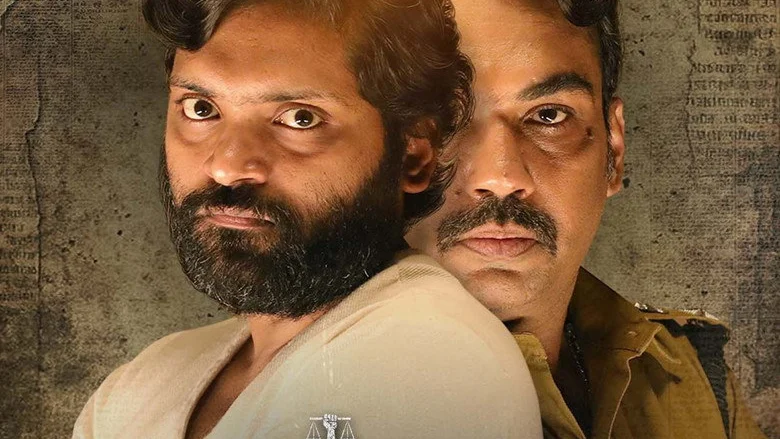
The corridors of the prison feel heavier than the crime itself in Dayal Padmanabhan’s Lakshmikanthan Kolai Vazhakku, where a jailer’s composed stride suggests more menace than any courtroom argument. This political crime drama, built around a real murder case, wants to be a mirror to power and justice, but it keeps fogging up with its own sermons.
Vetri Carries the Weight, But Barely Breaks a Sweat
Vetri, as Arivumathi, is the emotional anchor of this procedural, yet his performance registers as functional rather than commanding. He does what he can to carry the film, but the script gives him little room to explode or retreat.
The Times of India noted that Vetri is “adequate, ” which feels like the kindest possible read on a central turn that never quite locates the desperation beneath the determination. His scenes work when the camera lets silence do the talking, but those moments are too sparse.
Padmanabhan’s Direction Favors Arguments Over Atmosphere
Padmanabhan, who co-writes with Kavitha Bharathi, clearly knows the political texture of this material. The realism is a strength, as Dina Thanthi pointed out, especially when the film stays inside institutional spaces rather than reaching for melodrama.
But the screenplay leans into a lecture-heavy rhythm that Cinema Express flagged as a “lecture-filled drama.” The director mistakes volume of dialogue for depth of conflict, and the narrow emotional focus leaves the courtroom scenes feeling like symposiums rather than showdowns.
The Genre Core: A Political Crime Drama That Prefers Talking to Telling
For a film rooted in a murder case, Lakshmikanthan Kolai Vazhakku is curiously allergic to tension. The setpieces are replaced by arguments, and the investigation unfolds through institutional confrontation rather than investigative momentum.
This choice is admirable in theory, grounding the drama in realism over stylized spectacle, but the execution turns explanatory. When characters explain the stakes instead of feeling them, the political crime genre loses its bite.
The film’s best instincts surface when it stops explaining and simply observes. Those grounded moments carry a quiet authority that the louder, more didactic stretches desperately need.
Rangaraj Pandey Steals the Show With Quiet Command
Rangaraj Pandey, playing jailer Sivanandham, is the film’s saving grace. Critics unanimously pointed to his “composed authority” as the most watchable element, and it’s easy to see why, he brings a stillness that makes every other performance look busy.
His presence signals what the film could have been: a tighter, more menacing study of power dynamics within prison walls. The supporting cast, including Brigida Saga and Saravanan, remain functional, but Pandey’s gravitas casts a long shadow over their work.
Subramaniam Siva and Kanya Bharathi add weight to the ensemble, though their roles feel underwritten. The casting suggests a director who values experienced faces over star power, which suits the material’s serious intent.
Audience Reception and the Didactic Divide
With a BookMyShow audience score of 3, the gap between intent and impact is clear. Viewers drawn to political crime dramas will find the subject matter compelling, but the lecture-driven approach wears thin quickly.
Cinema Express’s criticism of the “narrow emotional focus” cuts to the heart of the problem. This is a film that wants to discuss justice without making you feel the injustice, a fatal flaw for a drama that should leave you unsettled.
I found myself wishing Padmanabhan trusted his actors and his audience more, letting the case’s inherent tension breathe instead of explaining every implication.
For those who appreciate grounded political storytelling, there’s a decent film buried inside this one, but you’ll have to sit through several sermons to find it. More Tamil Drama reviews might offer tighter alternatives to this uneven drama.
If you choose to watch, a regular theatrical screening or OTT viewing suffices; this is not a film that demands a big screen. Lakshmikanthan Kolai Vazhakku earns a middling 2 out of 5, a realistic crime drama that never quite trusts its own story enough to let it speak.
For a more compelling exploration of institutional power, Idhayam Murali review offers a different kind of restraint worth examining.
Fans of ensemble-driven political fare might find Dhamaal 4 verdict a lighter, if formulaic, counterpoint.
Lakshmikanthan Kolai Vazhakku (2026): A Realistic Crime Drama That Lectures Instead of Gripping
Visually captivating cinematography, stellar sound design, and commanding performances.
Slight pacing drag in the second act before the climactic resolution.