Raja Shivaji (2026): A Historical Epic Anchored by Riteish Deshmukh’s Commanding Presence
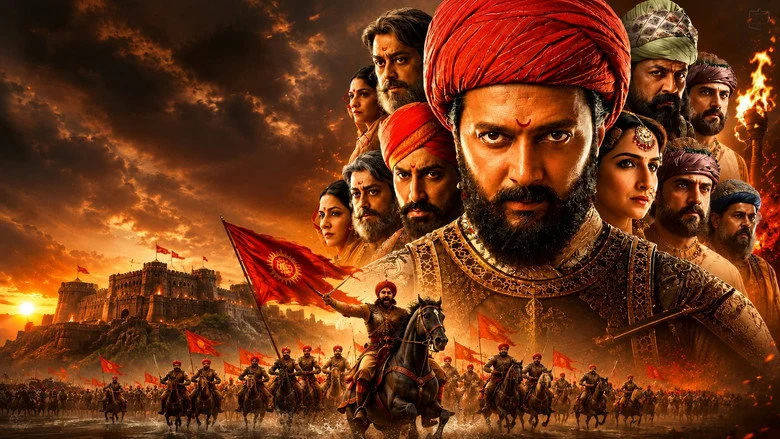
The Afzal Khan sequence arrives with the weight of a decade of political maneuvering compressed into a single, lethal embrace. When Riteish Deshmukh’s Shivaji Maharaj locks eyes with Sanjay Dutt’s towering antagonist, the film finally snaps into focus.
Everything before it is setup; everything after it is payoff. This is the moment where the historical drama’s ambition and its execution momentarily align.
Riteish Deshmukh Carries the Crown with Restraint
Deshmukh’s performance is the film’s anchor, and he wisely avoids broad dramatics. His strength emerges in state-building passages and battlefield command, where authority is expressed through stillness rather than volume.
The actor positions Shivaji as a strategist first, a warrior second. It is a measured, confident reading of a figure who could easily tip into caricature in lesser hands.
The Afzal Khan Gambit: Genre Execution Under the Microscope
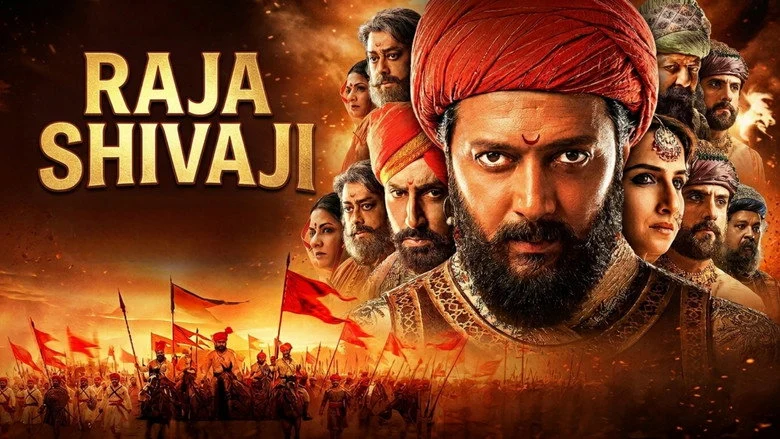
The confrontation sequence works because it respects the historical gravity of the moment. Dutt’s physical menace contrasts sharply with Deshmukh’s calculated calm, creating genuine tension in a genre often content with noise over nuance.
The battle staging and court-political passages rely on tableau-style composition and formal dialogue scenes. This approach gives the film a classical gravity, though it occasionally sacrifices momentum for monumentality.
Santosh Sivan’s cinematography captures the 17th-century scale with grandeur, but the editing struggles to bridge the gap between spectacle and drama. The first half is setup-heavy; the second half rewards patience with the confrontation and its aftermath.
Supporting Cast: Ensemble Weight, Uneven Payoff
Sanjay Dutt’s Afzal Khan functions as the principal conflict driver, though his arc remains more functional than fully developed. His effectiveness is tied almost entirely to that climactic showdown.
Abhishek Bachchan adds dynastic weight as Sambhaji Shahaji Bhonsale, while Bhagyashree Patwardhan’s Jijabai provides the moral and ideological spine. Sachin Khedekar’s Shahaji Bhosale grounds the lineage in historical context.
Genelia Deshmukh’s Saibai offers emotional grounding in the domestic sphere, and Vidya Balan’s Khadija Sultana broadens the political canvas. Fardeen Khan’s Shah Jahan supplies imperial context without dominating scenes.
The ensemble signals the film’s ambition, but several arcs remain underdeveloped relative to the central hero. This is Shivaji’s story; everyone else orbits.
The Box Office Verdict and What Audiences Are Saying
The commercial response has been emphatic. InsideBoxOffice reported an opening day India net of ₹12.40 crore, while NDTV, citing Sacnilk, placed it at ₹11.35 crore. The first week climbed to ₹96.39 crore India net and ₹117.97 crore worldwide, per Rapturemuse citing Sacnilk.
BookMyShow’s audience score stands at 8.9/10 from over 61, 400 votes, and the film has been declared a hit. Ram Gopal Varma weighed in on the performance, and the trade chatter is unmistakably positive.
Yet the critical consensus is cooler. The InsideBoxOffice live review averages around 2.5, with pacing and uneven transitions cited as recurring flaws. The ambition is respected; the execution is questioned.
I found myself caught between these two poles, admiring the scale while wishing the screenplay matched the production’s confidence.
For those who enjoy epic storytelling with political heft, there’s plenty to explore in our Marathi Action reviews.
The Political Frame and Its Audience Fit
The film’s core theme, Hindavi Swarajya against the Bijapur Sultanate and Mughals, carries obvious contemporary resonance. The production leans into the state-building narrative without overt editorializing, letting the historical record speak through its chosen emphasis.
Audience complaints mirror critical ones: pacing in the first half, narrative unevenness between set pieces, and limited memorability for some supporting arcs. The praise focuses on Deshmukh’s portrayal, the battle scale, and the ensemble’s sheer star power.
This is a film built for the big screen, where its visual scale can overwhelm its structural flaws. For fans of historical epics and Marathi audiences, it delivers what it promises, even if it stumbles along the way.
If you’re drawn to the tension between royal duty and personal conviction, Riteish Deshmukh’s measured performance here shares a similar register with the ensemble dynamics explored in Vaazha II review.
See it for the confrontation, stay for the scale, and forgive the stretches where the film loses its grip. This is a theatrical experience best consumed on the biggest screen available, where the visual ambition justifies the ticket price.
Raja Shivaji (2026) is a flawed but ambitious historical epic that earns a 2.5 out of 5, worth your time for Deshmukh’s commanding lead turn, but only if you can sit through the uneven build to reach the payoff.
For those who appreciate how grand spectacle can sometimes mask narrative gaps, the approach here echoes the visual ambition found in Mandalorian Grogu verdict.
Raja Shivaji (2026): A Historical Epic Anchored by Riteish Deshmukh’s Commanding Presence
Visually captivating cinematography, stellar sound design, and commanding performances.
Slight pacing drag in the second act before the climactic resolution.