Chand Mera Dil (2026): A Romantic Drama That Drowns in Its Own Tears
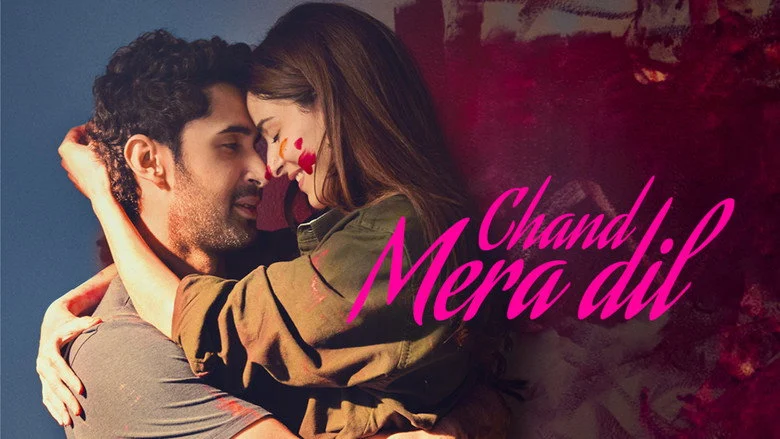
There is a moment in Chand Mera Dil where the screen is saturated with close-ups of Ananya Panday and Lakshya Lalwani, their faces glistening under soft-focus lighting, a song swelling underneath, and you realize the film is asking you to feel something, desperately, insistently, and with very little narrative reason to. The emotional machinery is loud, but the heart beneath it is barely audible.
Vivek Soni’s debut theatrical feature, a Hindi romantic musical drama that opened on 22 May 2026, wants to be a sweeping tale of love and sacrifice. It ends up being a two-hour-and-twenty-six-minute exercise in melodrama that mistakes volume for depth.
Ananya Panday Carries the Weight of a Film That Refuses to Trust Her
Panday, as Chandni Prasad, is the film’s emotional center, and she commits to the register with genuine sincerity. Her tearful confrontations land with a theatrical intensity that suggests she understood the assignment, even if the assignment was flawed.
Yet the film leans on her so heavily that it becomes a crutch. When the screenplay falters, the camera just holds on Panday’s face, waiting for her grief to fill the void. It’s a strategy that works in fits and starts, but it cannot sustain a 146-minute runtime.
Lakshya Lalwani’s Aarav Is a Character in Search of a Personality
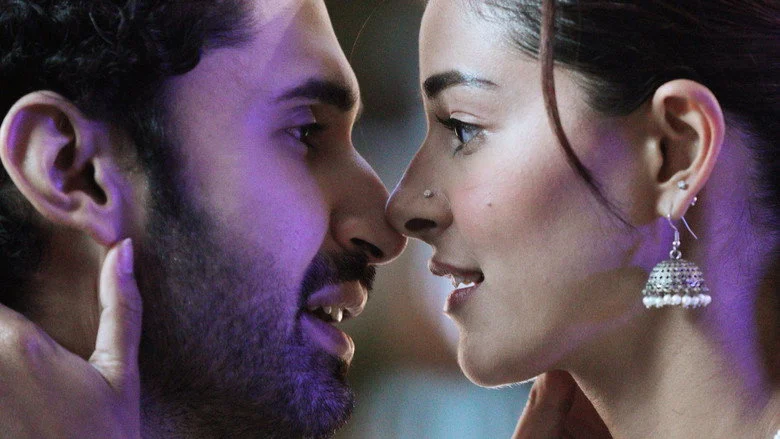
Lalwani brings a brooding physicality to Aarav Rawat, but the script gives him little to work with beyond the standard romantic-lead beats. His chemistry with Panday is the film’s primary commercial draw, and it’s easy to see why audiences showed up for the pairing.
But Aarav’s emotional arc is sketched in broad strokes rather than fine lines. Lalwani does what he can with the material, yet his performance feels like a series of reactions to Chandni’s pain rather than a fully realized character in his own right.
The Genre-Core Execution: A Romance That Forgets How to Breathe
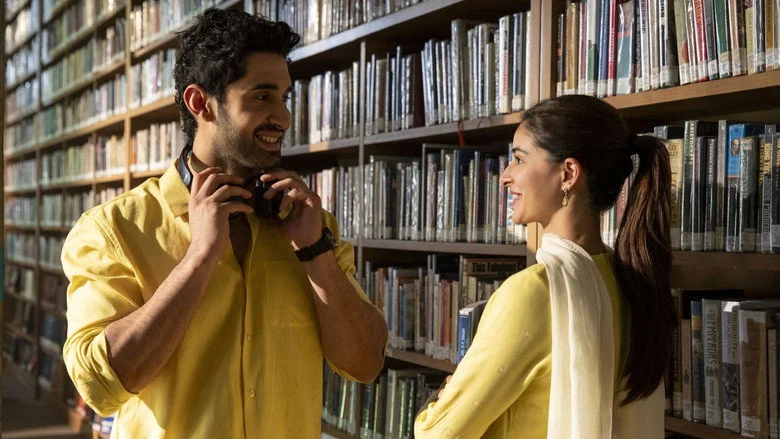
For a romantic musical, Chand Mera Dil understands the grammar of the genre, the longing glances, the rain-soaked confrontations, the songs that externalize inner turmoil, but it forgets the rhythm. The pacing is uneven, with emotional peaks arriving without sufficient buildup and valleys that stretch too long without purpose.
The melodrama is the film’s chosen language, and it commits to that language without irony. But where the best romantic dramas find moments of quiet between the storms, Soni’s direction keeps the emotional register at a constant high, exhausting the viewer’s capacity for empathy. The opening weekend scenes centered on the lead romantic track drew attention, yet that attention was largely driven by star power rather than craft.
Cinema Express put it bluntly, describing the film as “brimming with empty tears and emptier melodrama.” That assessment captures the central problem: the film manufactures feeling without earning it, and the audience can sense the manipulation.
Supporting Cast: A Talented Ensemble Left on the Sidelines
Aastha Singh, as Jyotsna, and Paresh Pahuja, as Kevin, are present in the cast but barely register in the discourse around the film. Their presence signals an attempt to build a fuller world around the leads, yet the screenplay never gives them enough to do.
Manish Chaudhari, playing Kamal Rawat, brings a veteran’s gravitas to his scenes, but his character’s function is largely functional, a plot device rather than a person. The supporting cast is a reminder of what this film could have been with a stronger script that distributed its emotional weight more evenly.
The Box Office Verdict: A Slow Fade That Speaks Volumes
The numbers tell a story the reviews already hinted at. Sacnilk reported a day-one gross of roughly Rs 3.39 crore, a modest opening for a film headlined by two popular young stars. By day seven, the India net stood at ₹19.45 crore, with a worldwide gross of ₹26.03 crore, per Filmibeat and Hindustan Times reporting.
By day nine, the worldwide gross inched up to ₹26.39 crore, a trajectory that suggests limited audience momentum rather than word-of-mouth acceleration. The verdict is a flop, and the reasons are clear: mixed-to-negative reviews, weak emotional payoff, and a melodramatic tone that failed to convert curiosity into sustained interest.
I kept waiting for the film to surprise me, to find a moment of restraint that would justify its excesses. That moment never arrived.
For fans of the lead pair, there is something to be found here, their chemistry is genuine, and the songs carry a certain charm. But for anyone seeking a romance that earns its tears, this is a hard pass. The best format to experience this is OTT, where you can pause, breathe, and maybe skip ahead to the songs.
If you’re in the mood for more Hindi romantic dramas that handle emotion with more nuance, browse our Hindi Drama reviews for better options.
Chand Mera Dil is a film that confuses crying with feeling, and in doing so, it leaves you dry-eyed and disconnected, a 2-out-of-5 effort that will appeal only to the most forgiving fans of the genre.
For a more restrained take on emotional storytelling, check out Operation Sindoor review.
And for a drama where restraint becomes the story itself, Last Tenant verdict offers a masterful counterpoint.
Chand Mera Dil (2026): A Romantic Drama That Drowns in Its Own Tears
Visually captivating cinematography, stellar sound design, and commanding performances.
Slight pacing drag in the second act before the climactic resolution.