Picture (2026): Tulu Family Drama Earns Its Laughs But Loses Its Way

The opening act of Picture finds Deepu (Nithyaprakash Bantwal) packing his bags for the city, encouraged by a father who raised him alone. The frame is warm, the intent clear, this is a family story wrapped in a young man’s ambition.
Within minutes, you sense the tonal register: gentle comedy with sentimental edges. The setup promises a journey, but the route feels travelled before.
Nithyaprakash Bantwal Carries What the Script Cannot
Bantwal anchors the film with a performance that keeps the narrative breathing even when the writing stalls. He plays Deepu’s earnestness without tipping into melodrama, which matters in a story that leans heavily on father-son sentiment.
The actor’s comic timing lands in situational beats, but his real work shows in quieter moments, the weight of leaving home, the awkwardness of new love. He holds the screen even when the screenplay around him loses grip.
The Comedy Works When It Stays Local
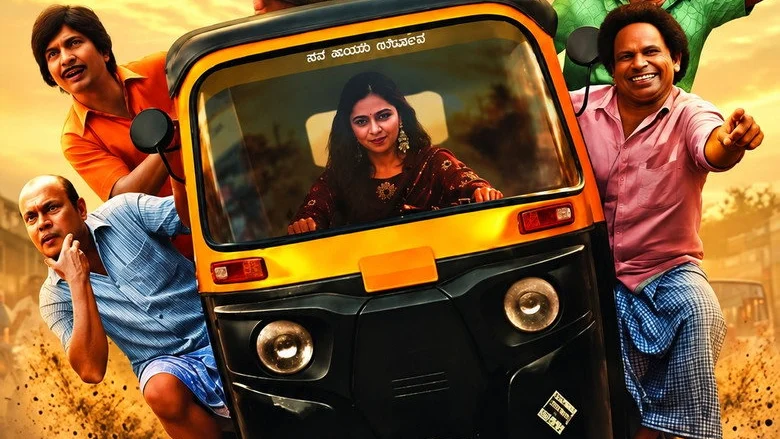
Picture’s primary genre is comedy, and its best humour comes from the ensemble of familiar Tulu cinema faces. The situational jokes land because they feel rooted in a specific cultural reality, not generic template laughs.
The film blends this humour with a touch of sentiment, aiming for the family entertainer format. That balancing act succeeds in patches, a scene between Deepu and his father carries genuine warmth that the comedy never undermines.
But the genre execution falters when the script reaches for predictability. The middle stretch, where Deepu trains as an actor and courts Nidhi (Amrutha Sudu), drags into familiar territory. You can sense the beats before they arrive.
Direction Shows Instinct, Screenplay Shows Fatigue
Sandeep Bedra demonstrates a clear eye for casting and a natural feel for ensemble dynamics. He gets credible work from his actors, which is half the battle in regional family dramas.
The flaw is structural: the screenplay is linear to a fault, and the pacing turns uneven in the second half. The narrative loses momentum precisely when it should tighten toward the climax, diluting the emotional payoff.
Supporting Cast Gives the Film Its Texture
Naveen D. Padil’s Tharnath contributes solidly to the proceedings, adding a counterpoint to Deepu’s earnest journey. His presence signals the film’s reliance on character actors to fill gaps the lead cannot.
Devadas Kapikad also makes his presence felt, reinforcing the ensemble-first approach. The casting of these Tulu cinema regulars is deliberate, it gives Picture a lived-in quality that a bigger-budget production might have missed. The supporting cast is not the problem; the material they are given often is.
The Times of India’s 2.5/5 verdict calls it “a light-hearted Kannada-Tulu family entertainer that blends situational comedy and emotion, strengthened by its ensemble cast, though uneven pacing and predictable storytelling limit its impact.” The audience disagrees sharply, IMDb shows 9.6/10 from over 10, 545 votes, and BookMyShow reflects 9.1/10 from 630+ ratings. That gap between critical and popular reception tells its own story about what Tulu family audiences want.
Audience praise centres on “super direction” and an “awesome story, ” which suggests the film’s emotional core connects with its primary viewers even when craft falters. For a regional language release, that audience validation carries weight.
Picture is a film caught between two poles: a family audience that embraces its warmth and a critical eye that sees its predictability. I found myself siding with the critics on pacing but understanding the audience on heart. For more on how regional cinema navigates this divide, browse our Kannada Drama reviews.
If you are a family looking for a clean entertainer with familiar faces, Picture delivers enough laughs and sentiment to justify an evening. If you need narrative tightness or fresh storytelling, the 159-minute runtime will test your patience. Watch it with your parents, not your film club.
Picture earns its audience’s devotion through honest sentiment and ensemble charm, but a flabby middle and predictable arc keep it from greatness, a decent 2.5/5 for the patient viewer, higher if you measure by applause in a family hall.
For a sharper look at how regional films balance craft and commerce, see Photographer review.
If uneven scripting in promising regional projects interests you, check KJQ verdict.
Picture (2026): Tulu Family Drama Earns Its Laughs But Loses Its Way
Visually captivating cinematography, stellar sound design, and commanding performances.
Slight pacing drag in the second act before the climactic resolution.