WHCA Accuses Trump Team of Retaliation After Reporter Pulled From Press Pool
- The Scoop: The White House Correspondents’ Association accused the Trump administration of retaliation after The Independent‘s Andrew Feinberg was pulled from the traveling press pool for the president’s Iowa trip.
- The Flashpoint: President Trump told Feinberg to “be careful” following questioning about a whistleblower program, after which the correspondent lost his scheduled seat on the trip.
- The Stakes: WHCA president Jacqui Heinrich framed the removal as a direct threat to independent press access, escalating a widening confrontation over White House media credentials.
The White House Correspondents’ Association has publicly accused the Trump administration of retaliation after The Independent correspondent Andrew Feinberg was removed from the traveling press pool for the president’s Iowa trip.
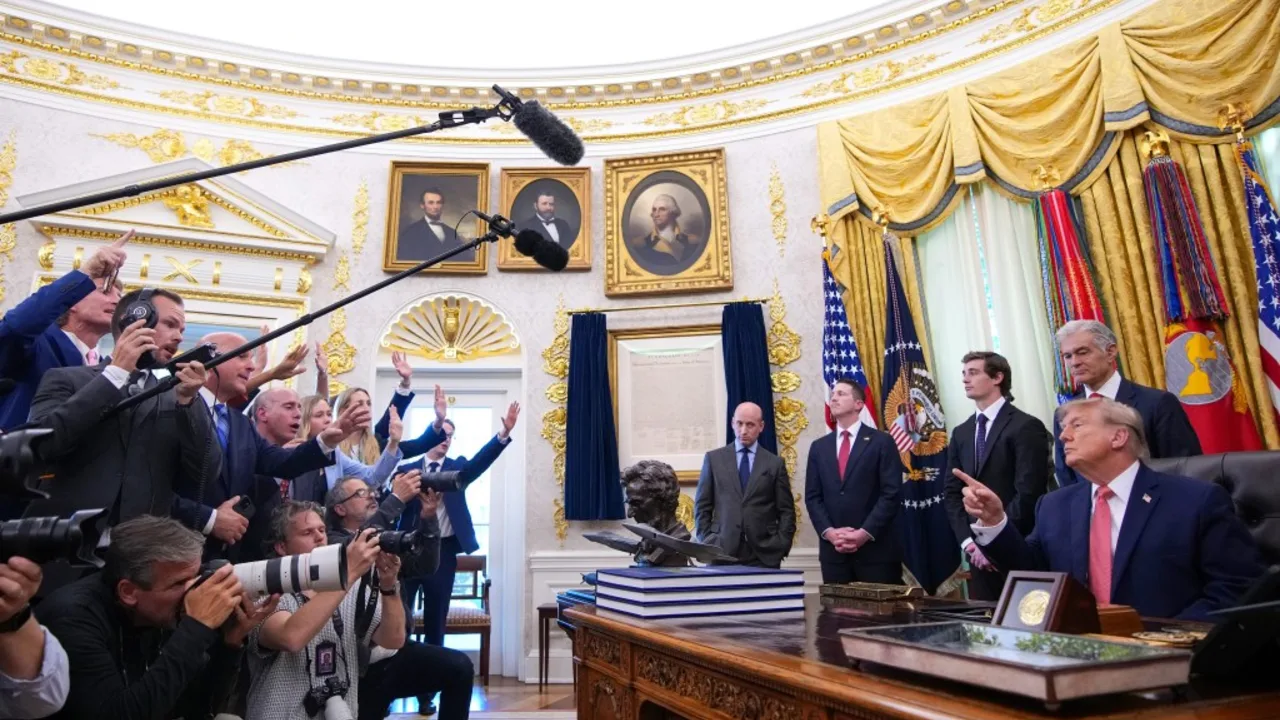
The removal followed a tense Oval Office exchange in which Trump told Feinberg to “be careful” after the reporter pressed him on a whistleblower program.
Inside the Pool Removal: How a Single Exchange Became a Press-Freedom Flashpoint
WHCA president Jacqui Heinrich, a Fox News senior White House correspondent, did not soften the association’s read on the sequence of events.
“That is retaliation,” Heinrich said, adding that “the American public’s right to an independent press depends on reporters being able to do their jobs without fear that challenging the president will cut off their access.”
The WHCA’s formal statement went further, grounding its objection in constitutional rather than procedural terms.
“The Constitution protects the freedom of the press from government interference,” the association said, noting that “that protection does not depend on whether the president likes a news organization’s coverage, agrees with its reporting, or approves of the questions its journalists ask.”
The language is deliberate. By anchoring the dispute in the First Amendment rather than pool logistics, the WHCA is treating a single seat assignment as a test case for how far access can be weaponized.
A Pattern of Locked Doors: The Broader Fight Over White House Credentials
The Feinberg episode is not an isolated skirmish. Earlier reporting cited in the record shows journalists from CNN, POLITICO, and MS NOW were denied access to White House events, drawing the same First Amendment objection from the correspondents’ association.
Each denial narrows the pipeline between the Oval Office and the public, and each one raises the cost of asking difficult questions on camera.
Trade desks tracking press-freedom confrontations and release-calendar disputes alike are watching how the administration formalizes pool rules, monitored across our trade entertainment wire desk for the industry fallout.
The practical consequence lands on newsroom budgets and assignment rotations: outlets must now weigh whether a challenging line of questioning jeopardizes future access for an entire bureau, not just the reporter who asks it.
Why the WHCA Picked This Fight in Public
Heinrich’s decision to attach the word “retaliation” on the record converts a behind-the-scenes scheduling change into a public accusation the White House must now answer.
The association’s leverage is reputational, not institutional, it cannot compel seat assignments, but it can make each removal costly in coverage.
The standoff also reframes how press-access disputes get covered across the media landscape, contrasting with contemporary genre experiments that dominate entertainment cycles while institutional press fights quietly reshape the information pipeline.
The endgame is a credibility ledger: every reporter pulled from a pool becomes a data point in the WHCA’s case, and every White House denial becomes a fresh headline cycle the administration has to absorb.