A Bridge Too Far Streaming Free: Attenborough’s WWII Epic Lands on Tubi
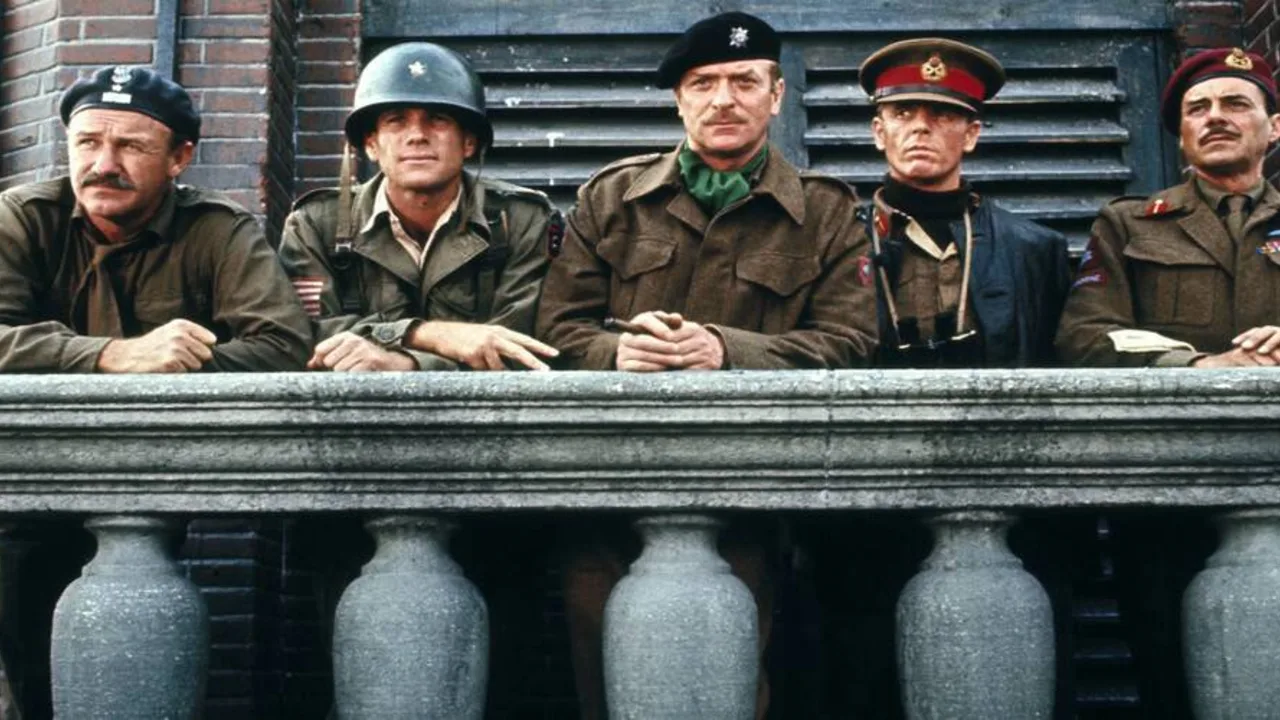
- The Scoop: Richard Attenborough’s 1977 WWII epic A Bridge Too Far is now streaming free on Tubi and Pluto TV.
- Production Scale: The film dramatizes Operation Market Garden, the Allied airborne gamble to seize Dutch bridges in September 1944, adapted from Cornelius Ryan’s book.
- Streaming Play: A zero-cost ad-supported window gives the all-star war spectacle a fresh discovery pipeline decades after its theatrical run.
Richard Attenborough’s 1977 WWII epic A Bridge Too Far is now streaming free on Tubi and Pluto TV, handing the all-star war spectacle a new audience decades after its theatrical run.
An All-Star War Machine Built on Real Terrain and Real Hardware
Attenborough mounted the film as a large-scale, physically demanding production rather than a soundstage approximation of combat. The director staged the Allied airborne assault on Operation Market Garden with practical scope, massing troops, vehicles, and aircraft to sell the sheer scale of the September 1944 campaign.
That commitment to real-world staging remains the film’s defining asset. Modern war releases such as recent commemorative war projects often lean on digital augmentation, while Attenborough’s approach put crews and equipment on location and let the logistics carry the drama.
The film adapts Cornelius Ryan’s book, compressing the doomed bridge-by-bridge advance into a sprawling ensemble narrative. Its ambition lies in the operational detail: the airborne drops, the armored push, and the command-room calculations that turned a bold plan into a costly stalemate.
Why Free Streaming Is the Right Window for a Legacy War Epic
Placing a 1977 war film on ad-supported platforms is a deliberate play for discovery rather than prestige. Tubi and Pluto TV reach viewers who would never seek out a catalog war epic on a subscription service, and the free window removes the paywall friction that keeps older titles buried.
For the platforms, the film is a low-cost acquisition with durable appeal. War epics draw older male viewers and history-minded audiences, demographics that ad-supported services prize because they watch long-form content in extended sessions.
The theatrical-to-streaming pipeline for catalog titles works as a marketing funnel in reverse. A free window generates sampling, drives word-of-mouth, and keeps a legacy title circulating in the cultural conversation without a single marketing dollar spent on a re-release campaign.
For anyone tracking how older war films perform in the streaming era, the title’s placement sits alongside the broader trade entertainment wire coverage of catalog acquisitions and platform library strategy.
The Commercial Case for Rediscovering Attenborough’s Gamble
The film’s enduring value rests on its refusal to sanitize the campaign. Attenborough shows the operation’s failure as a matter of planning overreach, and that honesty gives the film a gravity that glossy combat spectacle rarely matches.
Its ensemble structure also functions as a time capsule of mid-1970s star power, with a roster of name actors carrying the operational narrative across multiple fronts. That casting density is exactly what makes the film ripe for rediscovery: viewers tune in for the faces and stay for the scale.
The free streaming window carries real economic weight for the platforms. Ad-supported services monetize long runtime and repeat viewing, and a three-hour war epic delivers extended session time that drives ad inventory and reduces subscriber churn.
For Attenborough’s legacy, the placement keeps a physically ambitious production in circulation at a moment when practical-scale filmmaking is increasingly rare. The film’s availability is a reminder that the biggest war spectacles were once built on location, not in a server farm.