Sunny Deol’s Lord Hanuman Revealed in Ramayana: Part I End-Credits Sting
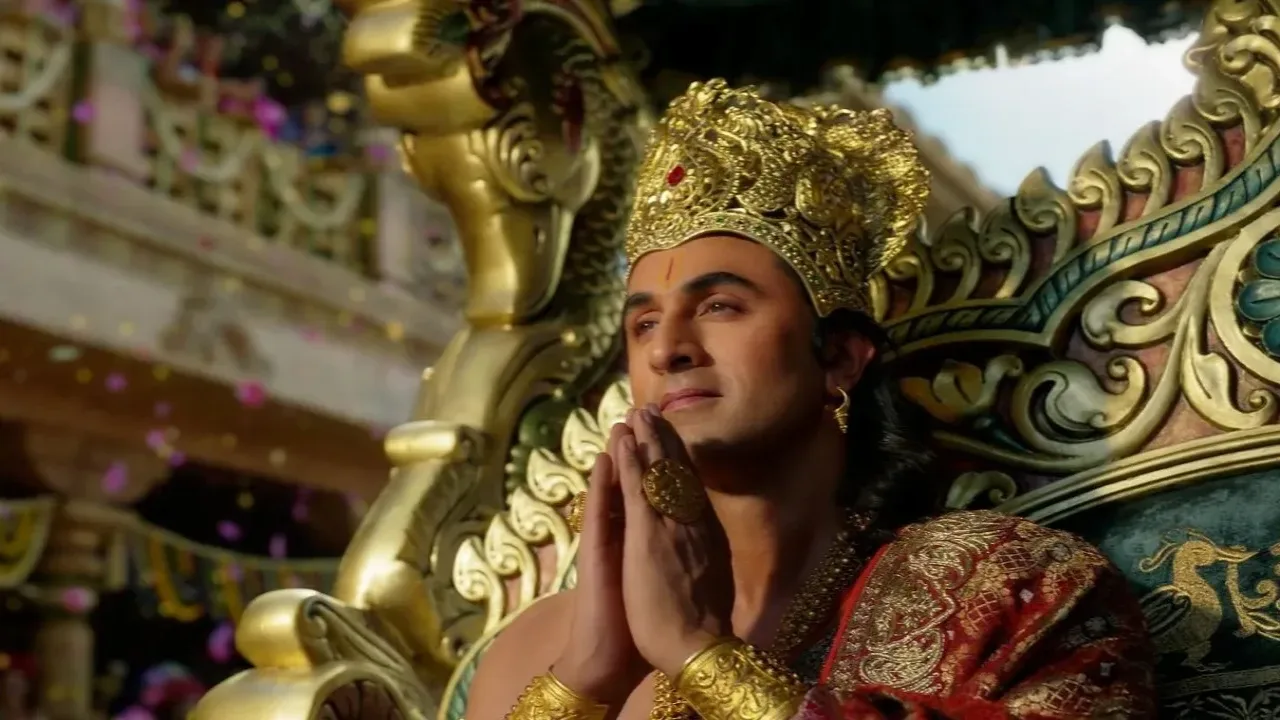
- The Scoop: Sunny Deol’s Lord Hanuman is held back for a climactic reveal at the conclusion of Ramayana: Part I, surfacing during or immediately around the end credits.
- Franchise Architecture: The withheld entrance is engineered as a bridge into the sequel, with the film’s ending built to leave audiences primed for the next chapter rather than spending Deol’s character in Part I.
- Calendar Leverage: The film lands November 5, 2026, anchoring the Diwali festive corridor, with paid previews slotted for November 4.
- Creative Assembly: Nitesh Tiwari directs and Namit Malhotra produces, with Ranbir Kapoor as Rama, Sai Pallavi as Sita, Yash as Ravana and a first-look rollout timed to Hanuman Jayanti on April 2.
Sunny Deol’s Lord Hanuman surfaces at the close of Ramayana: Part I, with the reveal staged during or immediately around the end credits. The placement turns the film’s final minutes into a franchise handoff rather than a conventional curtain call.
The Withheld Entrance: Why Hanuman Is the Final Card, Not the Opening Act
Deol’s character is deliberately kept off the main narrative board, reserving his full weight for the sequel. The construction mirrors the cliffhanger grammar that powered the close of Baahubali: The Beginning, a template Indian event cinema has leaned on ever since.
Director Nitesh Tiwari is orchestrating that withholding with intent, treating the end-credits slot as a mass-appeal detonation point. Positioning Deol’s entrance after the story has resolved gives the reveal its own theatrical oxygen, separate from the Rama-Ravana spine.
The casting itself carries a distinct charge. Deol’s screen persona, built on brute physical presence and a booming register, sits in deliberate contrast to Ranbir Kapoor’s restrained Rama and Yash’s operatic Ravana.
That trio of performance registers gives Tiwari three separate tonal engines to balance across a two-part structure. Deol’s Hanuman, arriving last, becomes the emotional exclamation point rather than a competing lead.
Diwali 2026 and the ₹1,600 Crore Question: Inside the Release Gamble
The film is locked for November 5, 2026, planting its flag squarely in the Diwali corridor. Paid previews are scheduled for November 4, a one-day runway that lets word of mouth build before the official holiday crush.
Producer Namit Malhotra is backing the project at a reported scale of roughly ₹1,600 crore, a figure that places it among the most expensive Indian productions mounted. That number demands holiday footfalls, not a staggered rollout.
Diwali delivers the densest multiplex attendance window on the Indian calendar, and a two-part mythological epic needs every one of those days. The preview night functions as a pressure valve, seeding reactions before the festive surge.
The promotional calendar is equally calculated. First looks for Kapoor, Yash, Pallavi and Deol were slated for April 2, timed to Hanuman Jayanti, a date that hands the marketing team a ready-made cultural hook for Deol’s reveal.
Music duties reportedly draw on Hans Zimmer and A.R. Rahman, an international-plus-domestic pairing that signals global theatrical ambitions. The supporting bench runs deep, with Ravi Dubey as Lakshman, Kajal Aggarwal as Mandodari and Arun Govil as King Dasharath.
Rakul Preet Singh’s Shurpanakha, Vivek Oberoi’s Vidyutjiva and Kunal Kapoor’s Indra Dev round out a roster built for scale. Lara Dutta’s Kaikeyi and Sheeba Chaddha’s Manthara anchor the palace intrigue that sets the exile in motion.
For Malhotra and Tiwari, the end-credits sting is the cheapest marketing asset in the package, a moment designed to travel by word of mouth and pull repeat business into the second weekend. Track the rollout across our trade entertainment wire desk as the Diwali corridor tightens.
The commercial math is unforgiving: a ₹1,600 crore bet needs the festive window to deliver record footfalls, and the Hanuman reveal is engineered to convert opening-week curiosity into sequel anticipation. Contrast that with the more modest scale of contemporary war releases chasing similar holiday slots.
Every day of the Diwali run counts against that budget, and the end-credits reveal is the studio’s lever for stretching the film’s theatrical life beyond the first weekend.