Rose Byrne on The Good Daughter’s Sister Bond and That Complicated Ending
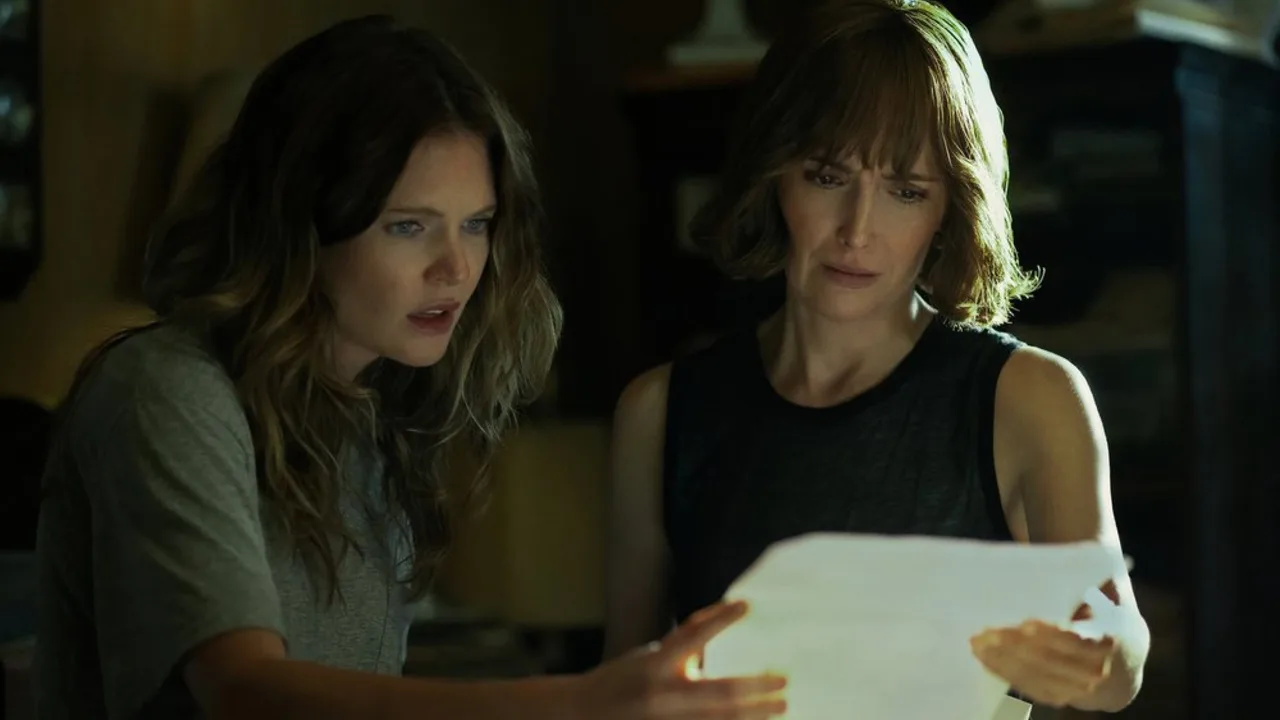
- The Scoop: Rose Byrne leads and executive produces The Good Daughter, a six-episode adaptation of Karin Slaughter’s novel that premiered November 12 on Peacock and Sky/NOW.
- Sister Act: Byrne cites the chance to work side by side with Meghann Fahy as the creative pull, with the pair playing estranged siblings Sam and Charlie Quinn.
- Creative Muscle: Slaughter wrote all six episodes, Steph Green directed the full run, and Made Up Stories produced with Fifth Season handling global distribution.
- Endgame: The finale lands on a deliberately complicated note that closes the story rather than teasing a second season.
Rose Byrne headlines and executive produces The Good Daughter, the six-episode Karin Slaughter adaptation that launched November 12 on Peacock in the U.S. and Sky/NOW across the U.K. and Ireland.
The limited series pairs Byrne’s Samantha “Sam” Quinn with Meghann Fahy’s Charlotte “Charlie” Quinn, estranged sisters pulled back together by a violent attack in their Georgia hometown.
The Sister Dynamic That Sold Byrne on a Limited-Series Detour
Byrne has been explicit about the draw. The two-hander with Fahy, she said, offered something the industry rarely hands out: “it’s rare you get to work side by side with a fellow actress.”
That instinct shapes the entire architecture of the show. Sam and Charlie carry the investigation, the family wreckage, and the two-decade-old trauma of an earlier attack on the Quinn household, with Brendan Gleeson’s Rusty and Olivia Williams’s Harriet anchoring the parental generation.
Fahy’s presence gives Byrne a genuine scene partner rather than a supporting foil, and the casting math reflects a performer choosing material by the caliber of the person across the table.
“It’s rare you get to work side by side with a fellow actress.”, Rose Byrne, actor and executive producer
Slaughter and Green Build a Closed-Loop Thriller, Not a Franchise Pilot
Karin Slaughter adapted her own 2017 bestseller and wrote all six episodes, an unusual concentration of authorship that keeps the source novel’s voice intact on screen.
Steph Green directed the full run and executive produced, giving the series a single visual grammar across its entire arc rather than the patchwork feel of rotating directors.
Made Up Stories produced in partnership with Fifth Season, which handles global distribution, a structure built for a finite, premium crime story rather than an open-ended season order.
Slaughter has floated the idea of a short-story continuation following the sisters, but that remains a notion under discussion, not a greenlit follow-up.
Why the Ambiguous Finale Is the Point, Not a Cliffhanger
The ending arrives complicated and conclusive at once. It closes the emotional account between the Quinn sisters without dangling a renewal bait-and-switch over the audience.
That choice fits the limited-series format, where a resolved finale protects the show’s reputation and lets the cast walk away clean rather than locked into multi-year options.
For Peacock and Sky, the value sits in a self-contained prestige title that can be marketed as a complete watch, a subscriber acquisition play tracked across our trade entertainment wire desk rather than a franchise bet.
The November 12 drop lands in the pre-Thanksgiving corridor, a window that rewards binge-ready crime thrillers with holiday-adjacent sampling before the December glut.
Byrne’s executive-producer credit also signals a talent-first packaging model, where the star’s investment in the material, and in her co-lead, becomes the show’s most bankable marketing asset, contrasting with contemporary event-release programming built on spectacle over performance.
With six episodes, one director, one writer, and a finale that actually ends, The Good Daughter bets that a finished story outperforms an unfinished franchise.