Batwara 1947 (2026): Sikander Mirza Is lands hard though the screenplay stays patchy
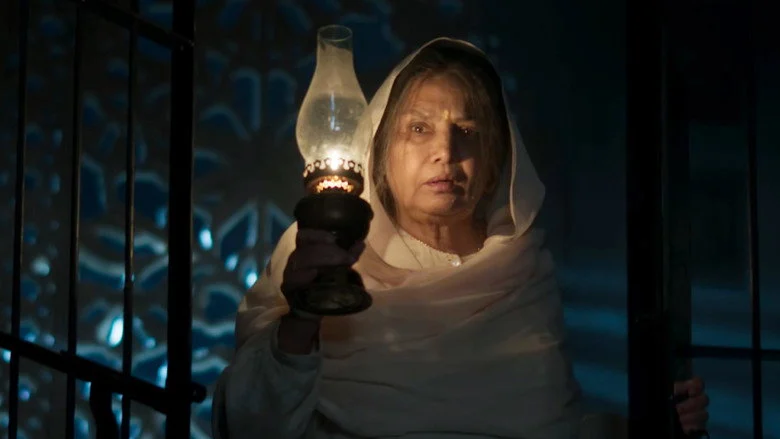
The first direct confrontation inside the haveli arrives not with raised fists but with measured, wounded words. Sunny Deol’s Sikander Mirza and Shabana Azmi’s Durgavati circle each other like boxers who have already taken the worst hits of their lives, and the room itself feels like a character holding its breath. This is a film that understands its central tension is not about who wins a property dispute, but about who carries the heavier weight of memory.
Sikander Mirza Is a New Kind of Sunny Deol Hero
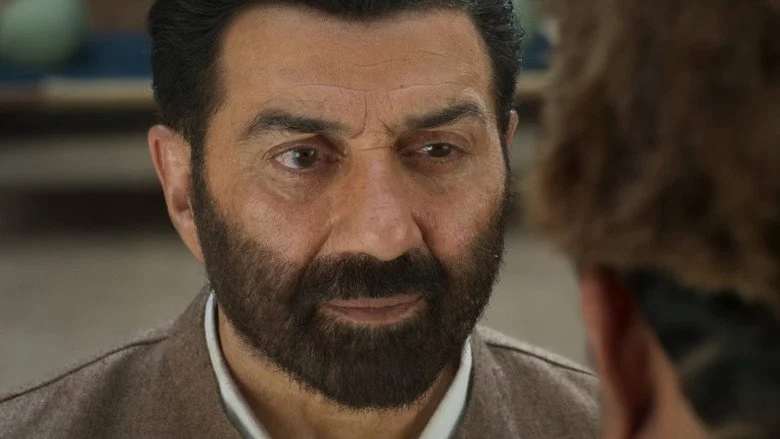
Deol trades his trademark explosive physicality for something far more interesting: a man paralyzed by the moral implications of his own survival. His Sikander is protective, yes, but the protection comes with guilt that sits visibly on his shoulders.
The actor’s strongest register here is hesitation. Watching him wrestle with frustration against a woman whose loss mirrors his own is a reminder that Deol can do far more than break bones when the material demands restraint.
Santoshi’s Focused Direction Meets a Stage-Bound Screenplay
Rajkumar Santoshi keeps the narrative locked to one conflict and one setting, which gives the drama a disciplined focus that his recent action-heavy work has lacked. The decision to confine the story to the haveli and its emotional fallout pays off in intensity.
But the theatrical DNA of Professor Asghar Wajahat’s source play becomes a double-edged sword. The middle stretch leans so heavily on dialogue-driven confrontation that the visual language goes dormant, and the pacing sags before the resolution arrives.
Genre Execution: Drama That Demands Patience
The film prioritizes interpersonal conflict over plot mechanics, which is a brave choice for a mainstream Hindi release. Every scene inside the haveli is built around the slow excavation of what the house means to each character, treating the structure as a repository of grief rather than a piece of real estate. The emotional stakes are communicated through memory and moral choice, not through dramatic twists or sudden revelations.
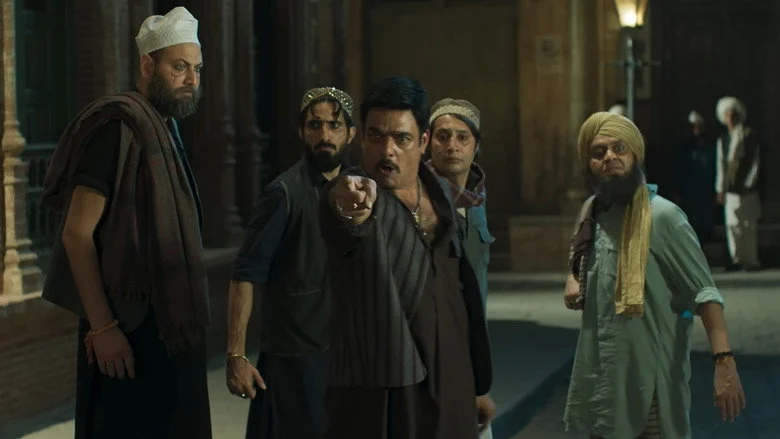
Santoshi uses the Partition setting to supply historical pressure to what is essentially a domestic standoff. The family’s arrival at the occupied haveli is staged with an uneasy quiet, the kind that suggests violence could erupt at any moment without needing to show it. This restraint is the film’s greatest craft asset, even when it risks testing the audience’s patience.
The confrontation between the new occupants and Durgavati functions as the film’s dramatic engine, but it is also where the repetition creeps in. The same arguments are revisited with slight variations, and the emotional beats begin to feel familiar well before the climax arrives. It is a deliberate, arthouse-inflected approach that demands a viewer willing to sit with discomfort rather than seek resolution.
Azmi’s Authority and Zinta’s Quiet Anchor
Shabana Azmi delivers the film’s moral center as Durgavati, the displaced Hindu woman who refuses to surrender the only thing she has left. Her controlled senior-character authority gives the property dispute its gravity, and her exchanges with Deol carry the weight of a nation’s trauma distilled into one woman’s stubbornness.
Preity Zinta returns to screens as Hamida, functioning as the emotional anchor during the migration and settlement passages. She does not get the fireworks of the central confrontation, but her presence stabilizes the family unit in ways that make the larger conflict land harder. Karan Deol’s Javed and Khushi Hajare’s Tanvir round out the household, representing a younger generation that inherits the trauma without understanding its full dimensions.
Audience Reception: A Film for the Patient Viewer
Times of India’s 3/5 rating captures the general critical consensus: a well-intentioned, well-acted drama that struggles with its own pacing. The audience response mirrors this split, with praise flowing toward Deol’s restrained performance and Azmi’s commanding presence while complaints center on the slow middle section and the dialogue-heavy approach.
Crucially, the CBFC cleared the film without cuts, suggesting no political friction despite the sensitive subject matter. This is not a film for those expecting Gadar-style action heroics; it is a chamber piece that happens to be set against the backdrop of history’s most painful division.
For more content like this, browse other Hindi Action reviews.
Verdict: A Morality Play That Values Conversation Over Confrontation
I found myself wishing Santoshi had trusted his actors even more and trimmed the repetitive middle passages that dilute the impact of the final emotional turn. The film’s best moments are its quietest ones, and they deserve a tighter frame around them.
This is a worthy watch for audiences who appreciate performance-driven period drama and can tolerate a contemplative pace. Skip it if you need your Partition stories delivered with the kinetic energy of a commercial blockbuster.
Batwara 1947 is a sincere, actor-led drama that earns a 3/5 for its commitment to moral complexity over narrative momentum.
If you appreciated this film’s restrained character work, you might find a similar quality in this Picture review.
For a different take on trauma and survival, consider this Photographer verdict.
Batwara 1947 (2026): Sikander Mirza Is lands hard though the screenplay stays patchy
Visually captivating cinematography, stellar sound design, and commanding performances.
Slight pacing drag in the second act before the climactic resolution.