Billy Evans Disputes Nude Shower Scene Consent in ‘You Can See Everything
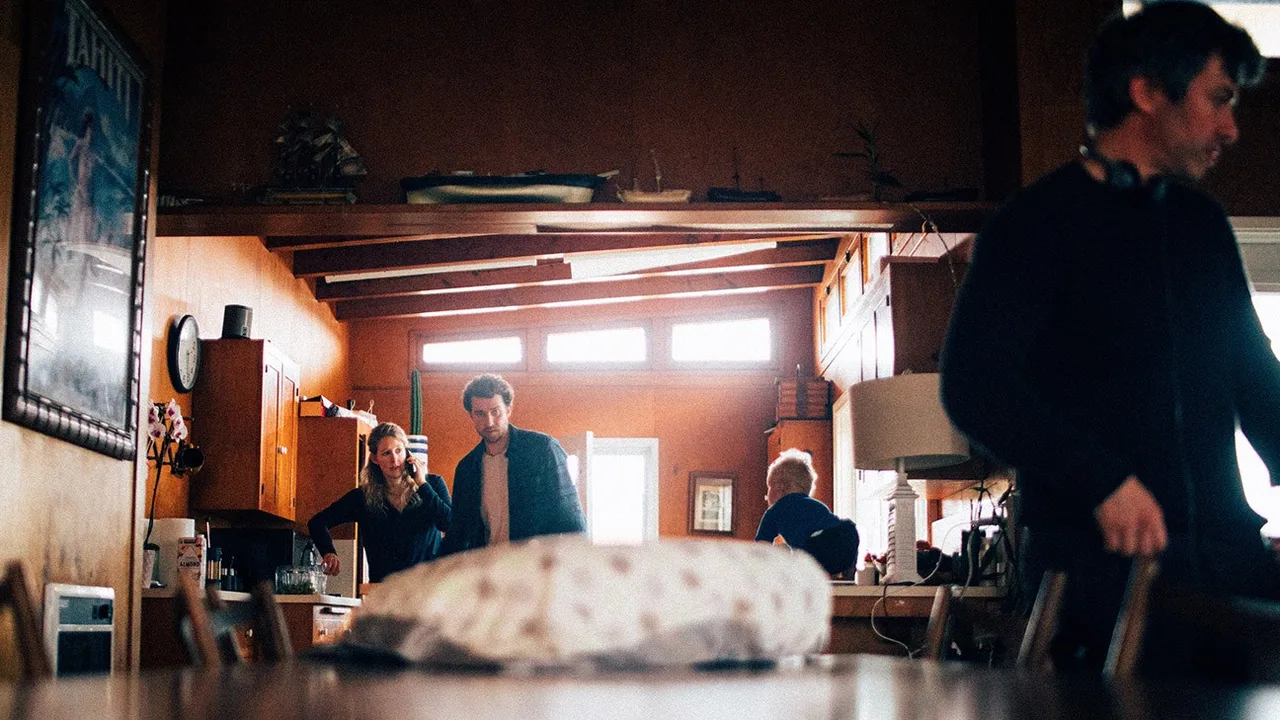
- The Scoop: Billy Evans, Elizabeth Holmes’ partner, says he never agreed to appear fully nude in the documentary You Can See Everything, directly contradicting his directors’ account.
- The Scene in Question: The film captures Evans unclothed in a shower after a gym session, footage that helped earn the project an R rating for graphic nudity.
- The Directors’ Counterclaim: Nathan Fielder and Lance Oppenheim say Evans himself proposed the shower shoot and waved off any concern about being seen naked.
- Industry Stakes: The standoff turns a nonfiction portrait of Holmes’ pre-prison years into a referendum on consent and editorial duty toward nonprofessional subjects.
Billy Evans says he never consented to the fully nude shower sequence that appears in You Can See Everything, the Elizabeth Holmes documentary directed by Nathan Fielder and Lance Oppenheim.
His account collides head-on with the filmmakers’ version, leaving a genuine factual impasse at the center of the film’s press cycle.
A Consent Fight With No Middle Ground: Evans Versus His Own Directors
Evans is blunt about the footage. “I didn’t want it,” he told Variety, describing the claim that he volunteered for the scene as a “false narrative.”
Oppenheim tells it differently. He says the idea surfaced in the car ride back from the gym, when he offered Evans time to shower and Evans shot back, “Want to film me showering?”
The co-director adds that he proposed framing that would avoid showing Evans’ genitals, and that Evans said he didn’t care about being seen naked.
Evans counters that he understood the material would stay “PG,” and that he later asked for the image to be pixelated. The released cut kept it explicit.
Documentary Ethics Meet the R Rating: Why One Shower Scene Carries Outsized Weight
The sequence helped land the film an R rating for graphic nudity, a classification that narrows its booking options and sharpens the marketing headache.
Fielder and Oppenheim built their reputations on blurring the line between subject and stunt, and this dispute drags that method into a far less forgiving spotlight.
Evans is not a trained performer. He is a private citizen pulled into frame by marriage, which is precisely the kind of subject documentary consent protocols exist to protect.
That asymmetry gives the fight its teeth. A professional actor can absorb a bad edit; a nonprofessional facing unblurred footage has no comparable recourse once prints are in circulation.
Theatrical Rollout, Press Exposure and the Cost of an Unresolved Consent Claim
The film reached theaters in October 2026, and the controversy now travels with every screening rather than fading behind the opening weekend.
For a documentary, earned media is the entire campaign. Here the headlines arrive pre-loaded with litigation-adjacent language instead of critical praise.
Distributors tracking specialty bookings will weigh whether the dispute drives curiosity or repels the prestige crowd that sustains a nonfiction run past week two.
The title itself has become the accusation, since You Can See Everything now reads as a taunt rather than a promise to its own subject.
Every additional interview cycle raises the pressure on the filmmakers to produce consent documentation, and the absence of a public paper trail keeps the story alive.
Monitored across our trade entertainment news desk, the standoff carries real financial weight: a specialty title’s entire theatrical life depends on review momentum, and a consent scandal competes directly with the notices that would otherwise sell tickets.
Until one side produces a signed release or a paper trail, the film’s box-office ceiling stays tethered to a fight its directors cannot edit out.