Catherine the Great: Helen Mirren’s 4-Part HBO Epic Is Peak Prestige TV
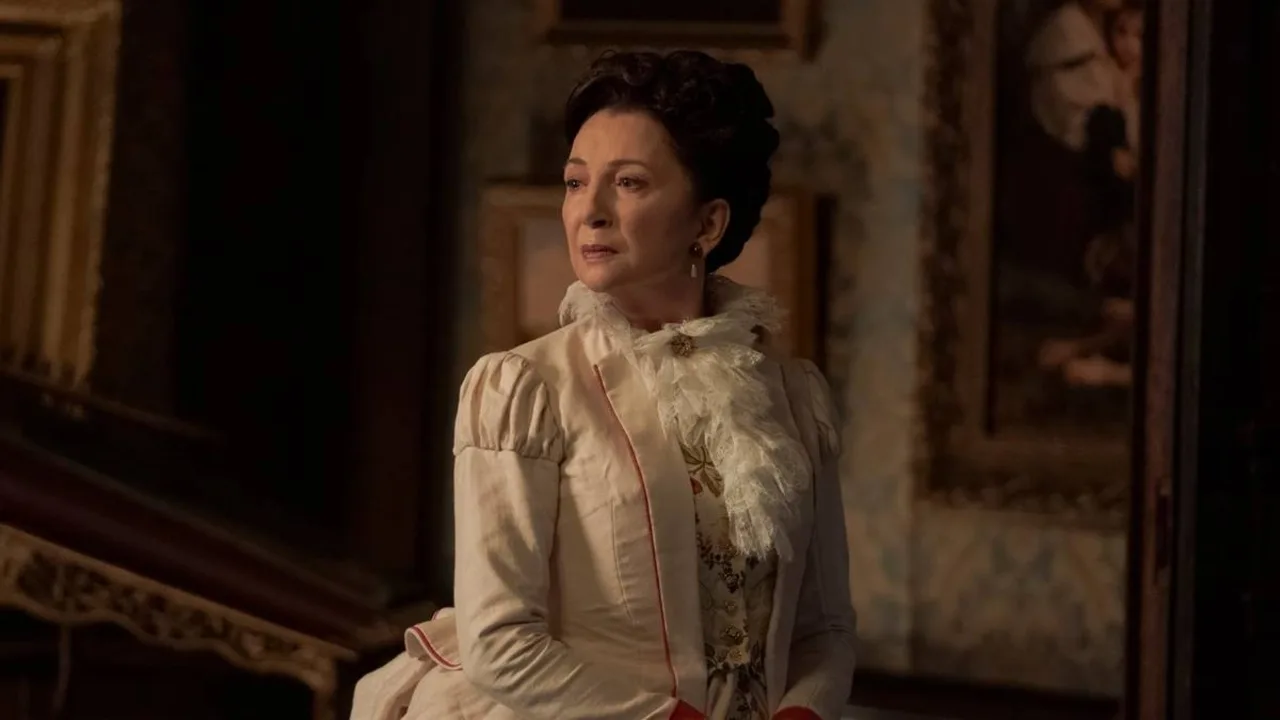
- The Scoop: HBO and Sky’s four-part Catherine the Great stars Helen Mirren as Russia’s empress, covering her reign from 1764 to her death in 1796.
- Location & Production Scale: The miniseries shot across Russia, Latvia, and Lithuania, mounting imperial-scale period production on real Eastern European terrain.
- Ensemble Firepower: Jason Clarke plays Grigory Potemkin opposite Mirren, backed by Rory Kinnear, Richard Roxburgh, Gina McKee, and Joseph Quinn as Paul.
- Industry Stakes: A four-episode HBO/Sky co-production that trades franchise volume for prestige density, betting on Mirren’s awards-profile marquee value.
HBO and Sky’s four-part Catherine the Great puts Helen Mirren on the Russian throne, tracing the empress from her 1764 ascent to her 1796 death.
The limited-series format compresses an entire imperial reign into four dense installments, a prestige play that trades episode count for concentrated star wattage.
Mirren Anchors a Four-Part Reign Built on Real Terrain
Producers mounted the production across Russia, Latvia, and Lithuania, hauling cast and crew through three countries to secure authentic period architecture rather than studio facsimiles.
That geographic spread carries real logistical weight: multi-nation period shoots demand customs coordination, location permits, and wardrobe logistics that balloon a production’s burn rate before a single frame is graded.
Mirren’s Catherine is the gravitational center, and the production leans on her command of the frame rather than spectacle volume to sell the scale of an empire.
Jason Clarke’s Grigory Potemkin supplies the emotional counterweight, moving from battlefield commander to lover, statesman, and lifelong confidant across the four chapters.
The supporting bench is unusually deep for a limited series, with Rory Kinnear as Minister Panin, Richard Roxburgh as Grigory Orlov, and Gina McKee as Countess Bruce filling out the court.
Joseph Quinn’s turn as Paul adds a generational friction to the palace intrigue, while Paul Ritter’s General Suvorov and Paul Kaye’s Pugachev seed the military and insurgent threats that define the era.
Prestige Density Over Franchise Volume: HBO’s Limited-Series Bet
HBO and Sky co-financed the project as a standalone historical event, sidestepping the multi-season commitment that defines most premium-cable drama slates.
That structure serves the subject: Catherine’s reign resists serialization, and four tightly engineered episodes let the creative team land a complete arc without the padding that sinks bloated historical sagas.
For Sky, the co-production delivers an awards-viable British-European prestige title with global export value, while HBO gains a marquee vehicle for a star whose name still moves the prestige audience.
The casting math is deliberate. Mirren’s presence converts a history-lesson premise into appointment viewing, and the ensemble around her signals serious dramatic intent rather than costume-drama filler.
Four episodes also mean a compressed marketing window, letting the network concentrate promotional spend into a single high-impact launch rather than stretching a campaign across a ten-week run.
Streaming and broadcast carriage for the miniseries remain a durable library asset, monitored across our trade entertainment wire desk as premium historical drama continues to command subscriber attention.
The economics favor this model: a four-night event drives concentrated sampling and conversation, while the finished product sits permanently in the catalog as a repeatable prestige draw.
For a network balancing franchise volume against awards prestige, a Mirren-led imperial epic delivers both cultural capital and a durable scheduling asset at a fraction of a returning-series commitment.
That is the real calculation behind four episodes instead of ten, maximum impact, minimum drag, and a star whose throne-room authority justifies every dollar of the location budget.