KD – The Devil (2026): Dhruva Sarja’s Mass Appeal Collides With A Messy, Overstuffed Screenplay
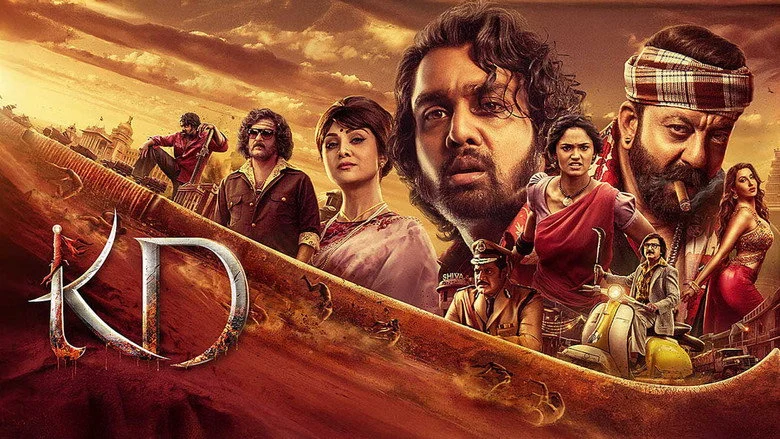
The opening stretch of KD: The Devil introduces Kaalidasa “KD” with a hero-elevation sequence designed to make the audience roar. Dhruva Sarja’s entry into the 1970s Bangalore underworld is staged with the kind of theatrical grandeur that Kannada mass cinema thrives on, the slow walk, the burning background, the swelling score doing half the acting.
For those first few minutes, the film feels like it might actually deliver on its promise of a stylish period action thriller. Then the screenplay starts talking, and the noise begins.
Prem’s Direction Shows Ambition But Loses Control Of The Chaos
The period-world construction is genuinely impressive, the production design sells a gritty, grimy Bangalore that feels lived-in rather than dressed-up. Prem clearly knows how to stage scale, and the visual ambition here is not in question.
But ambition without discipline produces exactly what this film becomes: loud, overstuffed, and narratively bloated. The director’s weakness is tonal control, and the second half pays the price for it.
Action Thriller Craft: Spectacle Over Substance
The genre framework is pure gangster-underworld, built on power struggles rather than investigative plotting. Conflict escalates through violent confrontations and hero-elevation beats, with the 1970s backdrop giving everything a distinct period texture. The early mass-entry sequence for KD is the clearest example of what this film does well, it commits fully to its own mythology.
But the latter-half confrontation passages reveal the cracks. The set pieces get bigger while the stakes get muddier, and the film’s reliance on scale and noise starts feeling like a substitute for actual tension. There’s a difference between building pressure and just being loud.
The cliffhanger ending compounds the problem, it doesn’t resolve the narrative so much as abandon it mid-sentence. Multiple reviews noted this unfinished quality, and it leaves the theatrical experience feeling incomplete rather than hungry for a sequel.
Sanjay Dutt’s Presence Adds Weight That The Writing Can’t Match
Sanjay Dutt’s Dhaak Deva is positioned as the dominant force in the underworld hierarchy, and his casting brings a gravitas that the script struggles to match. He doesn’t need to do much, his face carries decades of genre history, and that alone elevates every scene he’s in.
Shilpa Shetty’s Satyavati is visible in the central conflict but gets little to work with beyond ensemble placement. Ramesh Aravind and V. Ravichandran fill their supporting roles competently, their casting signals the film’s intent to be taken seriously as a large-scale ensemble piece, even if the writing doesn’t give them moments to seize.
The Critical Consensus: Excess Is The Real Devil Here
India Today’s assessment cuts to the chase: “This Dhruva Sarja-Sanjay Dutt-starrer period action drama is entertaining in bits but is mostly loud, messy and violent.” That’s the film in one sentence, moments of genuine entertainment drowning in a sea of overkill.
The Hollywood Reporter India put it even more sharply, noting that “Excess is the real devil here.” NDTV observed that “The film makes a big entrance but doesn’t keep you hooked till the end, ” which tracks with the near-universal criticism of the pacing drop-off.
The 123telugu.com rating of 2.25/5 feels about right for what this is, a film that knows exactly what it wants to be but can’t execute it cleanly. The IMDb snippet of 8.764 looks like fan-driven inflation rather than genuine critical consensus, and I’d caution anyone reading that number to take it with a fistful of salt.
For those who love Kannada mass cinema, there’s real pleasure to be found in Dhruva Sarja’s commitment to the role. He carries the film even when the writing weakens, and his energy is the single most consistent element across both halves. But for viewers who want their action thrillers to have actual narrative coherence, this is a taxing watch, the violence is relentless, the structure is uneven, and the excess eventually becomes exhausting.
Browse more Kannada action reviews if you want to see how other films in this space handle the balance between spectacle and storytelling.
The film reportedly faced multiple delays before release, and unfortunately, the final product suggests those delays didn’t buy the clarity the script needed. The old-school masala structure will satisfy fans of the genre, but anyone hoping for a tighter, more disciplined take on the period underworld will leave disappointed.
KD: The Devil is a film for Dhruva Sarja’s loyalists and committed mass-cinema audiences. If you’re in that camp, the early mass-entry sequences and the sheer scale of the production will give you your money’s worth. If you’re not, this 2-hour-20-minute ride will feel longer than its runtime suggests. Watch it on a regular screen with low expectations, and you might find the bits worth keeping.
KD: The Devil earns a generous 2.5 out of 5, a film with genuine star power buried under a screenplay that mistakes noise for intensity.
For a similar study in chaotic storytelling, check out Karuppu review.
If you want to see how a commanding lead performance can anchor a sprawling narrative, Raja Shivaji verdict offers a sharper comparison.
KD – The Devil (2026): Dhruva Sarja’s Mass Appeal Collides With A Messy, Overstuffed Screenplay
Visually captivating cinematography, stellar sound design, and commanding performances.
Slight pacing drag in the second act before the climactic resolution.