Maa Behen (2026): Madhuri Dixit s lands hard though the screenplay stays patchy
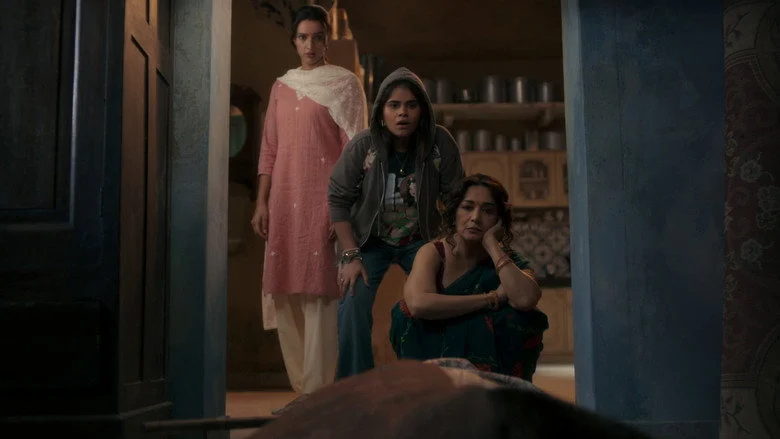
There is a stretch in the second half where the satire loses its nerve, the plot mechanics groan, and you can feel the screenplay reaching for a register it cannot quite grip. Then Madhuri Dixit appears, and the film snaps back into focus. Her Rekha is the emotional ballast here, a woman whose quiet defiance speaks louder than the film’s louder comedic gambits.
Dixit doesn’t just anchor the ensemble; she rescues entire sequences from the flabbiness that creeps into the writing. This is a performance-driven film, and she is the reason the weaker stretches feel tolerable rather than terminal.
Triptii Dimri Proves She Can Match a Legend Without Breaking a Sweat
Dimri’s Jaya is the counterweight to Dixit’s restraint, and their shared scenes carry a warmth that the film’s more schematic satire lacks. The mother-daughter dynamic is the film’s true north, and Dimri plays her part with a lived-in ease that makes the relationship feel authentic.
Where the film wants to be a commentary on moral policing, Dimri and Dixit make it a story about family. That shift in emphasis is the smartest thing the film does, and it is entirely thanks to the two leads.

The Dark Comedy Works in Fits, Not in Flow
The premise is a gift: two sisters and their mother, pushed into conflict with the self-appointed guardians of social virtue. The film’s best instincts are on display when it treats these gatekeepers not as villains to be reformed, but as absurdities to be outwitted. The Times of India put it well when it noted the film has “no interest in reforming society’s self-appointed moral guardians. Instead, it offers women a far simpler solution: why care?”
That laissez-faire attitude is refreshing, but the execution is uneven. The first half moves with a brisk, character-driven energy that suggests a director in full control of his material. The second half, however, loosens its grip, and the pacing starts to sag as the plot machinery becomes more visible.
Ravi Kishan’s Charitra Gupta functions as the moral-policing antagonist, but he is more functional than fleshed out. He serves the satire’s purpose without ever becoming a genuinely layered threat, which is a missed opportunity given the actor’s range. The film’s tone management is similarly hit-or-miss, swinging between gentle family dramedy and sharper social commentary without always finding the right balance.

Dharna Durga and Geetanjali Kulkarni Fill the Margins With Texture
Dharna Durga completes the central trio as Sushma, and she sharpens the generational conflict that the film circles around. Her presence adds a third perspective to the mother-daughter axis, preventing the dynamic from becoming a two-note melody. She is not given as much to do as the leads, but she makes her scenes count.
Geetanjali Kulkarni, as the neighborhood’s Gupta Aunty, is the film’s secret weapon in its social-comedy register. She adds texture to the moral-gatekeeper setup, grounding the satire in a recognizable domestic reality. Her casting signals the film’s intent to treat its social commentary as character-driven rather than polemical.
The Film’s Politics Are Present, But Pushed to the Background
There is no overt controversy here, and that is almost the point. The film’s political angle is baked into its premise, women’s autonomy against patriarchal judgment, but it refuses to sermonize. Hindustan Times called it “a warm, character-driven story elevated by strong performances, ” and that warmth is the film’s political statement. It chooses charm over confrontation, which will frustrate viewers expecting a sharper edge.
That said, the film’s refusal to engage more aggressively with its own themes leaves it feeling lighter than it should. The satire lands, but it never cuts deep. For a film about moral policing, it is surprisingly polite about its targets.
If this kind of women-led family drama is your lane, there is plenty more to explore in our Hindi Thriller reviews.
Verdict: A Performance-Driven Watch With a Soft Middle
The average critical rating of 3.25 from Hindustan Times and The Times of India feels about right. This is a film where the acting outshines the writing, and where the central trio’s chemistry compensates for the screenplay’s uneven second half. It is best enjoyed on OTT, where its modest ambitions and warm tone can land without the pressure of a theatrical outing.
Go for Dixit and Dimri, stay for the satire’s lighter moments, and forgive the flab in between. The film is a pleasant watch, but it never quite becomes the sharp-edged commentary it hints at.
Maa Behen is a warm, imperfect comedy that coasts on its leads’ chemistry, and I would give it a solid 3 out of 5 for the performances alone, even if the writing doesn’t quite match them.
For a sharper take on relationship dynamics, check out Pati Patni review.
And for a completely different kind of female-led storytelling, explore She Sells verdict.
Maa Behen (2026): Madhuri Dixit s lands hard though the screenplay stays patchy
Visually captivating cinematography, stellar sound design, and commanding performances.
Slight pacing drag in the second act before the climactic resolution.