Mollywood Times (2026): Naslen’s Meta-Cinema Satire Is Sharp But Overstuffed

Vineeth Madhavan sits across from a producer, pitching his horror film’s USP with the desperation of a man who knows the room has already decided against him. That recurring scene, the search for a marketable hook, becomes the nervous system of Mollywood Times, a psychological dark comedy that wants to dissect Malayalam cinema from the inside out.
Abhinav Sunder Nayak’s film, co-written with Ramu Sunil, arrives with a cynical pulse and a 167-minute runtime that tests the patience it so knowingly critiques.
Naslen Carries the Cynicism on His Shoulders
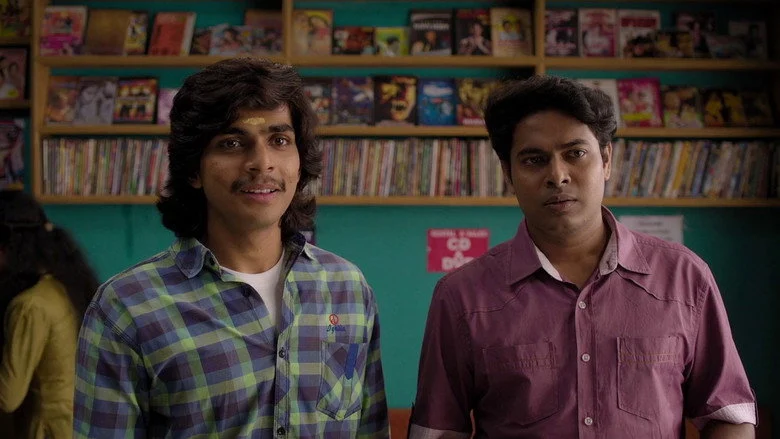
Naslen’s Vineeth Madhavan is the film’s engine, and critics have rightly singled him out. His frustration scenes, the repeated attempts to sell a horror concept that keeps getting rejected, carry the weight of every aspiring filmmaker who has heard “but what’s the USP?” one too many times.
There’s a specific exhaustion in his eyes during the backstage-showbiz passages that elevates what could have been a one-note satire. He doesn’t just play frustrated; he plays a man slowly realizing that talent is the least important variable in the equation.
A Direction That Knows Its Target
Nayak’s direction is observant and grounded, favoring an unglamorous backstage aesthetic over glossy showbiz sheen. The meta-cinema passages turn inward on Malayalam film culture with a precision that suggests lived experience.
But the screenplay’s accumulation of ideas eventually works against it. The satire begins to repeat itself in the middle stretches, and the narrative control loosens precisely when it should tighten. What starts as a scalpel becomes a hammer.
The Genre Blend: Comedy as Discomfort
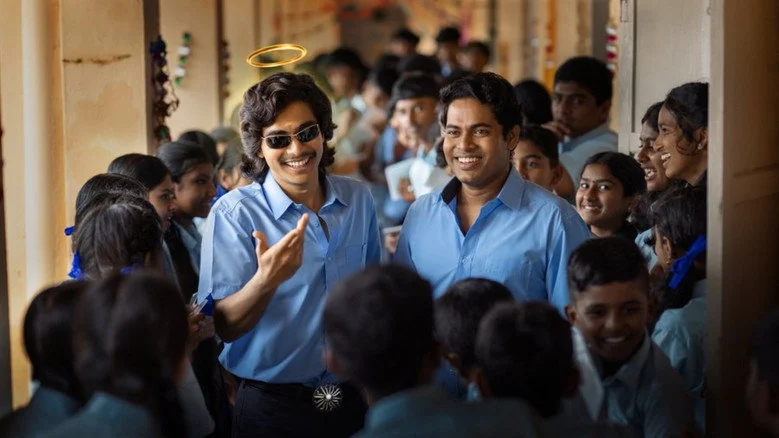
This is not an out-and-out laugh riot, and it doesn’t pretend to be. The humor builds from industry pressure and creative frustration, leaning into discomfort as part of its comic effect. The recurring USP search demonstrates this blend perfectly, it’s funny, but the laughter catches in your throat because you recognize the systemic absurdity.
The film’s cynical perspective on the filmmaking process is its sharpest tool. It treats success as dependent on factors far beyond talent, gatekeeping, luck, timing, and the willingness to compromise. That’s a provocative stance for a film made within the very industry it critiques.
The darker meta-cinema passages work best when they stop explaining and simply show. The backstage conflict scenes use comedy to expose institutional pressure, and when the film trusts that instinct, it hums with uncomfortable energy.
Supporting Cast: An Ensemble That Signals Intent
Sangeeth Prathap and Sharafudheen are listed among the major cast, and their presence signals the film’s ambition to assemble a credible industry-facing ensemble. Their roles may not have been dissected scene-by-scene in critical discourse, but their casting suggests Nayak wanted performers who could embody the industry’s gatekeeping machinery without caricature.
Basil Joseph’s inclusion in the ensemble adds another layer of meta-commentary, a filmmaker-actor appearing in a film about the difficulty of making films. The casting choices themselves become part of the satire, even when individual scenes don’t get the spotlight they deserve.
For those who follow the deeper currents of Malayalam cinema’s self-reflection, the film offers plenty to chew on. Malayalam Drama reviews have rarely felt this incestuous in the best possible way.
The Long Haul: Where Momentum Dies
The first half maintains focus while establishing Vineeth’s ambition and the industry setup. The editing tightens around his struggle, and the film feels like it knows where it’s going. Then comes the second half, where pacing becomes the villain, the satire loops back on itself, and the runtime starts to feel like a punishment rather than a choice.
The trade numbers tell part of the story: the opening day pulled in ₹1.80 crore India net and ₹2.09 crore worldwide gross, per Cinema Express citing Sacnilk. That’s a respectable start for a dark meta-comedy, but the film’s longevity will depend on whether audiences forgive the overstuffed middle for the sake of the sharp edges.
Critics have landed at an average of 3.5 from Filmfare, The Week, and New Indian Express. One review noted, “While its plethora of ideas occasionally overwhelms the storytelling, Mollywood Times is one of Malayalam cinema’s more distinctive experiments.” Another praised it as “Powered by an outstanding Naslen at the centre … offers an impressively provocative, if overstuffed, examination of how success often depends on far more than talent.”
I found myself agreeing with both assessments, though I’d add that the film’s willingness to sit in discomfort is both its strength and its limitation, it refuses to give you the easy catharsis you might expect from a comedy about filmmaking.
So, should you watch it? If you’re a student of Malayalam cinema’s self-image, absolutely, but wait for OTT, where you can pause, breathe, and return to the satire on your own terms. If you want a fast commercial entertainer, this will frustrate you. It’s a film that demands patience and rewards it unevenly, which might be the most honest thing about it.
Mollywood Times is a provocative, overstuffed experiment that earns a 3.5 out of 5, worth your time if you’re willing to meet it halfway.
For more on Naslen’s range and the meta-cinema wave, see Maa Behen review.
And if you’re exploring how Malayalam cinema’s self-awareness compares to Hindi cinema’s uneven experiments, Pati Patni verdict offers a different kind of tension.
Mollywood Times (2026): Naslen’s Meta-Cinema Satire Is Sharp But Overstuffed
Visually captivating cinematography, stellar sound design, and commanding performances.
Slight pacing drag in the second act before the climactic resolution.