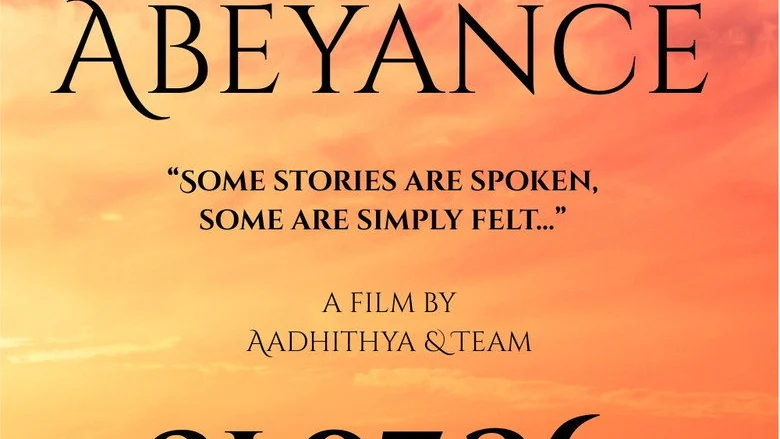
The Abeyance (2026): A 16-Minute Grief Study That Asks the Right Questions


There’s a particular stillness that settles over a room when someone is trying not to cry, that fragile, loaded quiet where every breath feels like a decision. That’s the atmosphere Aadhithya Sankara Mahadevan’s short film The Abeyance seems to be chasing, a Hindi drama-romance built entirely around a grieving young woman caught between the weight of her loss and the terrifying possibility of something new. In just sixteen minutes, it has to answer the question that many features fail at: can you compress the mess of grief into something that feels honest rather than rushed?
The film’s central conflict is simple on paper but slippery in practice, Adrika must decide whether holding on to loss is a form of loyalty or just a way to avoid the pain of moving forward. This is intimate, small-scale territory, and it’s refreshingly clear about its own ambitions.
Anirudh Is the Film’s Emotional Risk, and Rishu Raj Knows It
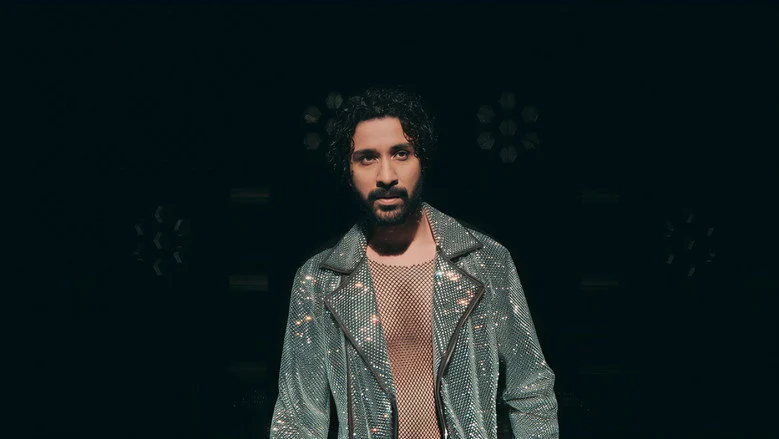
Rishu Raj plays Anirudh, the new connection that forces Adrika’s healing, and his role is quietly the most difficult in the film. He has to be patient without feeling passive, warm without tipping into pushy, and he has to do all of that in a runtime that doesn’t allow for slow-burn buildup.
Raj’s casting signals a deliberate choice to root the romance in subtlety rather than grand gestures. The character works best as a catalyst, someone whose very presence creates the tension the film needs to function.
Rijuta Sharma Carries the Silence Before She Carries the Story
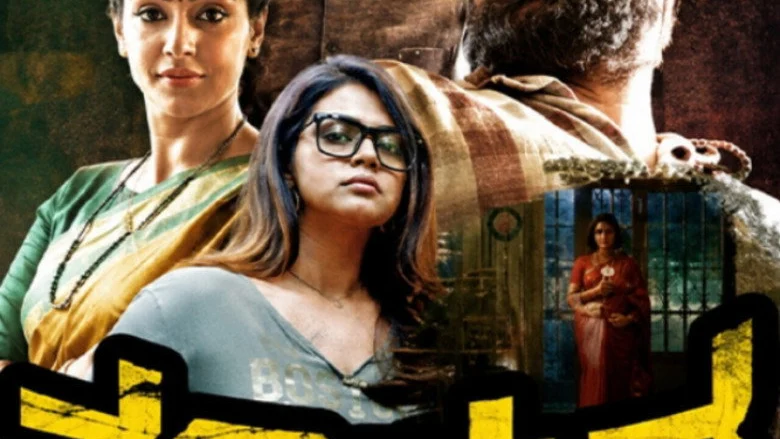
When a short film runs on grief, the lead actor becomes the entire special effect, and that burden falls entirely on Rijuta Sharma’s Adrika. With no scene-level breakdowns available, we’re left to read the film’s intent: a performance that should live mostly in her eyes and in the spaces between words.
What matters here is whether Sharma can make stillness feel active rather than empty. The film demands a lead who can hold the camera’s attention during the unglamorous work of simply existing while hurting.
The Geometry of Loss: How the Drama Fills Its Sixteen Minutes
Compressed storytelling is a merciless editor. With no subplots to hide behind, every shot in The Abeyance carries weight, and the film’s drama hinges on whether it can find visual language for an internal conflict. Grief is not photogenic by default, it’s often just tired eyes and a cluttered room, so the responsibility falls on Mahadevan’s direction to find the poetry in the mundane.
The romance element is smartly framed as an inconvenience rather than a solution. Anirudh isn’t presented as a cure; he’s presented as a question Adrika isn’t ready to answer. That keeps the drama honest, because healing is rarely linear, and a 16-minute film that pretends otherwise would collapse under its own dishonesty.
What’s missing, at least from the available information, is any detail about how the film actually lands its emotional beats. The synopsis promises the right structure, but the execution lives or dies on small moments, a hesitant hand, a half-finished sentence, a door left open.
Revathi, Mayank, Sampath, and Bhanumathi: A Cast Built for Texture
Manya Sondhi’s Revathi, R Grushnesh’s Mayank, Sai Shashank Singu’s Sampath, and Madhusnigdha Dash’s Bhanumathi form the supporting network around Adrika’s grief. This is a tight ensemble for a short runtime, which suggests Mahadevan wants the world around Adrika to feel populated rather than hollow.
A grief story without witnesses is just a monologue, so the presence of these four characters implies the film understands that healing happens in public, messy, scrutinized, and often interrupted by people who mean well but don’t quite know what to say. In a short film where every minute costs precious narrative space, having five named supporting roles is a bold choice.
Each of these actors will be asked to do more with less, a glance here, a loaded pause there, but that’s the assignment. My only reservation is whether the runtime can afford to give any of them enough to warrant our attention.
A Melancholy Gaze: Where This Film Fits Among Hindi Shorts
There are no political angles or controversies attached to The Abeyance, this is a quiet, class-oriented drama aimed squarely at festival circuits and streaming platforms that cater to patient viewers. The absence of contrived conflict is actually a point in its favor; not everything needs a villain.
It’s built for audiences who appreciate the short form’s discipline, and it sits comfortably alongside other Hindi shorts that treat grief as a landscape rather than a plot point. If you’re hoping for a high-concept thriller or spectacle, this isn’t the ticket.
But if the film delivers on the promise of its premise, it offers exactly what the format does best: a concentrated dose of feeling that doesn’t overstay its welcome. For that reason, it may resonate most powerfully with those who’ve lost someone and understand that closure is rarely a single moment, it’s a series of small surrenders. You can browse more Hindi drama reviews on the site if this kind of intimate filmmaking is your lane.
At sixteen minutes, this is a modest canvas with modest goals, and that’s a feature, not a bug. The Abeyance works if you meet it halfway, letting its quiet pace find you rather than demanding your attention. Watch it in a room where you won’t be interrupted, on any screen that lets the faces breathe. It’s the kind of short that rewards the audience it’s actually made for, the ones who still believe short films can feel like complete stories.
The Abeyance is a sincere, restrained meditation on letting go that doesn’t overreach, and I’d give it a solid 3 out of 5 for knowing exactly what it wants to be, even if I wish I could have seen more of it. For more on how small-scale storytelling handles isolation, Spider-Man offers a fascinating mainstream counterpoint.
Those who prefer their grief studies with sharper edges might find common ground in Srinivasa Mangapuram.
Readers looking for more hindi drama reviews can explore them on Bollyflix.
Ankit Jaiswal is the Chief Author, covering Indian cinema and OTT releases with honest, no-filler criticism. An SEO strategist by background, he brings a research-driven approach to film writing, cutting through hype to tell you exactly what's worth your time.