Once More (2026): Arjun Das Gives The Film Energy Despite Weak Payoffs

There’s a quiet ache at the centre of Once More, a Tamil romantic drama that opens not with grand gestures but with the hollow space a lost relationship leaves behind. Arjun Das plays a young man stuck in that space, and when Aditi Shankar’s character walks into his life, the film asks a deceptively simple question: how do you make room for someone new without betraying the past?
Director Vignesh Srikanth, who also wrote the script and lyrics, isn’t chasing melodrama here. This is a film about romantic recovery, and it wears that intention on its sleeve from the first frame to the last.
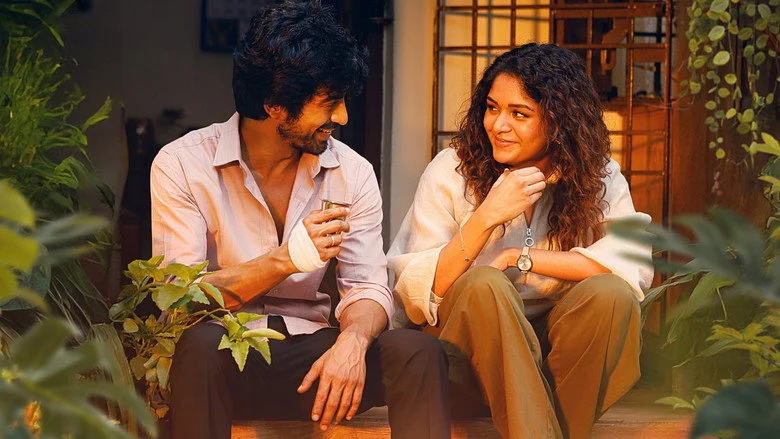
Arjun Das Proves He Can Carry a Love Story Without Raising His Voice
Arjun Das has spent much of his career in gritty, high-intensity spaces, so his casting here signals a deliberate shift. He plays a man wrestling with emotional paralysis, and the performance leans on restraint rather than volume. His silences do the heavy lifting, and they land more often than they miss.
There’s a particular stretch in the middle where his character watches the new woman in his life without quite knowing how to respond. Das sells that confusion with a stillness that suggests real interiority. It’s not a flashy turn, but it’s a committed one.
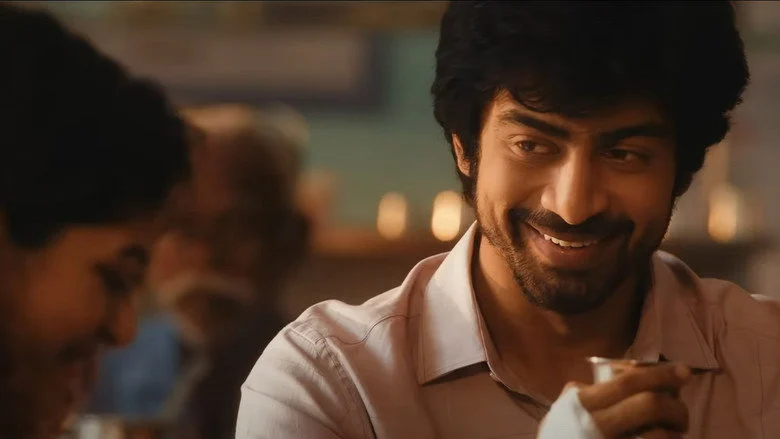
Aditi Shankar and the Art of Being the Second Chance
Aditi Shankar’s role is trickier than it looks. She has to be warm enough to pull the lead out of his shell, but patient enough not to feel like a plot device. She manages both, bringing a lightness that the film desperately needs whenever the melancholy threatens to flatten the mood.
Her best moments come in the quieter exchanges, where she reacts rather than initiates. The film understands that her character’s patience is itself a form of strength, and Shankar plays that with a natural ease. She’s not just the love interest; she’s the emotional counterweight.
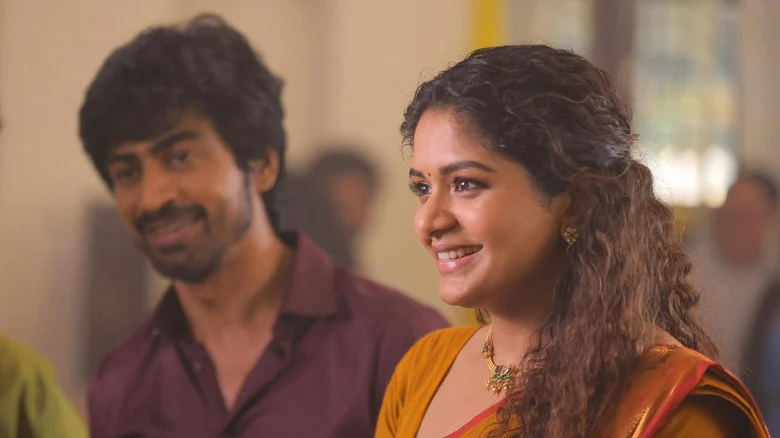
The Genre Core: A Romance That Breathes at Its Own Pace
As a romantic drama, Once More works best when it resists the urge to rush its central relationship. The screenplay takes a linear path, letting the two leads orbit each other before they truly connect. That patience is a virtue, even when it risks testing the audience’s own patience.
The music, composed by Hesham Abdul Wahab, is woven into the film’s fabric rather than bolted on. Since Srikanth also wrote the lyrics, there’s a cohesion between word and melody that elevates the emotional beats. The songs feel like extensions of the characters’ inner lives, not interruptions.
Where the film stumbles is in its supporting subplots. Dravid Selvam, Anusha Prabhu, and Chitra Lakshmanan are all present, but their arcs feel sketched rather than drawn. They exist to service the leads’ journey, which is fine, but it leaves the world around the central pair feeling a little thin.
For those who enjoy dissecting how Tamil cinema handles heartbreak and healing, there’s plenty to chew on here. Browse more Tamil Drama reviews to see how the genre keeps evolving.
Sona Olickal and the Supporting Cast’s Quiet Function
Sona Olickal holds an important role, and while the available details on her character are sparse, her casting signals a deliberate choice. She’s positioned as a presence that complicates the lead’s emotional state, and she does that without tipping into caricature. Her scenes with Das carry a tension that the main romance sometimes lacks.
The rest of the supporting cast, including Dravid Selvam and Anusha Prabhu, performs a functional duty. They’re the friends and family members who nudge the protagonist toward clarity. It’s not groundbreaking work, but it’s consistent, and it keeps the film grounded in a recognisable social reality.
A Film That Asks You to Feel Before It Asks You to Think
There are no controversies attached to Once More, and that feels fitting. This isn’t a film designed to provoke; it’s designed to resonate. The audience it will connect with is the one that shows up expecting a relationship-driven story with a musical heartbeat. Those looking for action or narrative complexity should look elsewhere.
The film’s central conflict, moving on after loss, is universal, even if the execution occasionally plays it safe. It’s a debut of intent from Srikanth, who clearly cares about his characters more than he cares about impressing with technique. That sincerity is the film’s strongest asset.
At 131 minutes, Once More doesn’t overstay its welcome, though the pacing in the middle could have been tightened. The absence of a conventional antagonist is a bold choice, and it pays off because the real enemy here is memory itself. The film is best watched in a regular theatre, where its music can wash over you without distraction.
Once More is a gentle, sincere romance that trusts its leads and its music to carry the emotional weight, and for the most part, they do. It’s not a film that reinvents the genre, but it doesn’t need to, it earns a solid 3 out of 5 for its restraint and heart.
If you appreciated how this film handles emotional restraint, you might find similar craft in Severance Season review.
For more on how character-driven storytelling shapes modern television, check out EXCLUSIVE Last verdict.
Once More (2026): Arjun Das Gives The Film Energy Despite Weak Payoffs
Visually captivating cinematography, stellar sound design, and commanding performances.
Slight pacing drag in the second act before the climactic resolution.