Babita Singh Reporting (2026): Nimisha Sajayan Carries a Sharp but Rushed Crime Drama

There is a moment early in Babita Singh Reporting where ASI Babita Singh is cornered by her in-laws, expected to serve tea and swallow judgment while a murder case sits unresolved in her files. It is in that collision of domestic duty and professional calling that the film finds its most honest, uncomfortable register.
This is not a whodunit engineered for gasps. It is a quiet, thoughtful investigation into patriarchy and self-worth, anchored by Nimisha Sajayan’s grounded lead turn.

Nimisha Sajayan Gives the Film Its Emotional Spine
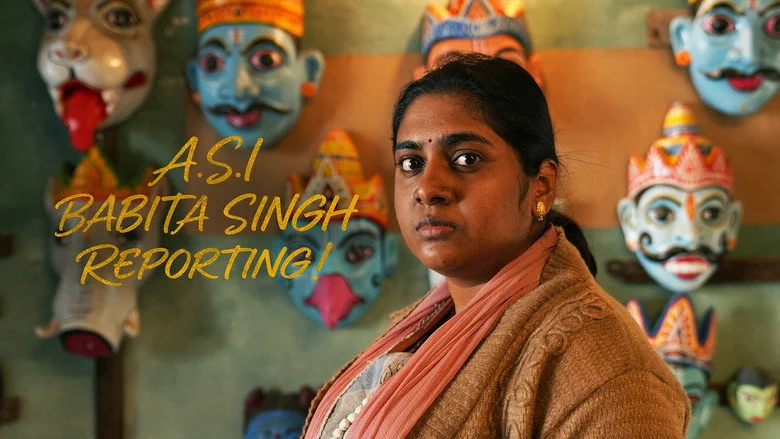
Sajayan is strongest when the script lets her breathe. Her confrontations with her in-laws carry a weary, lived-in frustration that no amount of procedural dialogue could manufacture.
She makes Babita’s insecurity visible without ever reducing her to a victim. Even when the police work underwrites her, Sajayan’s presence gives the character a weight that keeps the film upright.
Ambiecka Pandit’s Direction Finds Realism but Loses Momentum
Pandit’s direction favors grounded realism over spectacle, which suits the material’s social concerns. The domestic scenes are framed with a patience that the investigation sequences never quite match.
The flaw is structural: the second half compresses key developments, and the climax trades procedural satisfaction for emotional resolution. It is a choice that respects the character but shortchanges the genre.
The Crime Framework Works Best as a Mirror, Not a Mystery
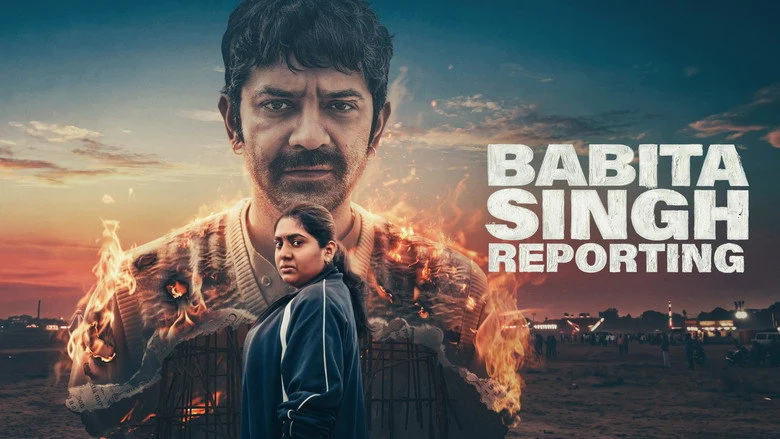
The film uses the murder of Babita’s childhood friend as a lens for examining patriarchal control rather than as a puzzle to be solved. The investigation scenes are less about forensic detail and more about how private family rules and public policing can both be sites of control.
This is a deliberate shift toward character study, and it differentiates the film from a routine police procedural. The case functions as a pressure valve for Babita’s interior conflict, and the writing is more interested in social pressure than in clue-chasing.
But that ambition has a cost. The mystery itself feels secondary, and viewers expecting a tightly engineered thriller will find the middle sections slack. The film is better as a domestic drama wearing a cop uniform than as a crime story.
The Ensemble Adds Texture, Even When Roles Are Thin
Anshumaan Pushkar delivers a restrained performance that supports the narrative without dominating it. His balance gives the domestic scenes a stabilizing presence.
Barun Sobti makes effective use of limited screen time, though reviewers note his character lacks depth, which restricts his impact. Rajesh Kumar and Geetika Vidya Ohlyan contribute to the ensemble texture, keeping the world around Babita populated and believable.
Sunita Rajwar, as the mother-in-law, sharpens the film’s critique of everyday patriarchy. Her presence makes the home feel as institutionally oppressive as the police station.
For more like this, browse our Hindi Drama reviews.
The Reception: Praise for the Lead, Criticism for the Payoff
Times of India rated the film 3.5/5, calling it “a quiet, thoughtful investigation into patriarchy and self-worth.” Another review described it as a “gripping crime-drama” that “works excellently as both a crime film and a domestic drama.”
The praise is consistent: Sajayan’s performance and the socially aware writing carry the day. The complaints are equally consistent, the ending feels rushed, and the investigation is less compelling than the character study.
It is a film that will frustrate viewers expecting a hard procedural, but it rewards those interested in seeing a woman’s interior life mapped onto a crime narrative. The emotional beats land; the procedural ones stumble.
I found myself wishing the script trusted its domestic conflict as much as it trusted Sajayan to sell it.
Babita Singh Reporting is a watch for fans of character-driven crime dramas who can forgive a rushed finale. Stream it on Amazon Prime Video with tempered expectations for the mystery and full expectations for the lead performance.
Babita Singh Reporting earns a solid 3 out of 5, worth your time for Sajayan’s work, even if the investigation never quite catches fire.
For a sharper take on procedural storytelling, revisit Once More review.
And if you want a mystery that commits fully to its craft, Severance Season verdict remains the gold standard.
Babita Singh Reporting (2026): Nimisha Sajayan Carries a Sharp but Rushed Crime Drama
Visually captivating cinematography, stellar sound design, and commanding performances.
Slight pacing drag in the second act before the climactic resolution.