Haunted 3D: Echoes of the Past (2026): A Familiar Ghost Story That Never Finds Its Pulse
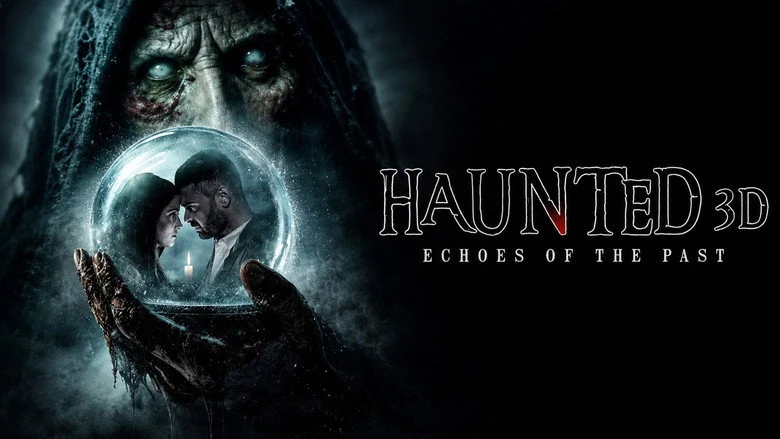
Vikram Bhatt’s latest horror outing opens with a man arriving at a remote mountain mansion, the isolation swallowing him whole as the gates creak shut behind him. It’s a promising first frame, one that suggests a return to the atmospheric dread that defined Bhatt’s early haunted-house cinema, but the promise curdles quickly into something far more familiar.
Mahaakshay Chakraborty anchors this 140-minute supernatural drama as a man fleeing his past, only to discover the mansion’s ghosts are merely echoes of his own unresolved guilt. The setup is classical, almost reverent in its haunted-house orthodoxy, yet the execution never quite rises above the weight of its own clichés.
Mahaakshay Chakraborty’s Internalised Struggle Keeps the Film Breathing
Chakraborty carries the film’s emotional burden with visible restraint, choosing internal conflict over dialogue-heavy exposition. His first extended night inside the mansion, where sound-driven suspense and isolation do the heavy lifting, is his strongest stretch, conveying terror through stillness rather than theatrics.
The final confrontation, where he faces both the supernatural presence and the emotional truth behind it, demands a performer capable of registering trauma and catharsis in equal measure. Chakraborty delivers competence, though not the raw vulnerability the material desperately needs. He remains watchable throughout, which is more than can be said for the screenplay surrounding him.
Bhatt’s Direction Favours Atmosphere But Surrenders to Melodrama
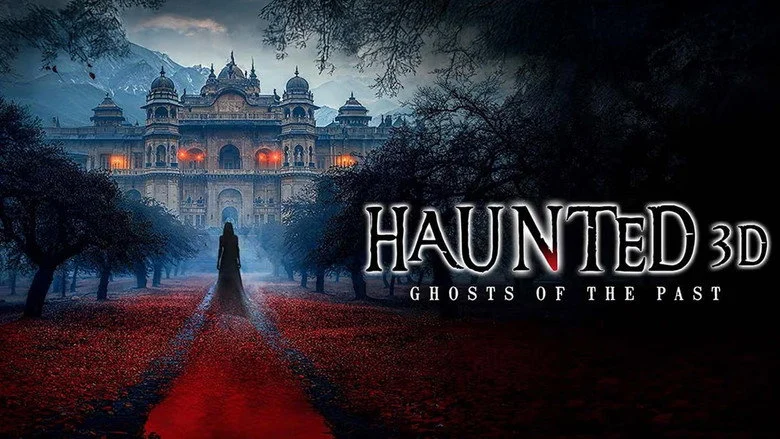
Bhatt’s clear strength here is his commitment to isolated-location horror, using the mountain mansion to sustain dread through confinement and delayed revelation. The visual language favours darkness, suspense-oriented framing, and a deliberate pace that builds genuine unease in the opening act.
But the middle stretch abandons this discipline, pausing momentum for exposition-heavy flashbacks and melodramatic backstory that feel recycled from Bhatt’s own earlier work. The screenplay, credited to Mahesh Bhatt and Suhrita Das, is linear to a fault, predictable beats arriving exactly when you expect them, with little narrative invention to mask the familiarity.
Horror Craft Relies on Sound and Shadow Rather Than Innovation
The mansion-entry and early-haunting sequence stands as the film’s most effective horror moment, establishing atmosphere through precise sound design and carefully composed darkness. It’s the kind of scene that reminds you why Bhatt has remained a fixture in Hindi horror, he understands that dread is built, not jump-scared into existence.
Yet the revelation sequence in the middle, which should unlock the house’s hidden past with narrative force, instead collapses into visual exposition that drains tension rather than amplifying it. The supernatural force becomes less threatening as it becomes more explained, a cardinal sin in haunted-house storytelling.
The climax attempts to fuse emotional resolution with horror confrontation, but the tonal whiplash between melodrama and supernatural menace undermines both registers. The film’s ambition to blend guilt, memory, and trauma into its ghost story is admirable; its execution of that ambition remains frustratingly uneven.
Supporting Cast Circles the Narrative Without Finding Traction
Chetna Pande functions as the film’s key emotional presence, anchoring the romantic-thriller layer that interweaves with the horror framework. Her scenes with Chakraborty in the backstory-driven portions provide the film’s most human moments, though the writing rarely gives her enough to elevate beyond archetype.
Gaurav Bajpai contributes to the tension dynamics within the lead ensemble, while Mannveer Choudharry and Shruti Prakash fill out the emotional support structure with limited material. Praneet Bhat and Hemant Pandey round out the supporting cast, their presence signalling the film’s attempt to build a lived-in world around its central hauntings, even if the script never quite gives them the dimensions to succeed.
There is no human antagonist here; the mansion’s supernatural presence serves as the primary threatening force, which is a bold structural choice that ultimately limits the film’s dramatic possibilities. A ghost can haunt a house, but it cannot create the narrative friction that a well-written human villain might have provided.
The Verdict Gap Between Critical Dismissal and Audience Tolerance
The film opened to Rs 2.50 crore net in India on its first day, as reported by India TV News citing Sacnilk, a modest figure that foreshadowed its eventual flop verdict. The critical response has been largely negative, with reviewers pointing to weak story construction and an overly familiar narrative framework that compares unfavourably to Bhatt’s own earlier horror successes like Haunted – 3D (2011) and the 1920 series.
Audience reception on IMDb sits at 5.1 from roughly 4, 000 votes, reflecting a viewer base that appreciates the remote mansion setting and the 3D theatrical presentation but complains about the slow middle portion and predictable story beats. The film’s horror-romance-thriller hybrid clearly found an audience willing to engage with its genre ambitions, just not one large enough to save its box office fortunes.
The film does expand the haunted-house framework into more explicit emotional backstory than its predecessors, and the mountain setting intensifies the isolation effectively. But originality remains its weakest suit, and the middle section drags where the setup promised momentum.
For those seeking more from the genre, our Hindi Thriller reviews offer a wider lens on what contemporary fright films are achieving, and where they continue to stumble.
What the Audience Response Reveals About Bhatt’s Horror Legacy
What’s striking about the audience reception is how it mirrors the critical consensus almost exactly, both camps praise the atmosphere and the 3D presentation while flagging the same pacing and predictability issues. This rare alignment suggests the film’s flaws are structural rather than matters of taste; the middle stretch that pauses for exposition and melodramatic backstory is the most criticised segment across every available metric.
Fans of Vikram Bhatt’s horror filmography will find echoes of his earlier work here, but those expecting a fresh evolution of his haunted-house vocabulary will leave disappointed. The film’s emotional payoff, centred on guilt and the consequences of repressing personal trauma, lands with less force than intended because the screenplay never quite earns the catharsis it reaches for.
I found myself most engaged during the early isolation sequences, when the film trusted its atmosphere to do the scaring, and most frustrated during the explanation-heavy stretches that followed. The 3D presentation adds theatrical value, but it cannot compensate for a narrative that keeps reminding you of better ghost stories you’ve already seen.
The film’s romantic framing within its horror structure is an interesting choice that occasionally pays dividends, but the tonal shifts between romance, melodrama, and supernatural terror never fully cohere. It’s a film that knows what it wants to be, a haunted-house drama about memory and guilt, but lacks the craft confidence to execute that vision without falling back on genre shorthand.
If the opening night figure of Rs 2.50 crore tells us anything, it’s that Bhatt’s name still carries theatrical weight for horror audiences in India. Whether that trust survives this outing remains an open question, as does the viability of a horror franchise that keeps revisiting the same haunted terrain without finding new ground to cover.
Those interested in how another film handles the weight of memory and masculine guilt might find resonance in ETERNAL MAN review, a very different but thematically adjacent exploration of past sins.
Skip the Theatre, Wait for a Discounted Streaming Night
For Vikram Bhatt completists and undemanding horror fans who simply want a haunted-house setting with competent 3D visuals, there’s enough atmosphere here to justify a casual viewing. But anyone hoping for the director to reclaim his early-2000s horror form will leave disappointed by a film that mistakes familiarity for comfort and melodrama for depth.
Watch it on a large screen if you must, the mountain mansion deserves the theatrical canvas, but manage expectations accordingly. The film’s best moments are its quietest ones, and they’re surrounded by too much noise trying to be something it isn’t.
Haunted 3D: Echoes of the Past is a film that understands the architecture of horror but forgets that architecture needs inhabitants with real emotional weight. A generous 2.5 out of 5, earned entirely by its atmosphere and Chakraborty’s restrained central performance.
For a more restrained approach to emotional storytelling, consider how Vo Ladki verdict handles similar themes of memory and unresolved pasts with considerably more discipline.
Haunted 3D: Echoes of the Past (2026): A Familiar Ghost Story That Never Finds Its Pulse
Visually captivating cinematography, stellar sound design, and commanding performances.
Slight pacing drag in the second act before the climactic resolution.