Bharat Bhhagya Viddhaata (2026): Kangana’s Fire Meets A Dampened Script
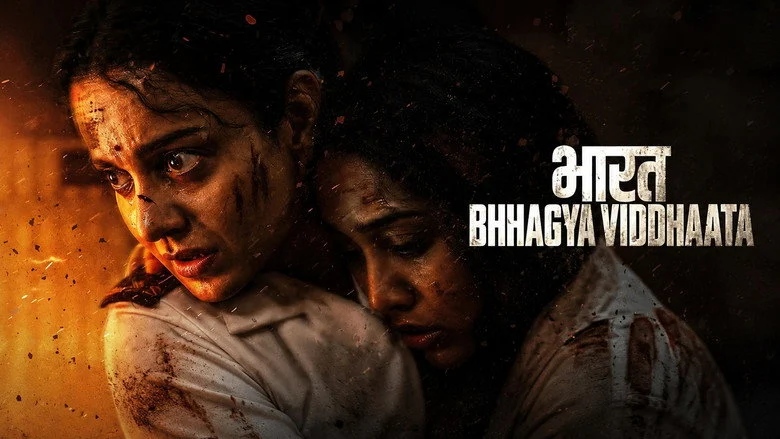
The maternity ward goes silent. Newborns are cradled, mothers are hushed, and senior nurse Geeta Madhav Gandhare moves through the corridor with a stillness that betrays the chaos just beyond the hospital gates. It is the night of 26/11, and the film’s most effective image is this: ordinary women in white uniforms becoming the last line of defense between terror and the vulnerable.
Manoj Tapadia’s Bharat Bhagya Viddhata wants to be a tribute to the unsung heroes of the Mumbai attacks, but it keeps tripping over its own earnestness.
Kangana Ranaut Anchors The Lockdown With A Commanding, Restrained Physicality
Ranaut’s Geeta is the film’s nervous system. When news of the attacks reaches the staff, her eyes do the work that the dialogue cannot, scanning wards, counting patients, calculating risk in real time. The lockdown sequence, where she coordinates nurses while gunfire crackles outside, is where the actress reminds you why she remains one of Hindi cinema’s most reliable emotional anchors.
The film works best when it stays glued to her presence in those dim corridors. One wishes Tapadia had trusted her silence more than his own sermonising.
Direction And Screenplay: A Noble Subject Buried Under Heavy-Handed Preaching
Tapadia’s direction shows genuine discipline in the opening act, establishing the contained geography of the hospital with direct, purposeful pacing. The linear structure serves the real-life urgency well, and the decision to keep the attackers as an external, faceless threat, rather than fleshed-out characters, preserves the focus on institutional response.
But the screenplay loses its nerve in the latter half. The tribute-style passages become increasingly melodramatic, with characters speaking in slogans about duty and service rather than in the fractured, panicked language of people under threat. The emotional beats land with the subtlety of a hammer, and the momentum built in the first hour evaporates into sentiment-heavy tableaux.
Critics have been blunt about this imbalance. One review called it “a noble tribute marred by over-the-top sentimentality and sermonising, ” while another noted that “Kangana is flame in film that could have been a fire.”
Genre Execution: A Medical Drama That Mistakes Volume For Tension
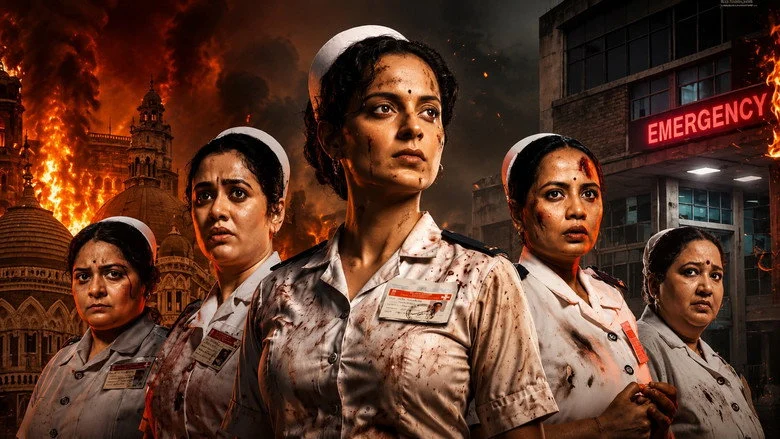
As a medical drama, the film understands its terrain, procedures, ward discipline, and the quiet coordination required to keep patients alive. The maternity ward protection sequence is the standout, where nurses shield expectant mothers and newborns with a desperation that feels authentic. The corridor movements, where staff shuffle patients while confusion reigns outside, sustain a genuine low-grade dread that the film’s louder moments undermine.
The historical 26/11 backdrop gives the story inherent weight, but Tapadia’s reliance on enclosed-space tension is inconsistent. When he trusts the geography of the hospital, the narrow hallways, the locked doors, the whispered instructions, the film breathes.
Yet the emotional register keeps spiking into overdrive. What should feel like controlled, professional fear instead becomes theatrical anguish, and the ensemble framework, designed to show coordinated response, gets muddled by characters who speak less like nurses and more like motivational posters. The restraint that defines great crisis cinema is precisely what this film lacks.
Supporting Cast: Sincere Efforts In Underwritten Roles
Girija Oak brings a quiet competence to Sheetal, grounding the nursing-floor dynamics with a naturalism that the script doesn’t always reward. Smita Tambe’s Trupti is sincere but underwritten, existing more as a function of the collective response than as a distinct personality. Prasad Oak, as Kedar Thatte, contributes a welcome domestic context to the crisis, his natural ease cutting through some of the film’s stiffness.
Sayaji Shinde’s special appearance as Inspector Kamble adds a procedural layer that the film could have used more of. His brief presence signals a law-and-order dimension that remains frustratingly unexplored, while Zahid Khan and Aditya Mishra, as the attackers, are purely functional, external threats without psychological texture, which is a choice that keeps the focus on the hospital but also drains the conflict of any real menace.
For more Hindi drama reviews, browse our collection of in-depth analyses.
Audience Reception: Admiration For The Subject, Frustration With The Execution
Audiences have echoed the critics’ split verdict. Praise centers on Ranaut’s performance and the film’s decision to treat nurses as active protectors rather than background furniture. The real-event basis and hospital setting carry inherent appeal, and the first-week domestic collection of Rs 5 crore nett, as reported by Pinkvilla, reflects initial curiosity.
But the complaints are consistent: heavy emotional treatment, uneven dramatic movement in the middle portions, and a perceived lack of impact beyond the central premise. The film’s box office verdict has been declared a flop, with trade reports noting a final run around Rs 5.50 crore nett in India. I found myself agreeing with the harshest assessment, one critic wrote that the film “fails to touch the heart and will, therefore, flop at the ticket windows, ” which proved prescient.
The political sensitivity of the 26/11 subject adds a layer of expectation that the film struggles to meet. By choosing tribute over tension, it sacrifices the very urgency that could have made it essential viewing.
For those who admire Ranaut’s commitment to patriotic narratives, this is a respectable but flawed entry in her filmography. For everyone else, the film’s intentions are admirable, but its execution is a reminder that sincerity alone cannot sustain a feature-length drama. Watch it for Kangana’s contained fury and the genuinely tense maternity ward sequence, but lower your expectations for everything around them.
Ranaut’s film shares thematic ground with another recent examination of institutional duty, which you can explore in our analysis of Haunted 3D review.
Bharat Bhagya Viddhata means well but delivers a 2.5/5, a film whose subject deserves better than its sermonising script and uneven pacing.
For a sharper look at how real-world events can be translated into cinema, consider our review of ETERNAL MAN verdict.
Bharat Bhhagya Viddhaata (2026): Kangana’s Fire Meets A Dampened Script
Visually captivating cinematography, stellar sound design, and commanding performances.
Slight pacing drag in the second act before the climactic resolution.