Jailer 2 (2026): Rajinikanth’s Cool Return & Second-Half Drift
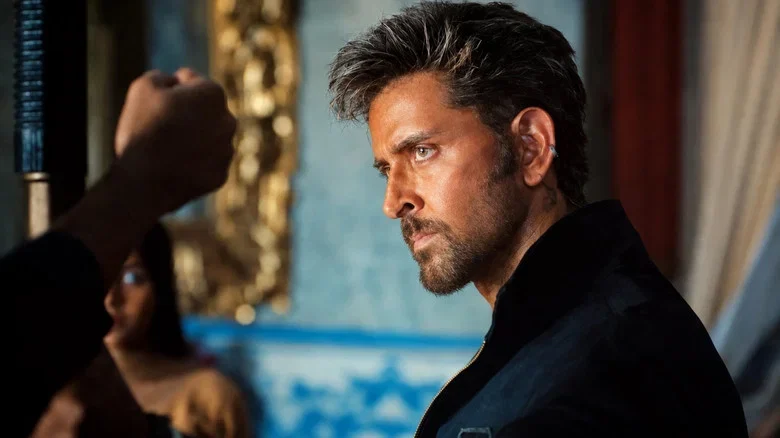
Three months after Varman’s funeral, Tiger Muthuvel Pandian is bagging groceries in a small-town supermarket, hiding in plain sight. The syndicate that wants him dead is already sending a man to find the killer, which means the retirement was never real.
The Grocery Aisle Is A Better Battlefield Than The Syndicate Boardroom
Nelson Dilipkumar opens with the most disciplined stretch of his career: a widower driving a fruit cart, a grandson who doesn’t ask questions, a wife who has learned not to. The concealment mechanism is genuinely elegant, because Muthuvel’s civilian cover is played as exhaustion rather than strategy.
When municipal officer Bhaskar’s petty dispute forces Muthuvel into Moorthi’s driving job, the film’s first real threat emerges not from gunfire but from a paper trail. Suraj Venjaramoodu’s Dileep traces that trail with the fussy diligence of a man who thinks he’s the hunter, and the irony lands because we know better.
Rajinikanth plays the supermarket supervisor with a flatness that reads as deliberate withholding, no twinkle, no swagger, just a man measuring how much of himself he can afford to show. It’s the most controlled he’s been in years, and it’s precisely why the moment Dileep’s men find him lands like a trapdoor opening.
SJ Suryah’s Villain Kills The One Character Who Made The Plot Work
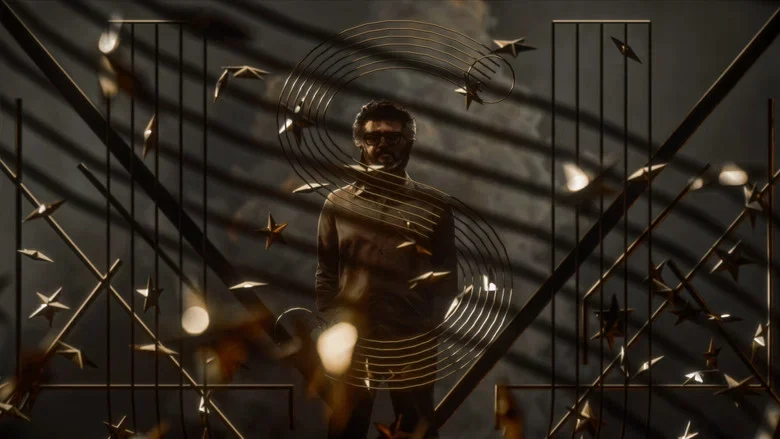
Bodhi Kalpak is introduced as a senior figure in the idol-trading syndicate, but SJ Suryah plays him as an anticipator, a man who has already rehearsed your betrayal before you’ve committed it. When Dileep switches sides and attempts the assassination, Bodhi doesn’t survive by luck. He survives because he predicted it, and the reversal is staged with brutal economy.
Killing Dileep is the film’s boldest structural choice and its most costly one. Dileep was the engine of the investigation, the audience’s surrogate in the hunt for Varman’s killer, and his death leaves a vacuum the Kalpak family war never fully fills.
What follows is a hostage economy: Bodhi injures Narasimha, abducts his wife and son, and forces Muthuvel to trade the three hidden idol containers for their lives. The MacGuffin becomes a bargaining chip, which is smart, but the film starts treating its own reversals as a substitute for escalation.
The screenplay resists the kinetic sensationalism that overtook Poovellaam Kettuppaar, opting instead for a deliberate, suffocating dread. That restraint is welcome in the first half and starts to feel like evasion in the second.
Bodhi’s Cruelest Weapon Is A Family Secret, Not A Gun
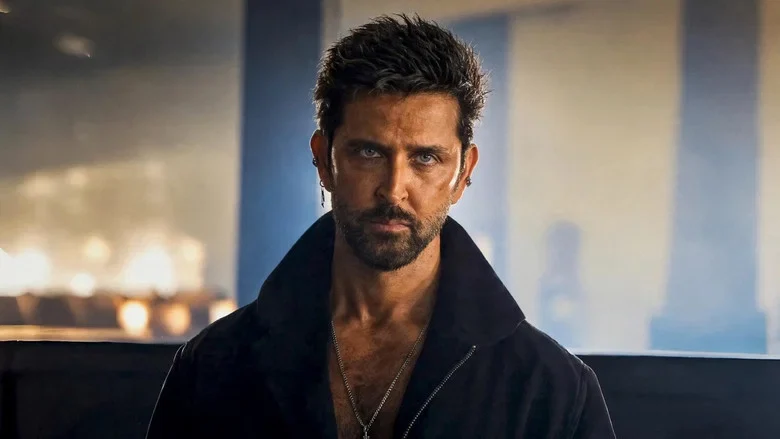
The film’s climax pivots on a psychological strike: Bodhi reveals to Muthuvel’s family that Muthuvel was responsible for his own son Arjun’s death. It’s the kind of revelation that should reframe everything that came before, and for about ninety seconds it does.
Ramya Krishnan’s Vijaya absorbs the disclosure with a stillness that’s more frightening than any outburst, she doesn’t scream, she recalibrates. The camera holds on her hands, not her face, and the choice is devastating.
But the film doesn’t know what to do with the rupture it creates. The family fracture is introduced, felt, and then subordinated to the next tactical reversal, which means the emotional stakes peak before the action does.
Just as he demonstrated a tighter spatial discipline in Blade Runner 2099, the filmmaker strips away decorative camera moves here to prioritize raw psychological friction. The problem is that Nelson’s discipline serves a script that keeps changing its mind about what the movie is about.
The Cameos Are Controlled, But The Ensemble Still Dilutes The Core Duel
Mohanlal, Jackie Shroff, Vidya Balan and Mithun Chakraborty appear in roles that are carefully rationed, and to the film’s credit none of them hijack the Muthuvel-Bodhi confrontation. The event-film architecture is managed with more discipline than the first installment’s chaotic cameo parade.
Still, the sheer volume of recognizable faces creates a low-grade distraction. Every time a new star enters frame, the audience recalibrates its attention, and the film’s central duel loses a few degrees of heat.
The restrained physical exhaustion Rajinikanth brings to the final confrontation recalls the psychological weight of his turn in Hum Mein Shahenshah Koun, where he also played a man whose violence was inseparable from his guilt. The difference is that the earlier film trusted that contradiction; this one keeps trying to resolve it.
Anirudh’s Score Is Doing Work The Screenplay Should Be Doing
Anirudh Ravichander’s background score is the film’s most reliable asset, and also its most revealing one. Every time the narrative sags, the music swells to cover the gap, and the audience responds because the sound is doing the emotional labor the writing has abandoned.
The first half’s pacing is driven by the concealment-and-discovery mechanism, and the editing trusts the slow build. The second half accelerates into hostage rescue, strategic reversals and family revelation, and the rhythm becomes frantic without becoming urgent.
This patient character study signals a welcome tonal maturity across contemporary Tamil thrillers, proving that tension thrives without manufactured plot theatrics. But maturity requires follow-through, and Jailer 2 keeps retreating to the safety of its star’s silhouette.
Sun Pictures Has A Hit, But The Franchise Is Running On Fumes
The early trade numbers are unambiguous: ₹59 crore India net on day one, ₹320.63 crore worldwide by day three. For Sun Pictures and the Tamil mass-entertainer pipeline, that’s a validation of the Rajinikanth event-film model and a green light for a third installment the ending explicitly teases.
But the commercial math is more fragile than the opening weekend suggests. The sequel’s reliance on cameo spectacle and star-wattage is a depreciating asset, and the second-half narrative drift is exactly the kind of word-of-mouth problem that erodes a franchise’s long-term theatrical leverage.
Rajinikanth remains the most bankable mass-market star in Tamil cinema, but his box-office power now depends on the film around him holding its shape. Jailer 2 mostly does, and then mostly doesn’t.
The Ending Opens A Door The Film Hasn’t Earned The Right To Walk Through
The final act leaves a continuing threat against Muthuvel and his allies, with the narrative explicitly setting up a third film. It’s a commercially logical choice and an emotionally evasive one, because the family rupture Bodhi created is never actually resolved.
What lingers isn’t the action or the score or the cameos. It’s the image of Vijaya’s hands, still, absorbing a truth her husband spent a film trying to bury. The film doesn’t know what to do with that image, and so it moves on.
A sequel that understands its hero’s guilt but not his family’s grief is a sequel that has learned the wrong lesson from its predecessor. Jailer 2 is a hit, and it’s also a warning: the next installment needs to trust its silences more than its star entrances.
Jailer 2 (2026): Rajinikanth’s Cool Return & Second-Half Drift
Visually captivating cinematography, stellar sound design, and commanding performances.
Slight pacing drag in the second act before the climactic resolution.