Vo Ladki (2026): Pandey’s Wristwatch Drama Chooses Restraint Over Resolution
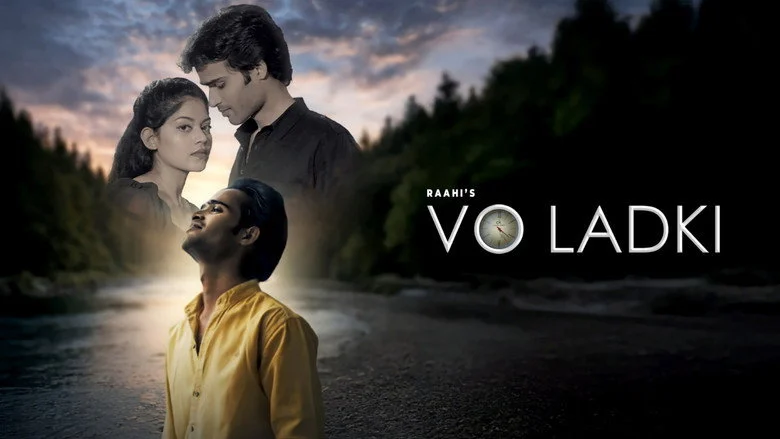
Pathik holds the wristwatch like it might combust, a physical tether to a woman he claims he wants to forget. His decision to travel across Madhya Pradesh to return it to Devyani is less an act of closure and more a confession that he hasn’t moved an inch.
This is the entire engine of Praween Kumar Pandey’s micro-budget Hindi drama, and for a certain patient viewer, that singular obsession is enough.
Raahi’s Restraint Is The Film’s Quiet Gamble
Raahi, carrying his first feature lead, plays Pathik with a clenched-jaw stillness that suits the material’s introspective bent. His performance hinges on the unspoken, the way he hesitates before knocking on Devyani’s door, the way he fingers that watch in his pocket during awkward pauses.
It is a risky, low-volume choice for a debut. When the screenplay offers little external conflict, his internalized grief becomes the only show in town, and he holds the screen with a sincerity that prevents the premise from collapsing into melodrama.
The Craft Of Unfinished Business
Director Pandey, working from a script by Raahi and Shubham Vishwakarma, commits fully to a contained, two-hander structure. Shooting across Sironj and Bhopal with cinematographer Bobby Singh, the film uses its limited geography to mirror the emotional claustrophobia of two people trapped in a past they can’t renegotiate.
The linear screenplay builds toward a single event, the final meeting, but stumbles in the middle stretch. The memory recall sequences lack visual distinction, blurring together when they should sting with specific regret. The watch motif is clear, but the scenes between the setup and the payoff often feel like they are marking time rather than deepening it.
There is a deliberate, almost theatrical patience to the staging. Pandey trusts that the weight of a shared history is enough to sustain tension, though a sharper edit might have given the middle act the urgency it desperately misses.
Devyani’s Counterweight And The Supporting Void
Hema Chaudhry, as Devyani, is the film’s emotional anchor, and her final confrontation with Pathik carries the charge the rest of the narrative has been saving up for. She brings a weary pragmatism to the role, refusing to let the reunion dissolve into easy tears or romantic fantasy.
The supporting cast, including Sanit Swami, Pooja Kandare, and Tina Rao, appear in the credits but leave little trace in the available narrative. Their presence signals a broader world around Pathik, yet the screenplay keeps them at arm’s length, a choice that protects the intimacy but robs the story of texture.
An Audience Built On Patience, Not Spectacle
This is a film for the class audience, viewers who find drama in a glance and romance in a delayed reply. The estimated ₹1.5 crore budget, sourced from IMDb, reflects an ambition that is personal rather than panoramic, and the film’s limited theatrical release on June 10th after its February premiere suggests a distribution strategy built on word-of-mouth rather than box office blitz.
There is no controversy here, no political firestorm. The conversation around Vo Ladki is quieter, centered on whether an intimate, memory-driven romance can still find traction in a market hungry for event films. For those who stayed away from high-octane spectacle, this is a deliberate counter-programming choice.
Browse more Hindi drama reviews for similar independent voices finding their footing.
Vo Ladki is not a film that will convert skeptics of slow-burn romance, but it rewards those who meet it on its own terms. The wristwatch, as a symbol of time stopped and time wasted, is a strong enough hook to justify the journey.
You should watch it for Raahi’s quiet conviction and Chaudhry’s grounded resistance, though a shorter middle act would have made the final payoff land harder. It’s a film to watch in a quiet room, on a regular screen, with no distractions.
Vo Ladki is a sincere, uneven debut that earns a 2.5 out of 5 for its commitment to emotional restraint over narrative momentum.
For a sharper look at a lead actor carrying a flawed script, Momacu review.
If you prefer dramas where strong stretches lift a mixed runtime, Peddi verdict.
Vo Ladki (2026): Pandey’s Wristwatch Drama Chooses Restraint Over Resolution
Visually captivating cinematography, stellar sound design, and commanding performances.
Slight pacing drag in the second act before the climactic resolution.