Momacu (2026): Jatin Sarna and stands out while the narrative loses grip
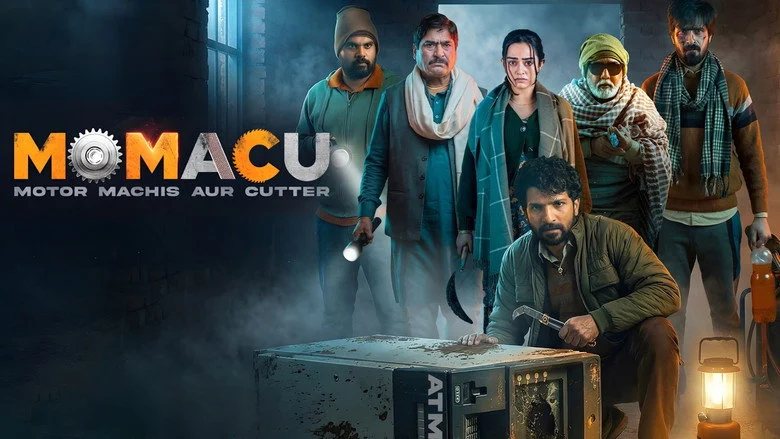
Three desperate men in rural Haryana haul a stolen ATM machine into an isolated tube-well room, believing it holds their ticket out of financial ruin. What follows is a 129-minute night where the machine becomes less a prize and more a sarcophagus of their collective sanity.
The premise is genuinely delicious, absurd, grounded, and instantly visual. Watching these men realize that stealing an ATM was the easy part, and cracking it open is a whole different beast, is where this film finds its pulse.
Kuldeep Kunal’s Direction Thrives in Confinement but Stumbles When It Stretches
Kuldeep Kunal, who also writes, understands the power of a contained stage. The single-night escalation, built around fear, exhaustion, and the biting cold, gives the film a pressure-cooker structure that rarely lets up.
The screenplay, however, shows its seams when the tonal shifts get aggressive. The pivot from dark comedy to thriller to drama isn’t always smooth, and certain stretches reportedly lose the momentum that the central setup works so hard to build.
It is a confident debut in terms of vision, but the execution of that vision, particularly in the second half, needs a firmer hand to keep the gears from grinding audibly.
The Heist is the Film’s Character, and Its Slow Unraveling is the Real Villain
There is no shadowy antagonist lurking in the dark here. The true opposition is the group’s own escalating mistrust and the sheer, stubborn physics of a machine designed not to be opened. The tension is derived from a closed-space countdown, a ticking clock measured in frostbite and fraying tempers.
The genre craft leans heavily on this isolation. The freezing-night staging and the remote tube-well location amplify every scrape of metal and every whispered argument, turning a simple act into a symphony of anxiety. The dark-comic beats emerge organically from the sheer stupidity of their predicament, their plan is a masterpiece of bad logic, and the film knows it.
That said, the pacing reportedly wavers when the film tries to stretch this lean thriller into a broader social drama. The core engine of suspense, the ensemble conflict, is strong, but the film’s ambition to be a musical thriller and a social commentary occasionally dilutes the raw, primal tension of the central heist.
Yashpal Sharma and Apoorva Arora Anchor the Ensemble’s Emotional Core
Yashpal Sharma is repeatedly highlighted as a major presence, and his casting signals the film’s intent to ground its absurdity in genuine dramatic weight. He anchors the emotional side of the ensemble, providing a counterpoint to the frantic energy of the younger men.
Apoorva Arora is positioned as pivotal to the tonal balance, and her presence in promotional coverage suggests she is the film’s link to a more textured, dark-comic register. Tushar Dutt and Gourav Sharma form the core of the trio, their dynamic driving the plot’s conflict.
Jatin Sarna, in a central role, carries the pressure of the narrative, and while scene-by-scene breakdowns are limited, his casting implies a performance built on internal desperation rather than external bombast. The supporting cast, including Shrikant Verma, fills out a world that feels authentically lived-in.
Audience Reception and the Long Road to a Verdict
With no verified aggregate scores or mainstream critical consensus available, the film’s reception rests on its premise and its pitch. The unusual ATM-heist concept and the rural setting are the main draws, appealing to class viewers interested in dark comedy and rural crime setups.
For those expecting clean commercial pacing, this might be a tough sit. The film is a slow burn that prioritizes character fractures over plot mechanics, which will test the patience of viewers not invested in the characters’ downward spiral.
I find myself more intrigued by the film’s ambition than its likely execution, hoping the contained-night structure delivers on its promise more consistently than the reports suggest.
For more stories that dissect the craft of Hindi cinema, browse our Hindi Thriller reviews.
Momacu is a film you watch for its concept and its atmosphere, not for a clean, cathartic payoff. It is a film that wants to sit with you, make you uncomfortable, and leave you thinking about the cost of desperation. If you are a fan of minimalist, character-driven crime dramas that favor mood over momentum, this is worth your time on a lazy afternoon. But if you need your thrillers to move with urgency, this might leave you cold.
Watch it on OTT, where its intimate, claustrophobic staging can be appreciated without the distraction of a theatrical crowd.
Momacu (2026) is a daring, flawed experiment that earns a 3 out of 5 for its nerve and its singular vision, even when its execution wobbles.
For a look at another film that struggles with pacing, check out our analysis of Peddi review.
If you are interested in how a single performance can energize a weak script, read our take on Bandar verdict.
Momacu (2026): Jatin Sarna and stands out while the narrative loses grip
Visually captivating cinematography, stellar sound design, and commanding performances.
Slight pacing drag in the second act before the climactic resolution.