Ottam Thullal (2026): A Rural Family Entertainer That Plays It Safe
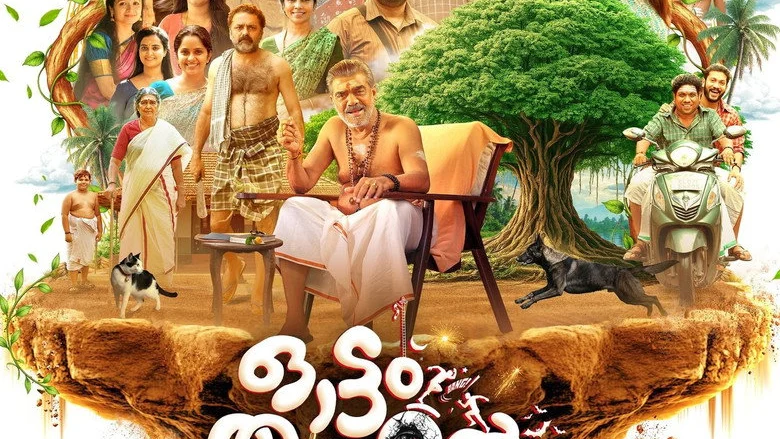
In a landscape where Malayalam cinema increasingly risks formal experiments, G. Marthandan’s Ottam Thullal arrives as a deliberate throwback, a rural family entertainer that wears its traditionalism like a comfortable hand-me-down. The ensemble, headlined by Vishnu Unnikrishnan and veteran Vijayaraghavan, promises humour and warmth in equal measure, but the trailer’s insistence on “community” and “emotions” raises an immediate question: does it have anything new to say, or is it content to be a pleasant evening’s company?
Vishnu Unnikrishnan Anchors a Familiar Yet Engaging Ensemble
Vishnu Unnikrishnan, coming off a string of varied roles, is tasked with holding this ensemble together. As the central figure navigating village dynamics, he brings a likeable earnestness that suits the material’s low-stakes, high-warmth register.
His comedic timing, honed in prior outings, feels assured against seasoned performers like Harisree Ashokan and Kalabhavan Shajohn. Yet, one wonders if the script gives him the sharp emotional arc needed to elevate this from a pleasant performance to a memorable one, the available material suggests a dependable, rather than revelatory, turn.
Marthandan’s Direction Values Comfort Over Risk
G. Marthandan, collaborating with writers Binu Sasiram and Binu Thrikkakkara, clearly prioritises a safe, inclusive tone that older audiences will appreciate. The strength here is the assured handling of multiple characters without letting any single thread dominate the narrative.
The flaw, however, lies in a screenplay that appears to rely heavily on situational humour and familiar family-drama beats. If the second half follows the predictable reconciliation arc that the marketing hints at, the film may struggle to justify its runtime beyond a generic feel-good exercise.
The Genre-Core: A Community Drama With Familiar Rhythms
As a family drama, the film’s primary currency is the chemistry between its characters. The casting of Vijayaraghavan as a senior figure, alongside the comic relief of Harisree Ashokan and the energy of Kalabhavan Shajohn, creates a promising dynamic. Each actor seems to occupy a clearly defined space, the patriarch, the jester, the hothead, which is both the film’s strength and its limitation.
This archetypal mapping ensures a comfortable viewing experience, but it rarely surprises. The absence of a clearly defined antagonist in the research suggests the conflict is internal to the community, a wedding-planning dispute, a property tussle, or a generational misunderstanding, which, when done well, can be deeply satisfying. When done lazily, it devolves into noise without consequence.
The film’s dependence on “everyday relationships” means its success hinges entirely on the writing’s specificity. From the available material, the humour appears rooted in regional dialect and character quirks, which bodes well for its core Malayali audience but may feel generic to outsiders looking for the narrative sharpness of recent Malayalam hits.
Veteran Support: Vijayaraghavan and Harisree Ashokan’s Comfort Zone
Vijayaraghavan, a stalwart of Malayalam family dramas, brings a gravitas that grounds the film’s lighter moments. His presence signals a certain quality bar, and his interactions with Unnikrishnan will likely form the film’s emotional backbone, a classic clash of generations that the genre thrives on.
Harisree Ashokan’s casting is a clear nod to audience nostalgia for the comedy of the 90s and 2000s. Pauly Valsan and Tini Tom round out the periphery, and their roles, while likely functional, will be judged by the laughs they generate in the theatres rather than any dramatic weight they carry.
Audience Fit: A Targeted Appeal With Limited Ambition
Ottam Thullal is unapologetically aimed at family audiences and fans of rural drama who miss the era of feel-good entertainers. For that demographic, the film’s lack of a complex plot is a feature, not a bug, it promises a safe, predictable outing.
However, viewers seeking the high-intensity plotting of recent Malayalam thrillers or the urban experimentalism of the new wave will find little to engage them here. There is no political controversy or social edge to this production; it is a clean, commercial bet that relies on star power and rustic charm to draw crowds. I suspect the film’s reception will hinge entirely on whether the humour translates beyond the trailer’s best bits.
For those looking to stay updated on the latest in Malayalam cinema, Malayalam Family reviews offer a broader perspective on the current landscape.
The film’s fate rests on word-of-mouth from its target audience, families seeking a wholesome watch. If the jokes land and the emotional beats connect, it will find its footing; if not, it risks being a forgettable entry in a competitive year. Watch it on the big screen if you belong to that core demographic, but temper expectations for narrative innovation.
Ottam Thullal plays it safe, and for a rural family entertainer, that earns it a modest 2.5 out of 5, a pleasant watch for the right crowd, but a skip for those craving cinematic risk.
For a deeper look at underdog storytelling, Aryabhatt Ka review offers a similar sincerity with its own flaws.
If you prefer narratives that challenge the audience, How Not verdict takes a bolder thematic approach.
Ottam Thullal (2026): A Rural Family Entertainer That Plays It Safe
Visually captivating cinematography, stellar sound design, and commanding performances.
Slight pacing drag in the second act before the climactic resolution.