Obsession Ending Explained: The One Wish Willow’s Cruel Twist & Why Nikki Survives
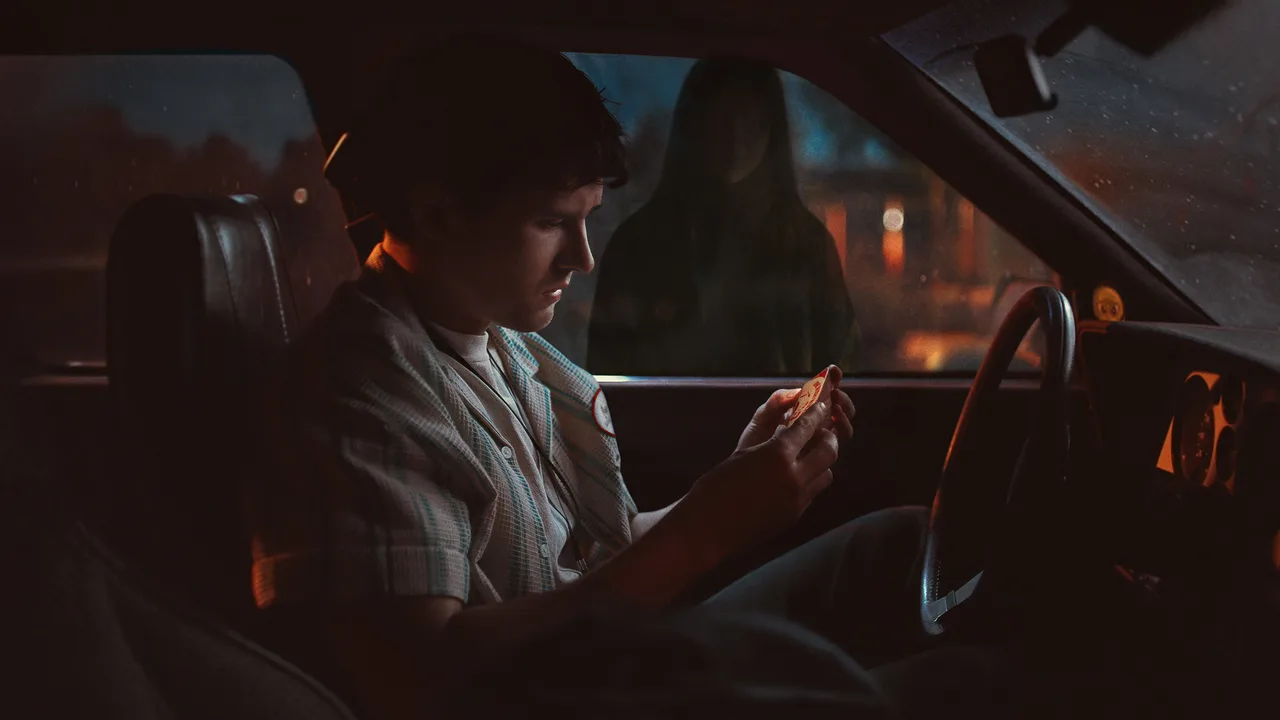
Bear dies on a bathroom floor with his lips still wet from a kiss that was never his to give. The pills are already working through him, and the woman holding him is not the woman he has loved since high school.
That is the final image Curry Barker leaves us with: two bodies locked in an embrace that neither of them actually chose.
One Wish Willow, Two Broken People, and the Trap That Was Set in High School
The whole catastrophe starts with a lonely man in a music store who mistakes longing for permission. Bear has spent years orbiting Nikki, and the One Wish Willow gives him a shortcut that no decent person should ever want.
What makes the escalation so nasty is how mundane it looks at first. Nikki’s affection reads as a dream come true for about ten minutes of screen time, then the film quietly turns the screws.
She watches him sleep. She fixates. She does something grotesque with his dead cat that lands like a bucket of ice water on the audience’s face. The horror is not supernatural spectacle; it is the sight of a man realizing he has invited something into his life that will not leave.
Barker shoots the music store in flat fluorescent light, all scuffed linoleum and cluttered vinyl bins, so the supernatural intrusion feels like mold spreading through a normal room. The friend group around Bear and Nikki (Ian, Sarah, Carter) gets pulled into the blast radius, and the body count starts climbing before anyone understands the rules.
By the third act, Bear knows the truth. The woman in his apartment is a wish-created impostor, and the real Nikki is trapped somewhere else entirely.
The prelude to the finale is not a chase or a confrontation. It is a man sitting with the knowledge that the only exits are his death, her death, or another wish.
The Overdose, the Counter-Wish, and the Most Twisted Kiss in Recent Horror
Bear chooses the bathroom. He swallows the pills with the grim efficiency of someone who has already done the math, and Barker keeps the camera close enough that we can hear him breathing.
Then Nikki finds the Willow. Her wish is simple and devastating: she asks that Bear love her as much as she loves him. The supernatural mechanism does not care about consent; it simply obeys.
What follows is the film’s cruelest choreography. Bear stumbles out of the bathroom before he can purge the overdose, and the new wish hits him mid-stride. The man who was trying to die to free Nikki is now compelled to adore the thing wearing her face.
They kiss. Barker holds the shot long enough to make the audience uncomfortable, because the passion on screen is not romance. It is two puppets being yanked by the same invisible hand.
The pills win. Bear collapses, and the death that was supposed to be a sacrifice becomes something stranger: a sacrifice performed by a man who was no longer capable of choosing it. The staging is intimate and claustrophobic, all tile and dim bulb light, and it lands harder than any jump scare in the film.
The supernatural mechanics here are ruthless in their symmetry. Bear’s original wish turned Nikki into a vessel; Nikki’s counter-wish turned Bear into one too. The film refuses to let either character escape the role of victimizer.
The Real Nikki Was Never in the Room, and the Breadcrumbs Were There All Along
The central revelation is that the obsessive Nikki we watched for most of the runtime was never Nikki at all. Bear’s wish did not just amplify her feelings; it evicted her spirit and installed a supernatural replacement.
Rewatch the sleep-watching scenes with that knowledge and they play completely differently. The blank stare, the too-perfect stillness, the way she never blinks at the right moments, those were not acting choices about obsession. They were tells that something else was piloting the body.
The dead cat sequence, which reads as grotesque cruelty on first viewing, becomes something worse on second pass. It is a wish-created entity testing the limits of what it can do inside a human life, and Bear’s horror is the horror of a man watching his own desire metastasize.
The rule that breaks the spell (death of the wisher, death of the wished, or a reversal via another Willow) is planted early in the lore and pays off with brutal precision. Bear’s overdose is not a panic move. It is the only move left on the board.
Barker has been candid that an earlier cut had Nikki shoot herself after Bear dies. The released version keeps her breathing, and that single choice changes the entire moral architecture of the film.
It also puts Indian Institute of Zombies in interesting company, since both films use supernatural horror to interrogate what people will do when desire is handed a shortcut.
Bear Pays in Blood, Nikki Pays in Memory, and the Friend Group Pays in Full
Bear’s ledger is ugly because he is both the victim and the architect. He never wanted a monster, but he did want Nikki’s autonomy gone, and the film refuses to let him off that hook just because he died trying to fix it.
His death is a genuine sacrifice and a genuine confession. He cannot apologize his way out of the wish, so he pays the only currency the spell accepts. The tragedy is that the payment comes after the damage is already irreversible.
Nikki’s fate is the harder one to sit with. Her spirit returns to a body that has been used as an instrument of violence, and she has to live inside the memory of atrocities she did not consciously commit.
The gun she picks up in the aftermath is not a plot device; it is the film acknowledging that survival is not the same as rescue.
She does not pull the trigger. That restraint is the ending’s quietest and most important beat. Barker leaves her alive, traumatized, and accountable, which is a far more uncomfortable conclusion than a clean double funeral.
The wish-created Nikki is expelled when Bear dies, and the film wisely refuses to give her a redemption arc. She was never a person; she was a consequence. Ian, Sarah, and Carter are left to reckon with a body count that no supernatural reversal undoes, and the film treats those deaths as permanent.
Love Without Consent Is Just Captivity, and Barker Shoots It That Way
The One Wish Willow is the film’s cleanest piece of visual thinking. It grants the literal wording of a desire while ignoring every condition that would make that desire worth having.
Barker’s camera keeps Bear and Nikki in tight, airless frames even when they are kissing, and the walls of the apartment start to feel like the inside of a locked box.
Fluorescent light, cluttered shelves, the hum of a refrigerator, the film uses the texture of ordinary domestic life to make possession feel banal and inescapable.
The sound design does the heavy lifting in the final act. There is no swelling score when Bear collapses; there is only the wet, ugly sound of a body giving out on bathroom tile.
Obsession as a genre has been having a moment, and the film’s willingness to sit in the aftermath rather than cut to black on a kill reflects an intensifying stylistic trend across recent theatrical releases.
It also distinguishes itself from the more operatic register of something like The Eternal Man, which trades in mythic grandeur where Barker trades in grimy intimacy.
The film’s answer to its own philosophical question is blunt: a relationship built by removing someone’s ability to choose is not love, no matter how passionately it is performed. Bear learns that too late, and Nikki learns it from the inside of her own violated body.
What the Wish Realm Is, Whether the Fake Nikki Was Sentient, and the Debate That Won’t Die
The film never explains the supernatural realm where the real Nikki’s spirit was held, and that omission has fueled plenty of post-screening arguments. Some viewers read it as a limbo state, a kind of waiting room where the original consciousness sits while the wish-created version runs the body.
Others argue the fake Nikki was genuinely sentient, a separate entity born from Bear’s desire and capable of its own cruelty. The evidence cuts both ways; she shows flashes of something like personality, but she also collapses the instant the wish is broken, which suggests she was never more than a mask.
The One Wish Willow’s ultimate fate is another open thread. If the object survives, so does the possibility of another wish, and Barker leaves that door ajar without walking through it.
There is also the question of whether Nikki faces legal consequences for the deaths committed through her body. The film does not answer it, and that ambiguity is deliberate. The horror is not just what happened to her; it is what happens next, off-screen, in a world that will never fully understand what she was.
No Sequel Bait, No Post-Credits Trick, Just a Woman Standing in the Rubble
There is no mid-credits or post-credits scene. The film ends where it needs to end, with Nikki alive and the wish broken, and Barker resists the urge to tease a franchise.
That restraint is the right call. Bear is dead, the spell is undone, and the only story left is the one Nikki has to live through, which is a psychological aftermath rather than a supernatural continuation. The film’s finality is its strength.
If there is a legacy here, it is the one Barker builds in the closing minutes: a horror film that treats its supernatural premise as a moral thought experiment and refuses to let the audience off with a clean resolution. The Willow is gone. The guilt is not.
Bear dies believing he is saving Nikki, and in a technical sense he is. But the film never lets him become a hero; it lets him become a cautionary tale, a man who wanted love so badly he wished away the person he loved.
Nikki survives with a gun in her hand and the memory of everything done in her name. The cut to black leaves her there, breathing, accountable, and utterly alone.