Where the Mask Ends Ending Explained: Lu Zhuo’s Coffin Trick & Who Rules Next
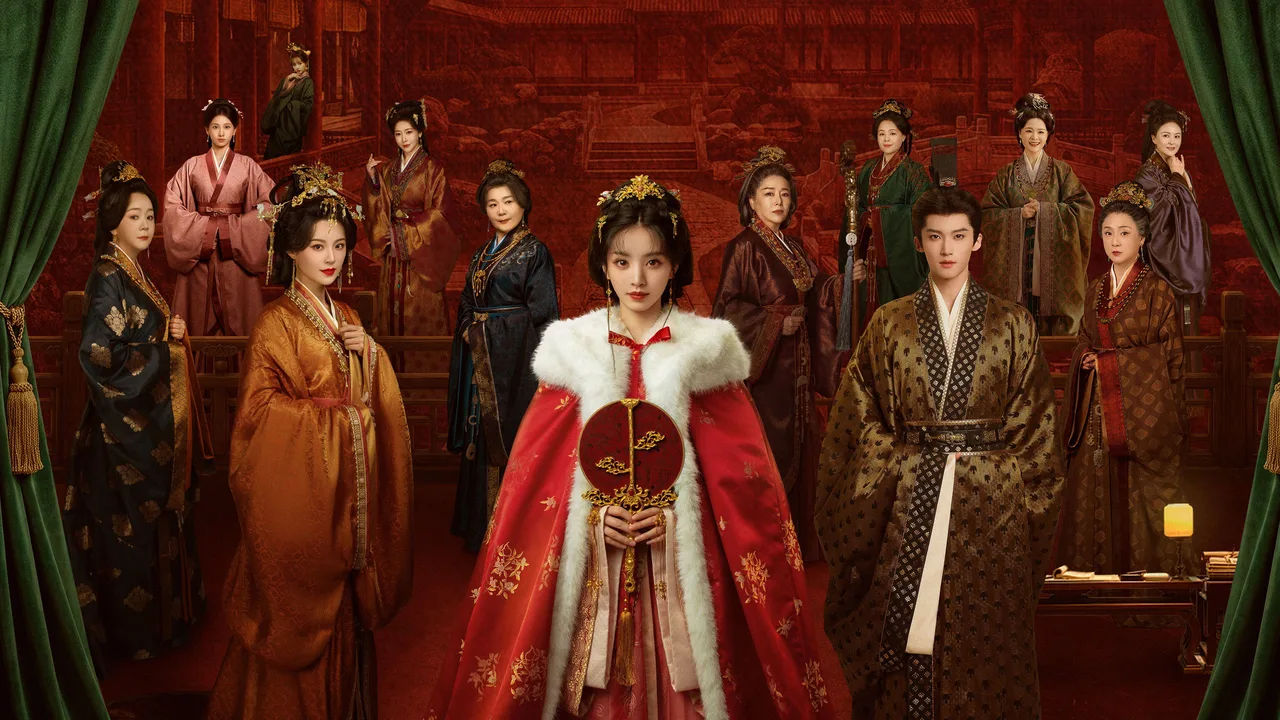
The coffin lid moves. That is the last thing Han Liao ever sees clearly. For three episodes the lacquered box has sat in the Lu courtyard as a monument to grief, and now the dead man inside it is standing up.
Lu Zhuo steps out of his own funeral, draws his blade, and cuts down the man who spent a month measuring his widow for a wedding. The rebellion dies with Han Liao. The mask does not.
The Funeral That Was Actually A Forward Command Post
The third act is built on a simple, ugly squeeze: A-Chou has spent years surviving as Wei Rao, and the borrowed name finally demands payment she cannot make. Lu Zhuo is reported dead in Death Valley. The army returns a sealed coffin, and the Lu household begins mourning.
Watch how the camera treats that box. It sits at the center of every wide shot, immovable furniture that the blocking keeps forcing A-Chou to walk around. She cannot kneel at it without ceremony. She cannot leave the room without passing it.
Meanwhile Han Liao circles. He wants Wei Rao’s name attached to his claim, and a widow is easier to move than a wife. The forced marriage is not a romantic subplot, it is a filing error with a knife behind it.
The former Crown Prince’s faction reads the death report as an open door. The Emperor is aging. Liu Shuo is not yet named heir. Every conspirator in the palace is doing arithmetic on a corpse that is not actually a corpse.
Why The Coffin Reversal Works As Camera Craft
The reveal is staged as a spatial ambush, not a jump scare. The confrontation happens in a hall the audience has already memorized: the same pillars, the same threshold, the same sightlines from the earlier mourning scenes. When Lu Zhuo rises, he is standing exactly where the coffin stood.
Director’s choice here is patience. The camera holds on Han Liao’s face a beat too long before the lid shifts, letting the audience register his certainty curdling into arithmetic. He is not afraid yet. He is recalculating.
Then the fight is short. Lu Zhuo has been dead for weeks; he has no ceremony left in him. The choreography is close-quarters and unglamorous, blade work inside arm’s reach, and the camera stays tight enough that the hall’s grandeur becomes irrelevant.
Compare the restraint to the frantic tonal swings that sank recent experiments like Pyre. This finale trusts stillness. It lets a room do the work a score usually does.
The Death Was A Military Mask, And That Is The Whole Point
Lu Zhuo’s survival is not a resurrection. He prepared a substitute body and left by another route, letting his enemies build a strategy on false intelligence. The coffin was bait, and Han Liao walked into it carrying a marriage contract.
The breadcrumbs were there. Rewatch the mourning sequence and notice who never weeps in front of the coffin, and who keeps asking procedural questions about the body’s condition. The household’s grief is real. The information flowing out of it is not.
This is the structural rhyme the series has been building since episode one. A-Chou survives by letting the world believe she is Wei Rao. Lu Zhuo survives by letting the world believe he is dead. Both victories require controlling who is permitted to know the truth.
The identity reveal lands on the same principle. A-Chou’s resemblance to Wei Rao opened the door, but her position at the end is earned through judgment and endurance, not a face. The birth secret and the family reunion confirm it: she is somebody’s daughter, not somebody’s stand-in.
That distinction is what separates this from the softer melodrama conventions across Dilwali Diwali, where identity is resolved by confession rather than by surviving a succession crisis with your name intact.
Who Walked Out Of The Hall And Who Did Not
Han Liao does not walk out. Lu Zhuo kills him in the hall, and the uprising loses its spine. The former Crown Prince’s conspiracy collapses with him, though the series leaves his precise punishment off-screen and unspecified.
Jun Dai takes her own poison. It is the only exit the story allows her, and the camera does not linger to romanticize it.
A-Chou survives with the title Princess Protector of the Realm, a reward for defending the throne. Lu Zhuo is tasked with supporting the new heir, Liu Shuo. Wei Rao’s birth mother lives, and the family thread closes in reunion rather than blood.
The Emperor dies after naming Liu Shuo. Liu Shuo ascends in the Xihe era and then dies three years into his reign, which is where the story refuses to hand over a clean answer.
A Borrowed Name That Became A Real Throne
The mask in the title is not just the impersonation. It is class, marriage, lineage, and political office, every identity other people assign to a body before that body gets a say. A-Chou spends the series inside masks and exits wearing one she chose.
The visual language backs this up. Early episodes frame her at the edges of rooms, half-lit, often behind screens or doorways. The final palace scenes put her at the center of the frame, in full light, with the doors open behind her.
Sound does the rest. The mourning sequences are scored and loud. The final scene is nearly silent, just footsteps and the sound of doors being opened by her order.
That open-door image also reads as an industry tell. Political finales that refuse to name a successor are becoming a house style across contemporary streaming drama, where a closed romantic arc and an open governance arc let a show end and continue at once.
The Succession Question Nobody Answers
The loudest fan debate is who takes the throne after Liu Shuo. The finale does not name him, and it does not name which regional prince has the stronger claim.
One camp reads A-Chou’s decision to open the palace and receive the princes personally as a declaration. Under that reading she becomes the stabilizer, the woman who brokers the next settlement from inside the vacuum.
The other camp reads the same scene as kindling. Liu Shuo’s death removes the last agreed settlement, and the regional princes are walking into a room with no arbiter and no army behind the hostess.
The text supports both. She has the title and the palace. She does not have troops. That gap is the entire ambiguity.
An Open Door And A Closed Love Story
There is no confirmed post-credits sequence. What the finale offers instead is a deliberate split ending: the romance is finished, the politics is not. A-Chou and Lu Zhuo are together, and that question is settled.
The succession is not settled, and the show wants you to feel the weight of that. Liu Shuo’s three-year reign is a warning, not a resolution. Defeating one conspiracy did not fix the system that produces conspiracies.
The final image is A-Chou receiving the regional princes in her own hall, under her own title, with the doors thrown wide. She is no longer hiding behind a borrowed face. She is also no longer protected by one.
Lu Zhuo stands with her, a man who has already proven he can disappear and return. The next war will not be won by a coffin trick. It will be won by whoever controls the room she just opened.