‘Big Boys Don’t Cry’: Muhammad Mustapha Doc Lands El Gouna Slot
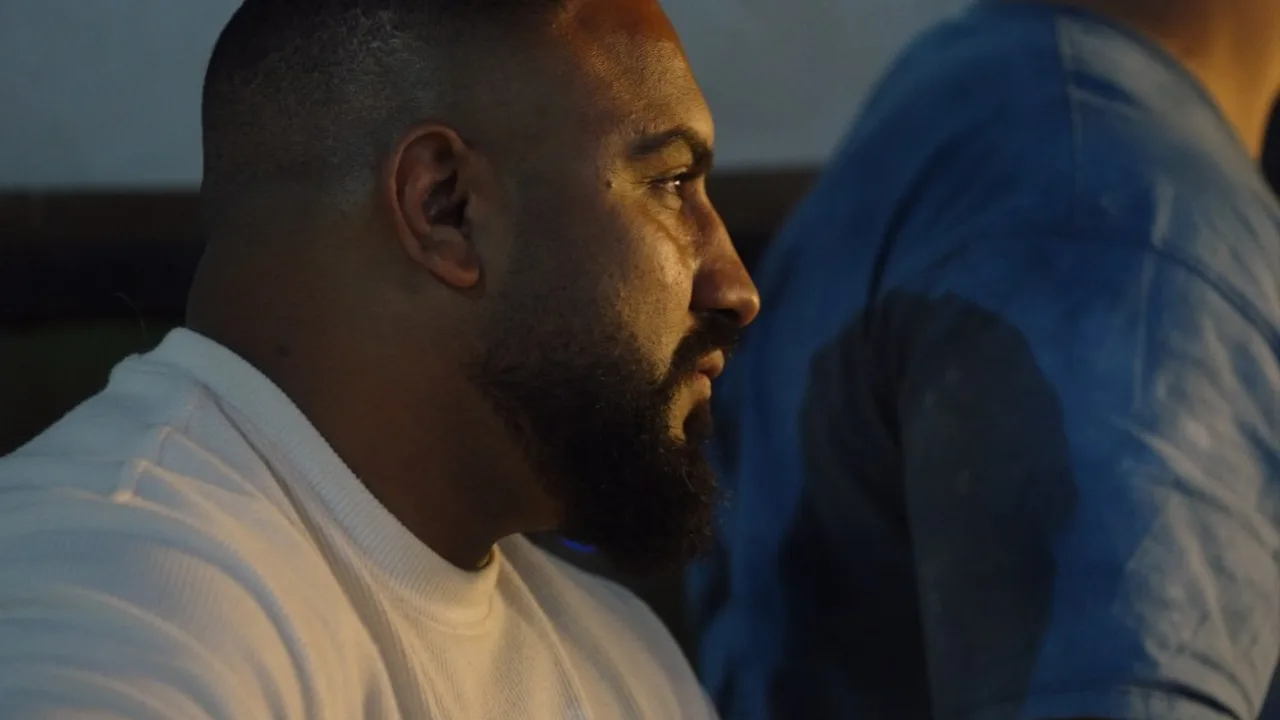
- The Scoop: Muhammad Mustapha’s documentary Big Boys Don’t Cry enters the El Gouna Film Festival catalogue as a 2026 title.
- Subject & Access: The 76-minute film embeds inside Egypt’s bodybuilding and bouncer circuits, probing the fault line between physical hardness and emotional vulnerability.
- Co-Production Footprint: The catalogue credits Egypt, Germany, Saudi Arabia, and Qatar as associated territories, signaling a multi-country financing base.
Muhammad Mustapha’s documentary Big Boys Don’t Cry has secured a place in the El Gouna Film Festival catalogue, positioning the Egyptian filmmaker’s study of hypermasculinity inside one of the region’s most closely watched launch pads. The 76-minute film trains its lens on bodybuilders and bouncers, two professions where physical hardness functions as currency and social armor.
The festival listing frames the project around a single, loaded question: whether a camera can reach a humane, vulnerable core beneath the muscle and the door-shift swagger. That inquiry gives the film its spine and its commercial identity as a festival conversation-starter rather than a conventional sports portrait.
Inside the Gym and the Door: A Camera Test of Male Armor
Mustapha’s staging is built on access rather than spectacle. The production moves through the training floors and nightlife entry points where men are paid to project invincibility, and the film’s tension comes from watching that projection strain under scrutiny. The catalogue’s own description places the camera inside the hypermasculine world rather than observing it from a safe distance.
That embedded approach carries real production weight. Gyms and club doors are controlled environments with their own hierarchies, and winning the trust of subjects who are professionally guarded is the film’s hardest logistical problem. Mustapha’s direction treats that resistance as material, letting the camera’s presence become part of the inquiry rather than a neutral window.
The 76-minute runtime is a deliberate piece of craft. It is tight enough to hold a festival slot and lean enough to travel across the international circuit without demanding an extended commitment from programmers. For a documentary built on intimacy rather than archival scale, that discipline is a distribution asset.
Four Territories, One Thesis: The Financing Map Behind the Film
The catalogue’s territorial spread (Egypt, Germany, Saudi Arabia, and Qatar) tells its own story about how this film got made. A four-country footprint on a 76-minute documentary points to a patchwork of regional funds, co-production partners, and festival support rather than a single deep-pocketed backer. That structure is increasingly the norm for Arab and Gulf nonfiction cinema.
The El Gouna slot is the film’s first major visibility platform, and festival placement of this kind functions as a de facto market screening for documentary buyers and streaming acquisitions teams. For a project without a confirmed theatrical corridor, the festival run is the release strategy, the room where word-of-mouth and press attention are manufactured.
That makes El Gouna’s audience the real first test of the film’s thesis. A documentary about male emotional lockdown lands differently in a Gulf festival hall than it would in a commercial multiplex, and the conversations it generates in that room are the currency that carries it toward further bookings. Follow the wider festival and release calendar through our trade entertainment wire desk.
The economics here are straightforward: a compact documentary with four-territory backing needs festival momentum to convert into acquisition interest, and every additional booking lowers the cost of the next one. Whether Big Boys Don’t Cry breaks out depends less on muscle than on how loudly that room responds, a pressure test every festival title faces, much like the reception battles tracked across recent commemorative releases in the wider market.