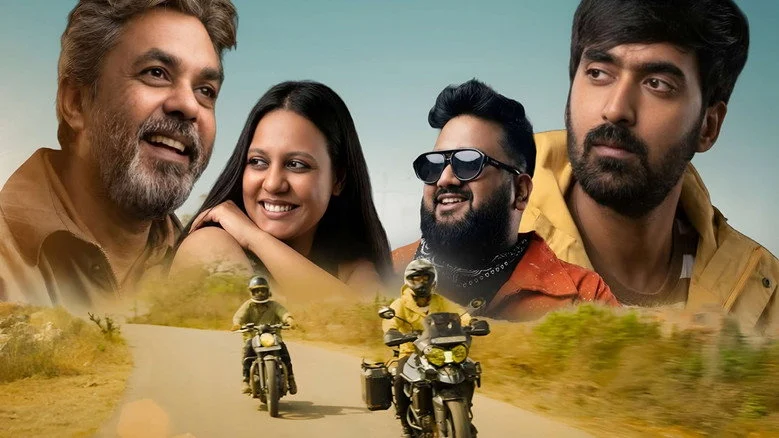
Father’s Day (2026): A Half-Baked Homage That Ignores Its Own Plot


The Finnish drama opens on a grey Helsinki morning, where a man named Tinke stares at an empty chair at the breakfast table. The camera lingers just long enough to signal loss, but the silence feels borrowed, not earned. By the time Veikko fumbles through a phone call to his estranged father, you sense the film reaching for a universal ache it never quite locates.
Tinke’s quiet anger: the one real performance in the room
Alok, as the son carrying years of resentment, has two scenes where his voice breaks on exactly the right syllable. One arrives during a confrontation at a bus stop, where his stillness holds more tension than the script’s dialogue. Too bad the writing keeps undercutting him with soap-operatic reveals that blunt every earned moment.
The actor’s best choice is a silent sequence in a rain-slicked parking lot, where he watches a stranger’s family reunion. The scene has no words and no music, and it lands harder than anything the director’s score tries to sell.
Aleksi Salmenperä’s direction: patient framing, impatient storytelling
Salmenperä composes each frame with the discipline of someone who knows where the light falls best. But the screenplay keeps reaching for emotional shortcuts, a sudden health diagnosis, a long-lost letter, that dissolve the very ambiguity the visuals build.
The film’s biggest structural mistake is a flashback sequence that reveals a childhood trauma too early, robbing the present-day drama of any suspense. By the midpoint, you’ve already guessed every beat the final act will hit.
Genre-core execution: a drama that refuses to sit still
Father’s Day wants to be a quiet character study about forgiveness, but it keeps lurching toward melodrama. The mood shifts from muted realism to teary confrontation without any transitional gear, leaving each emotional peak feeling staged rather than lived. A scene where Veikko shoves a birthday cake off a table plays more like a bad community theater audition than genuine rage.
The cinematography does some heavy lifting, one tracking shot through a forest at dusk effectively mirrors the characters’ emotional drift. But the sound design drowns out those subtleties with swelling strings every time a character looks sad. The craft is there; the trust in that craft isn’t.
I found myself wishing the director had let three or four of those quiet moments breathe instead of cutting to the next plot point. The film has the bones of a solid drama, but it keeps tripping over its own need to explain everything.
Supporting cast: wasted talents in thankless roles
Babu, as the estranged father, has a single scene, a monologue delivered to a hospital window, that hints at a richer character the script never explores. Harshil and Koushik play friends who exist only to deliver motivational speeches that sound like bad self-help pamphlets.
Samragni’s role as a sympathetic neighbor is so underwritten that her one emotional outburst feels unearned. The casting choices signal ambition, but the writing gives these actors nothing to sink their teeth into. Rajan appears for thirty seconds as a priest and manages more presence in that time than most of the principal cast.
Controversy and political angle: the silence speaks louder
There is no controversy, no political subtext, and no public debate around this film. Its release on July 17, 2026, in Karnataka passed without a single notable review or audience reaction. The absence of critical discourse is itself telling: Father’s Day has generated zero conversation, positive or negative. That silence is the most damning verdict a small release can receive.
If you are looking for more critical takes on Indian releases, browse the Kannada Adventure reviews we have covered this season.
Go or skip?
If you are a completist tracking every quiet Scandinavian drama that makes it to Karnataka screens, you will find a few moments of genuine feeling buried under generic storytelling. For everyone else, this is a skip. Watch it on a streaming platform where you can pause to make tea during the flashbacks.
Father’s Day is a watchable but forgettable drama that earns a 2 out of 5 for its cinematography and one decent performance, and little else.
Also read G D review for another film that shares Father’s Day’s problem of a strong start undone by a sagging second half.
Compare this with Varavu verdict for a similar collision of solid craft and patchy writing.
Ankit Jaiswal is the Chief Author, covering Indian cinema and OTT releases with honest, no-filler criticism. An SEO strategist by background, he brings a research-driven approach to film writing, cutting through hype to tell you exactly what's worth your time.