Kidney (2026): Rudrashish Majumdar’s Feud Drama Drowns in Its Own Inherited Blood
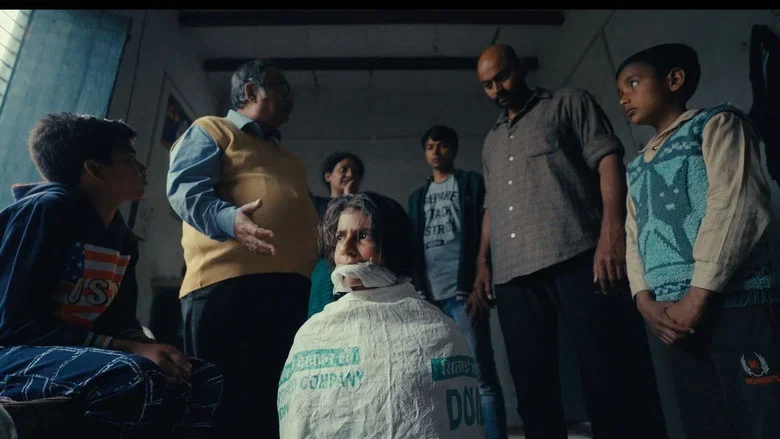
The village is split clean down the middle, two households glaring across a dirt path, and somewhere between them a boy is filming himself for TikTok. Aakarsh Sansanwal’s Kidney wants that image to carry the weight of a nation’s inherited hatred.
When A Feud Becomes The Only Character In The Room
The premise arrives fully assembled: a privileged Hindu family, a struggling Muslim family, a long-running blood feud, and a romance that dares to cross the line.
On paper, that’s a pressure cooker. On screen, it’s a diagram. Sansanwal stages the rivalry as a permanent condition rather than a living, breathing thing.
The elders glower. The boundary is drawn. The children look across it. This is the film’s first act, and it plays like a thesis statement being read aloud rather than a world being built.
What’s missing is texture, the specific, granular detail that makes a village feel inhabited rather than illustrated. We get the feud. We rarely get the people caught inside it.
The TikTok Kid And The Inheritance That Swallows Everyone
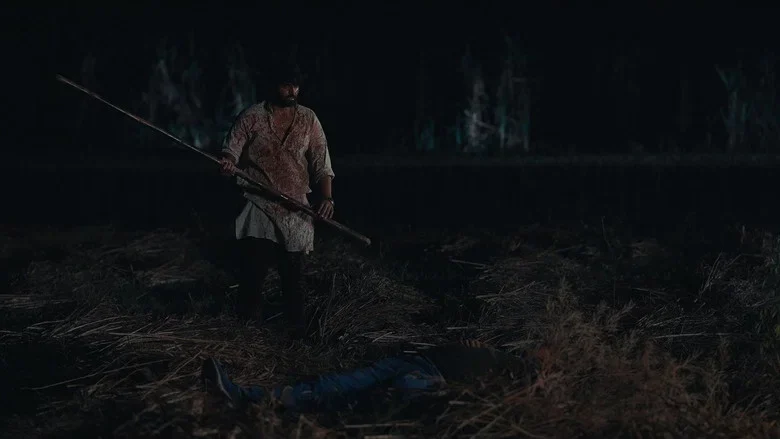
The central mechanism is intriguing: a young man chasing visibility through social media, a young woman clawing for autonomy from patriarchal control, and an inheritance dispute that turns their private rebellion into a public threat.
That inheritance engine is the film’s smartest structural choice. It converts abstract prejudice into a concrete, winnable prize.
But the screenplay never interrogates who controls the claim or why it matters beyond the fact of it. The dispute exists to escalate, not to illuminate.
As the young man, Rudrashish Majumdar carries the film’s most contemporary energy, a performer who understands that his character’s phone is his only escape hatch from a village that has already decided who he is.
His physicality in the early scenes is restless, his eyes constantly scanning for an exit or an audience. It’s a performance of performed confidence, and it’s the most alive thing in the film.
The film’s tonal control, though, is where it wobbles. Comedy and threatened bloodshed sit uneasily beside each other, never quite finding the register that would let one deepen the other.
The Stillness That Should Crack, And Doesn’t
There is a scene, roughly mid-film, where the two families face each other across a courtyard. No one moves. The camera holds. This is where Kidney should tighten the screws.
Instead, the moment passes without a single micro-expression landing hard enough to register. The blocking is symmetrical, the framing is flat, and the silence feels like a pause rather than a pressure.
Compare that to the spatial discipline on display in Wicker, where proximity itself becomes a threat. Sansanwal’s camera keeps its distance when it should lean in.
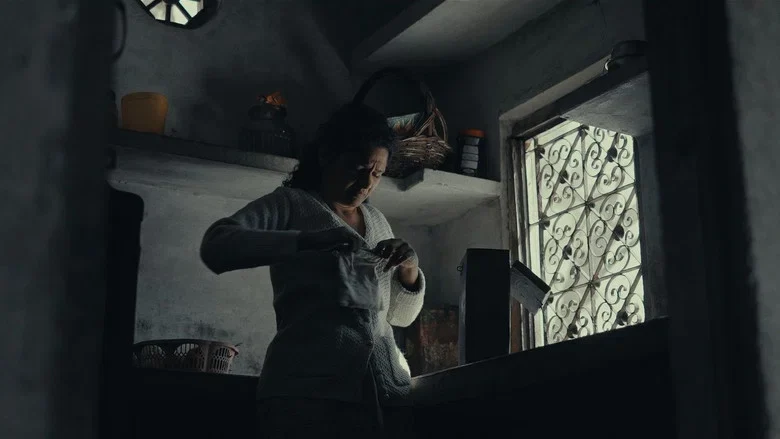
Simran Tandon, as the woman resisting patriarchal control, has the film’s most thankless task: she must embody a social condition rather than a person. She does what she can with a gaze that hardens scene by scene.
The supporting ensemble, the royal relatives, the temple elders, the faceless men who enforce the feud, functions as a chorus of disapproval rather than a set of individuals. That’s a choice, but not a rewarding one.
What’s missing is the kind of granular performance calibration that turns a family drama into a psychological excavation, the sort of patient character work that defines the best of Dilwali Diwali.
Direction That Trusts Its Themes More Than Its Scenes
Sansanwal has a clear intellectual grasp of what the film is about: inherited prejudice, economic privilege, religious division, and the way patriarchal authority constrains choice.
What he hasn’t yet developed is the instinct for the scene that complicates the theme rather than illustrates it. Every confrontation arrives on schedule. Every beat lands where you expect it.
Shray Saxena’s score does what it can, pushing emotional weight into spaces the staging leaves hollow. But music can only amplify tension that already exists; it can’t manufacture it from nothing.
The film runs a lean 125 minutes, and yet it feels longer, not because it’s slow, but because it’s repetitive. The feud escalates without evolving.
The tonal balancing act between drama and comedy is the film’s most visible fracture. A scene of genuine threat is followed by a beat of levity that undercuts rather than relieves.
This is the kind of miscalibration that separates a promising premise from a fully realized film, the difference between a filmmaker who knows what he wants to say and one who knows how to make us feel it.
The Studio Math And The Remake Pipeline Problem
Without verified production-house credits or box-office figures, Kidney arrives in the theatrical market as a question mark rather than a proposition.
That’s a problem for the film’s commercial viability, but it’s also a symptom of a larger issue: the Hindi drama space is crowded with films that look like this and say less.
The theatrical lifecycle for mid-budget social dramas is increasingly brutal, squeezed between streaming premieres and franchise spectacles. Kidney doesn’t have the star power or the critical buzz to break through that noise.
Majumdar’s box-office leverage remains unproven, and the film’s lack of a recognizable antagonist or franchise hook makes it a hard sell to exhibitors looking for guaranteed footfalls.
This is the kind of release that gets lost in the shuffle, not because it’s bad, but because it’s indistinguishable from a dozen other well-intentioned village dramas that arrive and vanish without a trace.
The film’s closest contemporary peer in terms of ambition might be the kind of meticulous craft on display in The Violinist, where every note is placed with intention. Kidney has the notes. It just doesn’t have the composition.
What The Ending Leaves Behind
The film escalates toward bloodshed, as the synopsis promises, but the resolution, whatever it is, feels less like a reckoning than a release valve.
That’s the tragedy of Kidney: it has all the ingredients of a film that could say something lasting about inherited hatred and the people crushed beneath it, but it never trusts its own characters enough to let them breathe.
Instead, it trusts its themes. And themes, however urgent, don’t bleed on screen. People do.
For a film so concerned with the weight of the past, Kidney never quite finds the present tense. It’s a drama about inheritance that forgets to inherit anything from the messy, contradictory, alive tradition of contemporary Hindi dramas it’s trying to join.
The result is a film that will be respected more than it is felt, a well-intentioned, thematically ambitious, emotionally distant piece of work that mistakes escalation for depth. It’s not a failure of vision. It’s a failure of nerve.
Kidney (2026): Rudrashish Majumdar’s Feud Drama Drowns in Its Own Inherited Blood
Visually captivating cinematography, stellar sound design, and commanding performances.
Slight pacing drag in the second act before the climactic resolution.