Khalifa Part 1 (2026): Prithviraj Sukumaran s stands out while the narrative loses grip


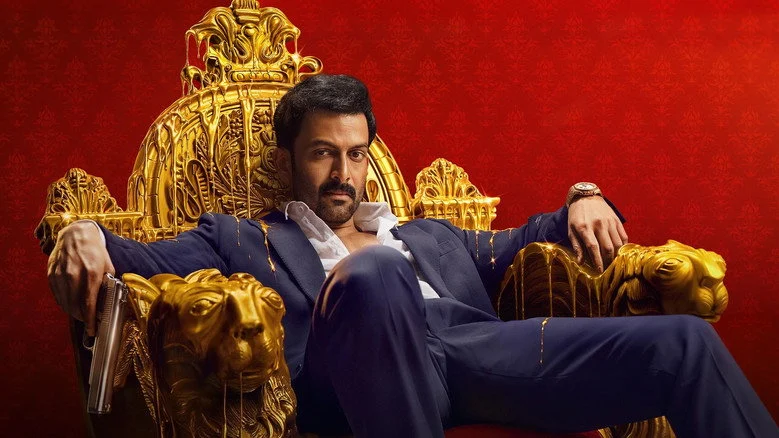
The trailer already told us what Vysakh is selling: Aamir Ali, heir to the Mambarakkal gold-smuggling empire, standing in the wreckage of a legacy he didn’t build but must now protect. Prithviraj Sukumaran is asked to carry menace, authority, and a simmering emotional conflict about inheritance. The material demands a performance that oscillates between cold calculation and volcanic rage.
From the available coverage, the actor seems to be operating in a register we’ve seen him perfect in films like *Kaduva*, controlled physicality, a voice that drops an octave when the script needs a threat. The problem is that we’re judging a portrait from its frame. The character’s internal conflict, the cost of that criminal crown, remains locked inside a two-part structure that withholds its payoff.
Vysakh’s Direction Prioritizes Geography Over Character
Vysakh knows how to make a frame look expensive. The international locations, Middle East, London, Nepal, Kerala, give the film a transnational crime aesthetic that immediately separates it from the local gangster fare. This is a director who understands that a gold-smuggling network needs to feel vast, and the globe-trotting setup delivers that breadth.
But the screenplay by Jinu Abraham appears to be building a world rather than a person. The central conflict, Aamir trapped between reclaiming a legacy and confronting its violence, is a strong hook, yet the available details suggest the setup spends more time establishing the empire’s scale than the man’s psychology. The “Vengeance will be written in Gold” tagline promises thematic weight, but whether the script earns that gravitas is a question this Part 1 alone cannot answer.
The Genre Core: A Smuggling Saga Built for Delayed Gratification
The gold-smuggling engine is a smart choice for Malayalam action cinema. It allows Vysakh to stage setpieces that feel international without losing the regional texture that grounds the story. The trailer-reported action sequences emphasize the scale of the operation, convoys, cross-border chases, the weight of illicit wealth moving through airports and ports. This isn’t a heist film; it’s an empire-in-crisis narrative.
The two-part structure is both the film’s ambition and its risk. By framing Aamir Ali’s journey as a prolonged escalation, the filmmakers are asking the audience to invest in a character arc that won’t complete for another film. The wrap announcement’s line, “Aamir Ali will follow Rajeevan. The smuggler will meet you after the nobody”, suggests a narrative that is deliberately withholding its most potent confrontation.
For a genre that thrives on immediate gratification, this is a gamble. The crime-thriller audience wants the payoff now; *Khalifa Part 1* is betting that the promise of a larger saga is enough to sustain interest. The craft appears polished, the locations are sweeping, but the genre’s core pleasure, the satisfaction of a closed loop, is deferred to a sequel that hasn’t arrived yet.
If you’re drawn to the scale of this world, you might also want to browse more Bollyfiix reviews for comparison.
Mohanlal and the Supporting Cast Signal Intent, Not Execution
Mohanlal’s presence as Mambarakkal Ahmed Ali is the film’s most intriguing casting decision. His reported role sits on the family-legacy axis, which means he’s likely the ghost that haunts Aamir’s choices, the inherited weight that makes this more than a simple crime story. Having a legend of this caliber in a supporting slot signals that the filmmakers are treating the legacy theme with seriousness.
Indrans and Tovino Thomas appear in the coverage without confirmed roles, which is frustrating because both actors have the range to elevate underwritten parts. Tovino, in particular, has proven he can hold his own in action-thriller spaces, and his reported inclusion suggests a larger ensemble at play. Neil Nitin Mukesh’s antagonist role remains unconfirmed, which is a notable gap in the pre-release narrative, the film needs a villain with teeth, and the silence on this front is curious.
The Pre-Release Buzz and the Two-Part Gamble
There’s no post-release consensus to lean on here, no critic aggregation, no verified audience scores. What we have is pre-release energy: a star pairing of Prithviraj and Mohanlal, a globe-spanning premise, and a marketing campaign that has leaned hard on the “Part 1” framing. The anticipation is real, but anticipation is not validation.
The risk is that *Khalifa Part 1* becomes a film judged on its promises rather than its execution. The setup is compelling, the scale is impressive, and the casting is loaded. But without verified feedback on pacing, screenplay tightness, or the villain’s impact, this review can only measure the architecture, not the inhabitant. I want to see how this lands on a big screen, but the reservation is genuine.
Prithviraj Sukumaran has built a career on choosing scripts that balance mass appeal with narrative ambition. The decision to split this story into two parts is either a confident declaration of scope or an overreach that dilutes the punch. The closing stretch of this first chapter will determine which one we’re watching.
For audiences, the math is simple: if you’re a fan of the lead pair or crave a transnational crime saga with gold at its center, this is your theatrical outing. If you prefer your crime thrillers to close their loops in one sitting, wait for the complete picture. Regular theatrical format is the way to experience the scale, and the sequel will be the real test of whether this gamble pays off.
Khalifa Part 1 is a visually ambitious, star-powered setup that demands patience it hasn’t yet earned, a solid 2.5 out of 5 for now, with the sequel holding the key to its final score.
For a tighter, more contained take on suspense, Ananya s review proves that brevity can be its own kind of thrill.
If you’re in the mood for a subtler exploration of restraint, Musafir Cafe verdict offers a different kind of patience.
Ankit Jaiswal is the Chief Author, covering Indian cinema and OTT releases with honest, no-filler criticism. An SEO strategist by background, he brings a research-driven approach to film writing, cutting through hype to tell you exactly what's worth your time.