Sudesha (2026): K. Lalita’s Quiet Gaze Anchors a Timely Ecofeminist Portrait
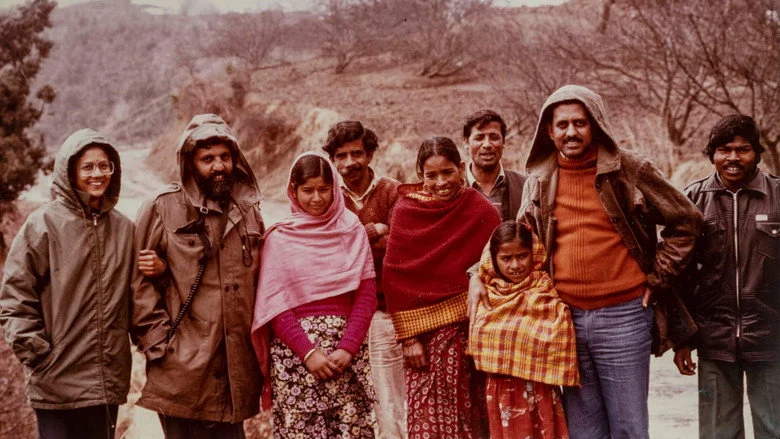
Watch K. Lalita move through the Himalayan foothills and you understand the film’s thesis without a single line of dialogue. Her Sudesha Devi is not a woman who speaks truth to power; she is a woman whose daily labor, hauling firewood, navigating steep terrain, feeding her family, becomes the protest itself. Lalita’s performance is built on physical endurance and composure, never dramatized emotion. That restraint is the movie’s quiet strength.
She anchors every frame with a stillness that suggests someone who has already accepted the cost of resistance. The portrait-style sequences of her traversing the mountains are the film’s most praised scenes, and rightly so. They connect the sweat of survival to the politics of conservation in a way that feels lived, not staged.
The Chipko Movement Gets a Face, Not a Lecture
The Yugantar Film Collective directs with a clarity that respects its subject. Instead of a broad historical recap of the Chipko movement, the film narrows its lens to one activist and one ecological struggle. Landscape and labor function as narrative tools here; the mountains are not a pretty backdrop but an active presence in every protest and every hardship.
The screenplay follows a linear documentary structure, efficiently setting up place and conflict in its first half before moving briskly toward consequences. The weakness is evident: at 34 minutes, the compression leaves little room for broader contextual detail or deeper personal history. The imprisonment sequence arrives with impact but without the narrative buildup that a longer format might have earned.
Genre-Core Execution: A Documentary That Respects Its Form
As a documentary, Sudesha relies on observational portraiture around a real activist figure. It does not manufacture drama where none exists. The connection between social struggle and environmental degradation is drawn with deliberate, unflashy strokes. Ordinary work, cooking, gathering, walking, is framed as political action, which is exactly where the film’s ecofeminist heart beats.
The scene of women working in the forest-dependent village while timber traders loom as an economic threat captures the film’s central tension. There is no villain with a face here; the antagonist is a structural force, felt through its pressure on daily life. The film trusts its audience to understand that threat without spelling it out.
Where the genre execution stumbles is in its brevity. The protest leading to imprisonment is covered with speed that feels almost abrupt. This is a documentary that knows its subject deeply but is forced to skim the surface of its own narrative arc. The result is focused, yes, but also slightly hungry for more.
For those interested in how regional cinema continues to document ecological resistance, Hindi Documentary reviews offer a wider lens on similar traditions.
Supporting Cast: A Community, Not a Chorus
Poornachandra Rao, Rama Melkote, K. Shyamala, and K. Seethadevi collectively build the village ecosystem around Sudesha. None of them get individual moments of development, but their presence reinforces the women-led labor and social environment that makes the protest credible. They are not background noise; they are the proof that this resistance is communal.
The casting signals an intent to show activism as a shared burden rather than a solo hero’s journey. Their faces, weathered and grounded, lend authenticity to the film’s political claims. One wishes the runtime allowed them more space, but their function within the collective framework is clear.
A Political Film, Unapologetically So
There is no controversy here beyond the inherent politics of the subject matter. A film about forest conservation protest and timber-trade conflict is, by definition, taking a side. The Yugantar Film Collective does not pretend otherwise. This is cinema as activism, rooted in the historical reality of the Chipko movement and its women participants.
The IMDb rating of 6.6 reflects an audience that appreciates the film’s focus but wishes for more depth. A review snippet from HDHub4u lands at 3.5/5, praising the concise structure while acknowledging its limitations. Audience complaints mirror the critical ones: too brief, limited character expansion, and a documentary restraint that may feel flat to mainstream viewers. That is not a flaw for the right audience, it is a feature.
The Verdict: Essential Viewing for the Patient
This is a film for viewers who understand that political cinema does not need a three-act dramatic arc to be effective. Watch it on OTT or a regular screening where you can sit with its images. Sudesha is a reminder that the personal is political, and that the forest is not a backdrop, it is a lifeline.
K. Lalita’s performance and the collective’s disciplined direction make this a meaningful, if brief, addition to ecofeminist cinema. I found myself wishing for another twenty minutes, which is perhaps the film’s truest compliment. Sudesha earns a solid 3.5 out of 5, a focused, principled short film that knows exactly what it wants to say and says it without waste.
For a contrast in how father-son dynamics handle narrative tension, Bhaskara Bharanam review offers a different kind of regional storytelling.
If you prefer your political cinema with a warmer, more familiar comedic touch, Uttar Da verdict takes a gentler route through social themes.
Sudesha (2026): K. Lalita’s Quiet Gaze Anchors a Timely Ecofeminist Portrait
Visually captivating cinematography, stellar sound design, and commanding performances.
Slight pacing drag in the second act before the climactic resolution.