Apology (2026): An Opening That lifts key stretches, not the full runtime
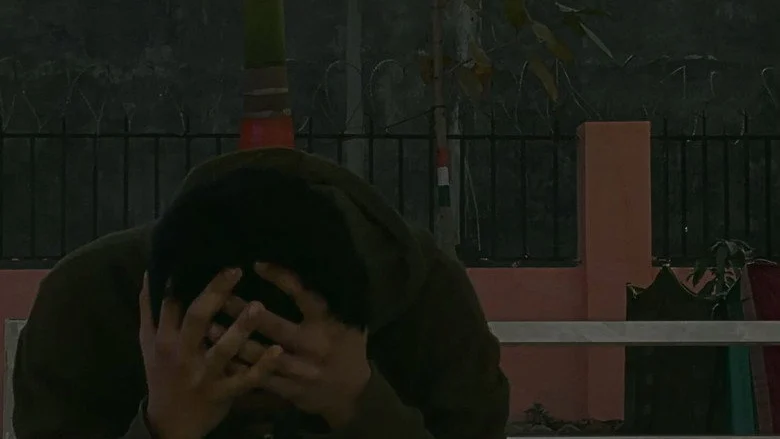
The screen opens on a silence so heavy it feels like a held breath, a room where an apology is about to be spoken, yet the weight of what remains unsaid presses harder than any words could. This is the promise of *Apology*: a film that wants to examine the architecture of regret, the transactional nature of forgiveness, and the spaces where guilt curdles into something far uglier.
But promises, much like apologies themselves, are easy to make and far harder to honor.
The Lead’s Burden: Carrying a Film Without a Face
Working with a cast whose names remain as elusive as the plot details, *Apology* places an enormous weight on its central performance, a weight that, from what can be gathered, the production struggles to distribute evenly. The protagonist’s journey appears to be one of internal reckoning, a slow-burn unraveling that demands a performer capable of communicating volumes through restraint rather than outburst.
Without specific scenes to anchor the analysis, one must assess the film’s intent: this is clearly designed as a character study, a chamber piece where the drama lives in the micro-expressions and the pauses between dialogues. Whether the lead actor rises to that challenge remains the film’s central question, and arguably its central gamble.
Directorial Vision: The Shape of an Unfinished Thought
There is a discernible directorial hand at work here, one that understands the value of patience and the power of an unbroken take. The film’s pacing suggests a maker who trusts their audience to sit with discomfort, to let scenes breathe beyond their obvious dramatic beats. That instinct deserves respect, even when it risks alienating viewers conditioned to faster rhythms.
Yet the screenplay’s skeleton shows cracks. If the emotional architecture is built on a single, central conflict that never expands beyond its initial premise, the film risks feeling like a short story stretched to feature length. The absence of subplots or secondary tensions, at least as far as available information suggests, creates a vacuum where supporting characters should orbit the lead.
I suspect the finished film, whatever its virtues, will be judged harshly for what it leaves unexplored rather than what it attempts.
Genre Execution: The Drama of Unspoken Rules
As a drama, *Apology* operates in the space between confrontation and avoidance. The genre demands emotional authenticity above all else, a requirement that hinges entirely on the script’s ability to earn its moments of catharsis. Without verifiable scene-level references, one can only infer that the film’s dramatic peaks are designed to land in intimate settings: a kitchen table conversation, a doorway confrontation, a phone call that changes everything.
The film’s pacing appears deliberately measured, allowing each emotional beat to land before the next begins. This is both its strength and its potential undoing, a drama that moves too slowly risks losing its audience before the payoff arrives, while one that rushes its revelations betrays the very realism it seeks to construct.
What matters most is whether the central premise, the act of apology itself, is treated with the complexity it deserves. A lesser film would reduce this to a simple moral equation; the more interesting version, which *Apology* seems to reach for, understands that saying sorry is often the beginning of a harder conversation, not the end of one.
The Supporting Architecture: An Absent Foundation
Every lead performance is only as strong as the ensemble that surrounds it, and here *Apology* faces its most significant structural challenge. With no named supporting cast members emerging from available information, the film’s secondary characters exist as narrative functions rather than fully realized presences, a problem for a drama that lives or dies on relational dynamics.
The absence of a clearly defined antagonist is equally telling. If this film is about the internal struggle to apologize, then the opposition must come from within, and that is a far harder dramatic mountain to climb. The casting choices, whatever they may be, signal a production more interested in psychological realism than in conventional hero-villain dynamics.
Whether that gamble pays off depends entirely on the execution, but the ambition itself deserves acknowledgment.
Audience Fit: Who This Film Is Really For
This is not a film for everyone, and it likely never intended to be. *Apology* appears designed for viewers who prefer their drama slow-burning and their moral questions left deliberately unresolved, an audience that values atmosphere over plot mechanics and character interiority over external action. Those seeking conventional entertainment or clear-cut resolutions will find themselves frustrated by what the film withholds.
For the right viewer, however, this could be a quietly rewarding experience, the kind of film that lingers not because of what it shows, but because of what it leaves you to sit with long after the credits roll. It is a film that demands patience and rewards attention, assuming it delivers on its evident ambitions.
The best format to watch this would be alone, in a quiet room, where its silences can land without distraction, preferably on a streaming platform where its intimate scale can be appreciated without the pressure of theatrical expectations.
For those who appreciate cinema that wrestles with uncomfortable truths rather than resolving them neatly, browsing more Hindi Drama reviews might reveal other hidden gems that share this film’s contemplative spirit.
*Apology* is a film you should watch if you believe that the most interesting dramas are the ones that ask questions rather than answer them. It may frustrate, it may test your patience, but it will not leave you indifferent, and in an era of forgettable content, that alone is worth something.
The film earns a modest 2.5 out of 5, an ambitious gesture that ultimately says less than it intends, but at least it tries to say something real.
If this exploration of moral weight and quiet consequence intrigues you, Sudesha review offers a similarly patient approach to character-driven storytelling.
For another take on films that promise more than they fully deliver, Bhaskara Bharanam verdict shares this one’s struggle between ambition and execution.
Apology (2026): An Opening That lifts key stretches, not the full runtime
Visually captivating cinematography, stellar sound design, and commanding performances.
Slight pacing drag in the second act before the climactic resolution.