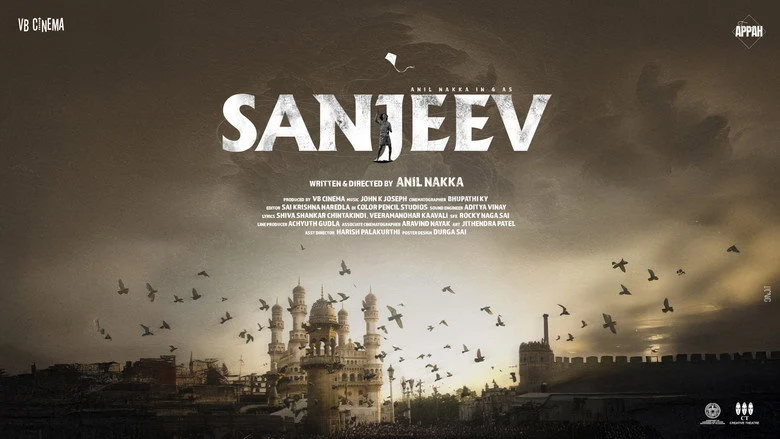
Sanjeev (2026): Anil Nakka’s Raw Minimalism Cuts Through the Noise

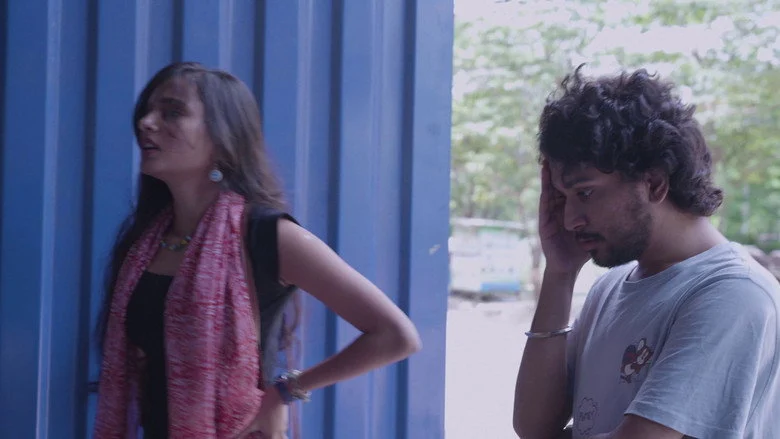
There’s a moment in the film where Sanjeev simply stops talking mid-sentence, and the silence does the talking. Anil Nakka, who also directs, plays this with a stillness that feels lived-in rather than performed.
He doesn’t reach for dramatic flourishes, and that restraint becomes the film’s quiet strength. Nakka’s face carries the weight of a man who has stopped expecting things to go right.
A Director Who Knows When to Step Back
Nakka the director shows real economy here, he trusts the frame and the actor over exposition. The screenplay, however, leans too heavily on implication, leaving a few emotional beats undercooked.
The 70-minute runtime helps. It forces a lean, purposeful structure that a longer cut might have padded into mediocrity.
The Genre Core: A Study in Tension, Not Action
Without a defined genre label, the film operates as a slow-burn character drama with thriller undertones. The tension isn’t in what happens, but in what Sanjeev might do next, and Nakka plays that ambiguity beautifully.
The craft here is about absence: missing frames, withheld information, and conversations that end too early. It’s a deliberate choice that gives the film an uneasy, almost paranoid energy, even in quieter moments.
That said, some of these stylistic gaps feel like shortcuts rather than choices. When a payoff never arrives, the patience the film demands starts to feel less like art and more like a test.
The Supporting Cast Builds a World of Weight
Veeramanohar Kavali as Shiva brings a grounded, pragmatic energy that contrasts well with Sanjeev’s internal chaos. His scenes feel like the only moments of relief in an otherwise heavy narrative.
Harish Palakurthi and Achyuth Gudla round out the ensemble with naturalistic performances that keep the world believable. Laya Miryala as Pallavi has limited screen time, but her presence lingers, she represents the normal life Sanjeev can’t quite reach.
Each supporting player signals the film’s intent: this is a story about how a man’s spiral affects everyone in his orbit.
Audience Reception and the Politics of Minimalism
The film’s sparse approach will divide viewers. Those who appreciate arthouse pacing will find depth; others will see it as a lack of content stretched thin.
There’s no controversy here, but the film’s refusal to explain itself is its own kind of provocation. In an era of over-explained cinema, Sanjeev dares you to keep up.
I found myself more impressed than moved, but that’s a personal preference, the craft is undeniable.
For more on this kind of stripped-down storytelling, browse more Telugu Drama reviews that tackle similar formal experiments.
Sanjeev is a film that rewards patience but demands it too. If you’re in the mood for something raw and unpolished, this is worth your 70 minutes, just don’t expect easy answers. The film works best on a small screen where its intimate framing can breathe.
Sanjeev is a bold, imperfect experiment that earns a solid 3 out of 5 for its fearless minimalism and Nakka’s committed lead turn.
If this kind of restrained character study appeals to you, TOY GUN review explores similar formal risks with its own narrative gaps.
For another take on consummate writing in a different register, Modha Rathri verdict shows how craft can elevate even lighter material.
Ankit Jaiswal is the Chief Author, covering Indian cinema and OTT releases with honest, no-filler criticism. An SEO strategist by background, he brings a research-driven approach to film writing, cutting through hype to tell you exactly what's worth your time.