Governor (2026): Manoj Bajpayee’s Restraint vs a Slow Economic Thriller
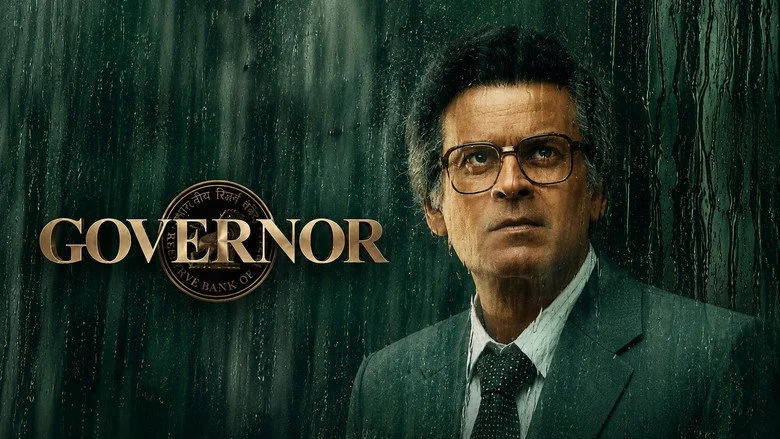
Raman sits across from men who want him to bend, and he doesn’t. The RBI Governorship is being handed to a reluctant bureaucrat while inflation eats the country alive, and Manoj Bajpayee makes every second of that hesitation feel like a national emergency. This is a film that wants to be a slow burn, and it is, sometimes to its own detriment.
A Reluctant Hero Who Carries the Weight Alone
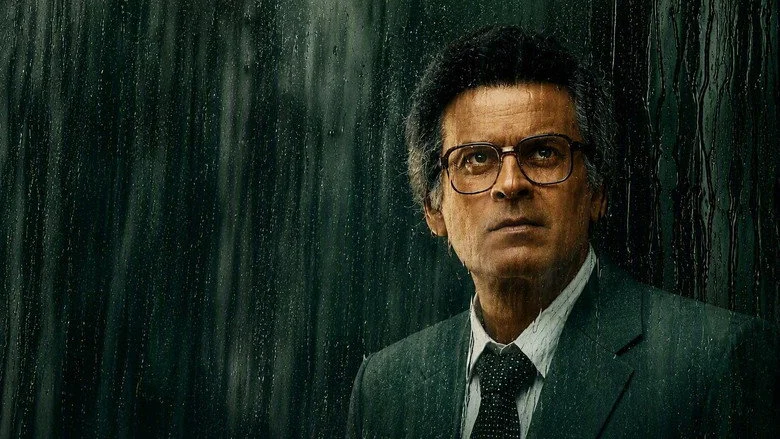
Bajpayee’s Raman is built on restraint, not dramatics. His best moments come in the decision-heavy scenes where pressure mounts and his face does the talking, the crisis-management sequences where a single signature could sink or save the economy. He carries the material far more effectively than it carries him.
There is a specific gravity to how he handles the institutional confrontation scenes. The film repeatedly frames economic stabilization as national survival, and Bajpayee sells that conviction without ever raising his voice. It’s a performance that reminds you what he can do when the script gives him a spine to work with.
Direction and Screenplay: Serious Intent, Uneven Pulse
Chinmay D. Mandlekar directs with a sober hand, keeping the narrative focused on political and institutional pressure rather than cheap theatrics. The premise, a 1990s economic crisis thriller centred on the RBI, is genuinely distinctive and historically anchored.
The flaw is pacing. The explanatory stretches around economic context and institutional procedure slow the middle sections to a crawl, and the film’s sober treatment limits its mass-market engagement. The screenplay is linear, which suits the procedural tone, but it never quite finds a propulsive gear when it needs one.
The Thriller Mechanics: Tension Through Procedure
The film builds suspense through institutional deadlines and political pressure rather than physical danger. Raman’s appointment at the brink of bankruptcy establishes the genre setup immediately, and sequences showing fuel shortages and inflation pressure demonstrate how macroeconomic stakes can function as thriller mechanics.
It’s a grounded, issue-focused approach that respects the audience’s intelligence. The tension comes from watching a man navigate a system that keeps trying to swallow him whole.
But the second half, while more intense, remains restrained, never fully propulsive. The procedural structure works in theory but the film doesn’t always translate policy pressure into cinematic momentum. I found myself wishing for one scene that broke the pattern entirely.
Supporting Cast: An Ensemble Left in the Shadows
Adah Sharma appears within the political-drama framework but gets little to work with in terms of scene-specific impact. Her casting signals the film’s intent to balance the institutional heaviness with a more accessible presence, yet the material doesn’t give her room to register strongly.
Madhoo and Noushad Mohamed Kunju round out the principal cast, but neither receives detailed attention in the narrative. The antagonist function here is largely systemic, spread across political and institutional resistance rather than a single identifiable villain. That’s a bold choice that fits the film’s serious tone, even if it costs the drama a focal point for audience frustration.
Box Office Reality and Audience Reception
The numbers tell a clear story. Opening day collections landed at ₹0.90 crore nett in India with a worldwide gross of ₹1.08 crore, as tracked by Hindustan Times and Moneycontrol. Bollywood Hungama reported the first week total at ₹4.98 crore nett domestically and ₹7.39 crore gross worldwide.
Pinkvilla confirmed the film wrapped its theatrical run as a flop, with collections ending around ₹5 crore nett in India. The audience complaints mirror the critical ones, pacing felt slow, commercial appeal was limited, and word-of-mouth never amplified. Those who appreciated the film praised Bajpayee’s central performance and the seriousness of the historical framing.
Browse more Hindi Thriller reviews for similar institutional dramas.
Verdict: A Performance Worth Respecting, A Film Hard to Love
Governor: The Silent Saviour is for fans of Bajpayee and viewers who appreciate political-economic dramas with historical roots. It is not for anyone seeking action-heavy pacing or a conventional commercial structure, the film wears its seriousness like armour, and that limits its reach.
Watch it on OTT where the restrained pacing feels less punishing and the performance can breathe. The theatrical experience apparently did it no favours, given the weak box office response.
For a similar clash between institutional duty and political pressure, Bharat Bhhagya review offers another angle on systemic conflict.
Governor: The Silent Saviour earns a respectable 2.5 out of 5, Bajpayee’s controlled brilliance deserves better than a film that never quite finds its own pulse.
Those seeking a tighter take on bureaucratic resistance might find Haunted 3D verdict a curious tonal contrast.
Governor (2026): Manoj Bajpayee’s Restraint vs a Slow Economic Thriller
Visually captivating cinematography, stellar sound design, and commanding performances.
Slight pacing drag in the second act before the climactic resolution.