Ikka (2026): Sunny Deol’s Courtroom Drama Never Finds Its Legal Teeth
Sunny Deol’s Arjun is at his most animated when he is shouting across a packed courtroom, his baritone bouncing off the wooden benches as he argues that justice cannot be reduced to appearances. That is the film’s central promise, a moral confrontation between a lawyer who doubts his client and the duty that binds him, and for a brief moment, in the final 30 minutes, Ikka delivers exactly the kind of tension its premise deserves. The problem is getting there.
The film, directed by Siddharth P. Malhotra, is a 140-minute Hindi courtroom drama that wants to be a heavyweight legal thriller but settles for being a forgettable drama that mistakes swagger for substance. It opens with Arjun, a respected lawyer, refusing a murder case before being pulled back in by conscience and circumstance. The setup is clean, almost textbook, a man who believes in the law forced to defend someone he suspects is guilty. What follows, however, is a long stretch of repetitive courtroom exchanges and overdone melodrama that tests patience before the film finally finds its footing in its closing stretch.
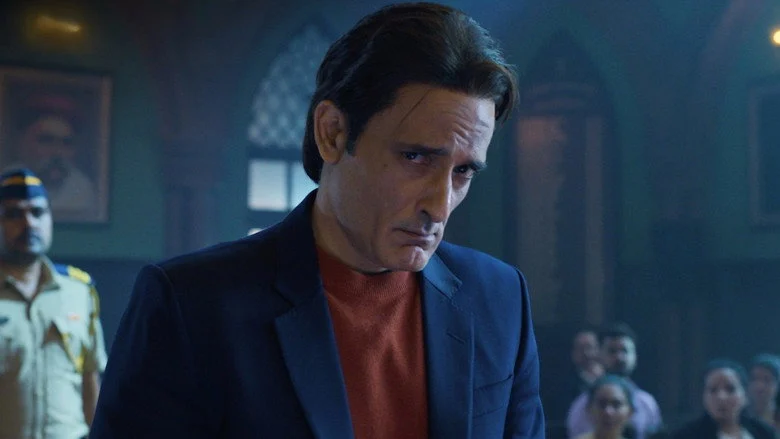
Akshaye Khanna’s Quiet Menace Makes the Courtroom Worth Watching
Khanna, playing the antagonist Raghav, is the film’s most controlled element. Where Deol brings volume, Khanna brings stillness, a reactive, coiled presence that makes every scene he occupies feel sharper. Reviews suggest his character is more effective as a counterweight than as a fully developed villain, but that counterweight is exactly what the film needs.
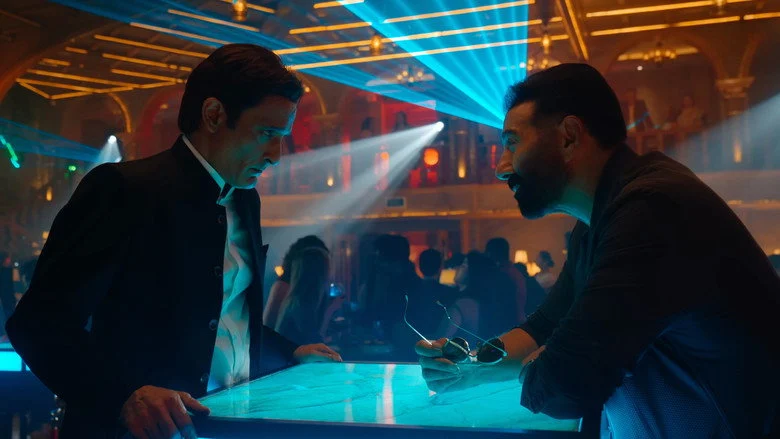
His restraint highlights what Deol’s performance lacks in subtlety. The two actors share a clear moral opposition, and when the script lets them simply face each other, Ikka works. The problem is that the writing does not always match their intensity.
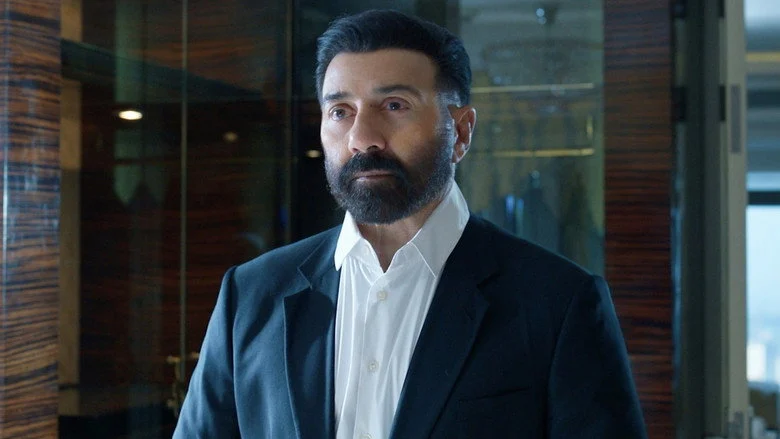
Sunny Deol’s Shout-Driven Energy Meets a Script That Can’t Keep Up
Deol is strongest in confrontation scenes that depend on forceful delivery, his natural register for this material. His role is built around courtroom confrontations, and when the camera lets him hold frame and let loose, there is a familiar, almost nostalgic charge to it. But critics have noted that the part is not always supported by writing that matches his intensity.
The moral conflict at the centre, defending a man you suspect is guilty, is a good one, but the screenplay keeps returning to the same argument beats instead of deepening them. Deol commits fully; the film around him does not always earn that commitment.
The Genre Core: A Legal Drama That Runs on Argument, Not Action
Ikka is a courtroom drama first and a thriller second, which means its engine is dialogue and moral positioning rather than set pieces. The film uses dialogue-heavy exchanges as its main source of suspense, and when those exchanges land, it works. The lawyer-versus-client conflict drives the stakes throughout, and there is a consistent attempt to frame privilege against justice.
But the pacing is uneven. The middle section is where the film loses its grip, repetitive courtroom scenes and family-crisis material that feels stretched rather than urgent. One review noted the film isn’t a snooze fest either, which is faint praise for a genre that lives or dies on sustained tension.
The final 30 minutes are the film’s strongest argument for itself. Multiple reviews identify this stretch as the most engaging, and it is here that the case reaches its dramatic peak. It is a telling sign that a film can save its best work for the end, but a stronger edit could have spread that energy across the whole runtime.
Dia Mirza, Tillotama Shome, and the Ensemble’s Underused Weight
Dia Mirza appears in the film’s moral and emotional framing, serving as the conscience-adjacent presence that anchors Arjun’s personal stakes. Her role is supportive rather than courtroom-dominant, but she brings a seriousness that fits the film’s tone. Tillotama Shome adds texture to the ensemble, she is part of what gives Ikka its intended gravitas, even if reviews do not single out a standout arc for her.
Sanjeeda Sheikh and Shishir Sharma round out the supporting structure, functioning within the family and legal-drama framework. The casting signals ambition, this is a serious ensemble, not a vanity project, but the screenplay does not always give them enough to do. The film feels like it has the right actors for a sharper script.
Audience Reception and the Verdict on This Courtroom Drama
Audience sentiment mirrors critical response. The average rating across multiple Indian review outlets sits at 2.5 out of 5, and the complaints are consistent: a stretched runtime, formulaic writing, and a reliance on melodrama over legal complexity. Viewers looking for a confrontational legal drama found the lead pair’s screen presence engaging, but many wanted stronger legal writing and fewer predictable beats.
The morality-and-justice setup was appreciated by those seeking a serious drama, and the final stretch won back some goodwill. But a film that only truly engages in its last half-hour has a structural problem, not a casting one. I found myself wishing the middle had been cut by at least twenty minutes.
If you are a Sunny Deol fan who wants to see him in full courtroom mode, Ikka delivers in patches, particularly in its closing act. But if you are looking for a tightly written legal thriller that respects your intelligence throughout, this is a watch-on-OTT-at-best situation, best suited for a lazy afternoon when you are willing to fast-forward through the repetition to reach the payoff.
For more Hindi courtroom drama reviews and legal thriller analysis, browse Hindi Thriller reviews.
In the end, Ikka is a film that mistakes volume for conviction, a 2.5-out-of-5 courtroom drama that only finds its voice when it is nearly over. For a sharper take on moral conflict in legal settings, check out Lakshmikanthan Kolai review. And for another uneven genre exercise carried by its lead’s charm, see Idhayam Murali verdict.
Ikka (2026): Sunny Deol’s Courtroom Drama Never Finds Its Legal Teeth
Visually captivating cinematography, stellar sound design, and commanding performances.
Slight pacing drag in the second act before the climactic resolution.