Mirzapur: The Movie Ending Explained: Beena’s Secret & What the Salon Gunshots Mean

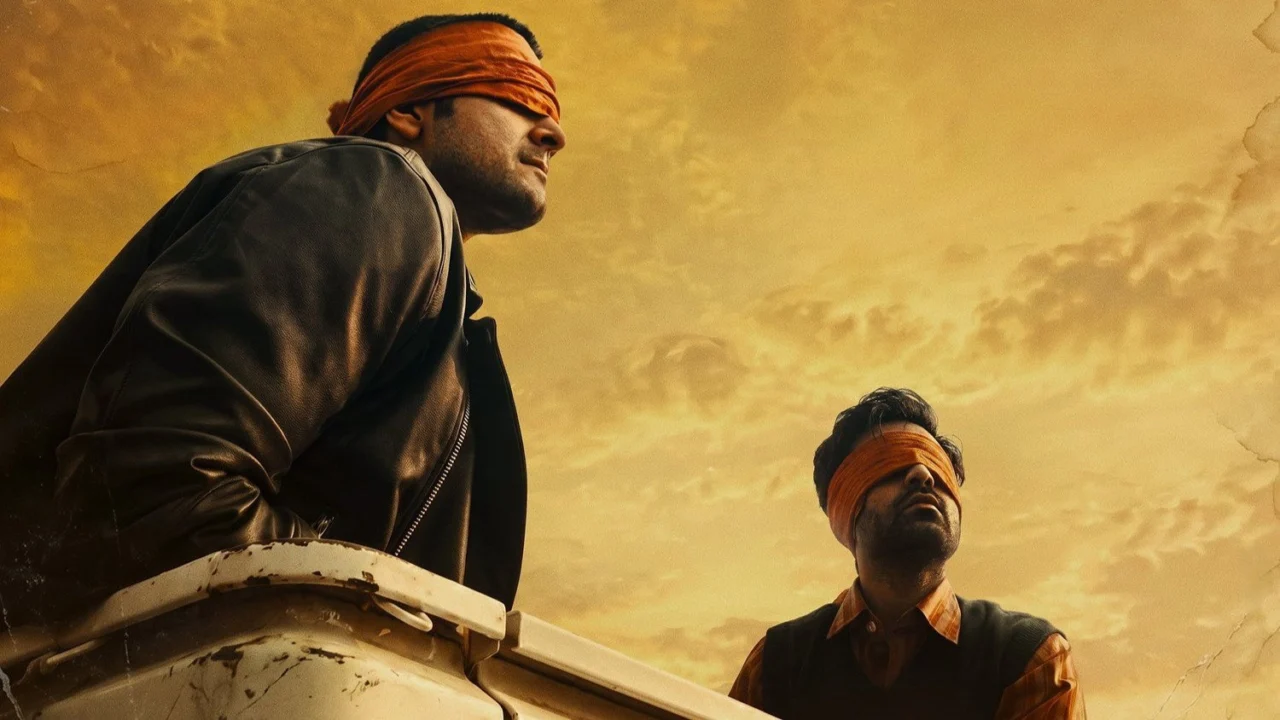
The last sound in Mirzapur: The Movie isn’t a bullet entering flesh. It’s the wet smear of a salon facial, the low hum of an exhaust fan, then the cold click of a pistol clearing leather after Guddu says “Swaranjali” and Munna says “Sweety.” Cut to black before the violence lands. A friendship dies without a body.
This is not an afterthought. It is the emotional thesis of a 197-minute prequel expansion that worked overtime to remind you Mirzapur’s demons never stay buried. Guddu and Munna can survive a desert war together, but they cannot survive the same woman. To understand the blast, you have to walk backward through a kidnapping, a near-death resurrection in the sand, and Beena Tripathi’s surgical cover-up.
The Road to the Climax: Stakes and Shifting Loyalties
Set against the 2018 backdrop, the film widens the opening cracks of the TV saga by forcing Kaleen Bhaiya to defend his throne against Babban Yadav, a rival who wants power and is happy to burn every bridge between Mirzapur and Rajasthan for it. Babban doesn’t fire warning shots. He kidnaps, bruises, and sends a message through bodies that wash up in the right places. The pressure level around the Tripathi stronghold keeps climbing until one wrong move can no longer be talked away. At the same time, the inner courtyard simmers with familiar wounds: Munna resents Guddu’s closeness to Kaleen, Guddu resents Munna’s entitlement, and both men circle Sweety Gupta like planets waiting to collide.
The tinderbox sparks when Babban lures Kaleen into a trap baited with Birju Lohar, a name that carries an old iron-quarter grudge. With Kaleen captured and the empire suddenly headless, the blood rivals are forced to pick a side. Bablu Pandit joins the rescue, Munna swallows his jealousy, and Guddu straps himself into the role of the man who will bleed first. They move toward Jaisalmer not as brothers, but as men sharing a truck with separate grudges and a shared target.
The Climax Deconstructed: Step-by-Step Breakdown of the Final Showdown
The Jaisalmer sequence trades the mansion’s drawn curtains for open desert brutality. Babban’s men control the streets and rooftops, and the rescue crew fights through a narrow, burning maze of alleys where every corner could be the last. The battle doesn’t look choreographed. It looks like a brawl between men who have been waiting for years to hate each other in the open.
The turning point comes from a jeep, not a bullet. Guddu is crushed beneath the vehicle during a push too far ahead of the group, and for a terrible minute, his eyes go glassy in the dirt. Bablu dives in with a crude revival shot—an adrenaline stimulant often used on collapsed camels—and jabs it straight into Guddu’s chest. There is no divine intervention here. It’s a filthy, desperate medical gamble on a battlefield. Guddu coughs back to life and rises without a single theatrical speech. He just grabs his weapon and rejoins the slaughter.
Babban dies in that melee, cut down before he can process that his girlfriend Mumtaz has already been killed in the crossfire. Kaleen is freed from his cell by a local political operator, Bhairav Singh Karnawat, who has his own reasons for wanting Babban erased. The surviving crew limps back to Mirzapur. The war is won. The uneasy peace is already rotting.
The Big Twist: Hidden Breadcrumbs and Narrative Misdirection
Babban was the visible enemy, but he was never the hidden one. The actual revelation lands inside the Tripathi mansion when Birju Lohar infiltrates the compound and Beena Tripathi shoots him before he can say why he was there. The film slowly reveals that Beena had a connection to Birju and a working knowledge of his family’s vendetta against Kaleen. She didn’t fire the bullets that started this war, but she opened the gate, adjusted the timing, and made sure the chaos served her own buried purposes.
The breadcrumbs are visible if you watch her hands rather than her dialogue. Earlier in the film, whenever Birju’s name comes up in family conversation, Beena busies herself with trivial business—folding cloth, adjusting a curtain, inspecting her nails—never asking questions, never flinching. On a second viewing, that calm reads not as disinterest but as careful choreography. Then there’s the night Birju enters the mansion: a compound that normally swallows intruders whole suddenly has a conveniently thin patrol rotation, and Beena is conspicuously absent from the room where Kaleen is brooding. She plants herself exactly where she needs to be, then performs the perfect protective wife when the killing shot comes from her own hand.
Kaleen’s eyes say everything. He can’t prove it, but he knows. In that moment, Beena stops being the sad woman pouring tea and becomes a threat the king cannot place under arrest without exposing his own kingdom’s rot.
Character Fates: Who Survived and Where the Moral Lines Fell
When the dust settles, the Tripathi empire is intact but terminally infected. Guddu Pandit survives the rollover and the battle, yet the clean-hearted outsider who walked into this saga has been hollowed out and replaced with a more efficient killer. He returns to Mirzapur with Kaleen’s trust and no innocence left to spend. Babban is dead, cut down by the machinery he tried to dismantle. His end doesn’t feel triumphant; it feels like a warning, especially because he entered this war grieving a woman and exited as a corpse on the same sand.
Kaleen survives the kidnapping, but the psychological wound is deeper than any bullet. He has to keep sharing a house with Beena, the wife who neutralized Birju with a single round and may have orchestrated the threat in the first place. Munna and Bablu survive as well, and each carries a different scar: Munna’s jealousy has only been paused, not cured; Bablu has seen Guddu at his most beastlike and understands what he’s become. Birju is dead, Mumtaz is dead, and their doubles are buried in the sand.
Morality in Mirzapur does not win. It just changes uniforms. Guddu is no longer the avenger with clean motivations—he is Kaleen’s most trusted weapon, and that promotion is a loss of identity in every way that matters.
Thematic Deconstruction: What the Final Shot Really Means
The salon scene is hardly a victory lap. Two men in facemasks, shoulder to shoulder in reclining chairs, cannot see each other’s eyes. They glance into mirrors and see distorted versions of themselves while the conversation drifts into confession. This is Mirzapur’s entire worldview condensed: power is not won by eliminating external enemies. It is held together by the fragile decision of your closest allies not to turn on you. The moment they suspect you want the same thing they want, the alliance is a paper cup in a flood.
The director strips the men of their weapons and their posture, lays them in a soft consumer space where normal people get haircuts, and still lets the hum of the machinery curdle into menace. Guddu says “Swaranjali.” Munna says “Sweety.” Two names for the same woman. The sound design does the rest—the pulse of the facial machine is louder than a heartbeat. Men love to think they are divided by god and country and revenge. Mirzapur knows better: they are divided by whoever gives them a reason to reach for a gun.
Unanswered Ambiguities & The Biggest Fan Debates
That final gunshot has split audiences into two camps. The more fatalistic theory sees the shot as a hard reset: Guddu, Munna, or both are hit in the salon, because the franchise has always insisted that an unresolved love triangle cannot be delayed forever. They argue the prequel put those two men into one room for a reason and that the weapon had to go off before the sequel can jump to the show’s Season 1 timeline, where Sweety is married to Munna but still belongs to Guddu’s heart. In that reading, the body count is the price of continuity.
The other camp treats the blast as a calculated fakeout. They believe the sequel will open in that salon, pull back, and reveal someone firing into the ceiling rather than at flesh—or that the shot comes from Bablu, who has been texting Golu while the tension boils and finally acts to separate his friends before they kill each other. That interpretation preserves both characters for the next installment while promising that their friendship has permanently shattered. Either way, fans are not arguing about whether murder happened. They are arguing about who gets to survive their own love story.
Post-Credits Tease & Franchise Future: What Happens Next?
Keep your seat through the end of the full crawl. The post-credits sequence shows Guddu, Munna, and Bablu in the salon, with Bablu on his phone texting Golu while the other two get facials. The conversation shifts to girlfriends with the lazy ease of men who have just had their heart rate dropped after surviving a desert. Then comes the coordinated double confession. Guddu says “Swaranjali.” Munna says “Sweety.” The mirror catches both faces at the same moment, and the temperature in the room drops below zero. A gun clears its holster, and the frame cuts before the impact.
There is no official word on a season continuation or a direct sequel, but the scene is built as an explicit handshake with what comes next. The next chapter will have to put Guddu, Munna, and Sweety on a collision course with the show’s canon, where Sweety is promised to Munna while loving Guddu. Beena remains in the shadows with Kaleen’s suspicion following her. Nothing is closed. Everything is loaded.
The ending of Mirzapur: The Movie does not want to satisfy you. It wants to leave you gripping the armrest with a question that has no comfortable answer: when two men love the same woman, and both have guns, survival means nothing if the man beside you is the one who walks into the next room with your secret. In Mirzapur, the crown is not passed. It is borrowed until someone you trust decides they want it back.

Recommended for You
Michael (2026): Jaafar Jackson s lifts key stretches, not the full runtime
The Motown-era sequences land first, and for a moment, Michael feels like it might crack the code, young Michael Jackson’s voice cutting…
Apology (2026): An Opening That lifts key stretches, not the full runtime
The screen opens on a silence so heavy it feels like a held breath, a room where an apology is about to…
Toxic: A Fairy Tale for Grown-ups (2026): Yash s Double stands out while the narrative loses grip
The most discussed element of Toxic is Yash playing Raya and his son, Ticket. The father-son contrast is the film’s central hook,…