Last Man in Tower (2026): lead performance stands out while the narrative loses grip
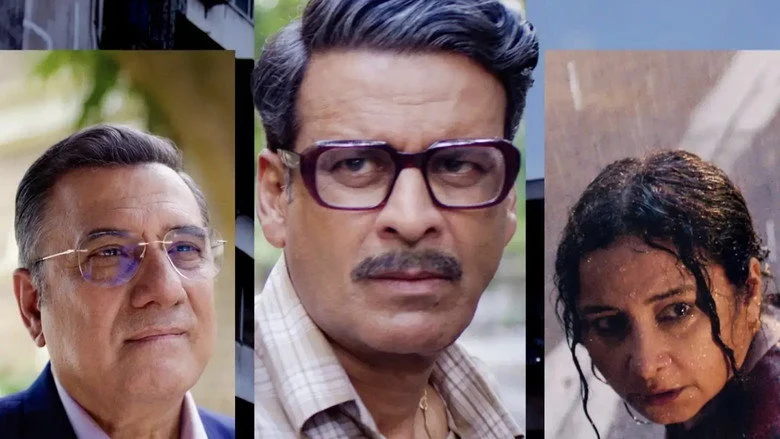
Vakola, 2010: an envelope from a builder lands in a crumbling housing society, and neighbours who shared tea for decades begin avoiding each other’s eyes. Manoj Bajpayee’s Masterji barely changes expression through any of it, and that refusal to perform is exactly what keeps you watching.
Manoj Bajpayee Builds Masterji Out of Small Refusals
Bajpayee plays retired teacher Yogesh Mishra as a man of routine, morning walk, folded newspaper, no speeches. His refusal to sell the flat lives in his shoulders, never in dialogue.
The Federal called it “a terrific performance, ” and the restraint is genuine. Masterji never argues; he simply declines, again and again, while his neighbours decide that he is the problem.
The break in that composure is the film’s best passage. When the isolation finally settles, the rage beneath the routine shows itself, and you glimpse the sharper film everyone kept declining to make. It lasts about four minutes, then the movie returns to being reasonable.

Ben Rekhi and Sooni Taraporevala Sand Down Adiga’s Teeth
Taraporevala’s screenplay is lean and legible, pushing the society’s fracture forward without a wasted detour. Ninety-seven minutes is disciplined for a novel this crowded with people and grudges.
Rekhi directs with a steady hand and almost no provocation. The community feels lived-in, the stairwells feel real, but the anger stays managed, kept at a comfortable distance. He trusts his actors to hold the frame without help, and they do.
Scroll observed that the adaptation replaces “the defiant satire in Adiga’s writing with a more familiar sense of resignation.” That is the specific flaw: a story about moral rot, told as a study in etiquette.
Juhi Chaturvedi’s Hindi dialogue keeps the residents’ speech casual and unliterary, which suits the setting. It also means the film rarely produces one line you would carry out of the theatre. For a story built on principle, the language stays insistently ordinary.
In Vishram Society, Every Handshake Is a Quiet Betrayal
As a social drama, the craft sits entirely in rooms, society meetings, doorways, kitchen tables where politeness does the work of pressure. Rangarajan Ramabadran’s frames give the crumbling colony a tactile, unglamorous weight that grounds every argument. The building becomes a character with a leaking roof and unpaid bills.
Rekhi keeps his ensemble inside the same frame whenever alliances shift, and Govind Vasantha’s score stays low underneath them. That is the right instinct: redevelopment is a collective decision long before it turns into a personal one. Nothing is scored to tell you how to feel about the vote, which is a small mercy.
Momentum is where the film slips. The first half builds the community patiently; the second accelerates Masterji’s isolation without quite earning the escalation. I found the final act too polite for the anger it is clearly sitting on. A sharper edit would have made the neighbours’ arithmetic feel like violence.
For viewers who prefer their dramas argued across a dining table rather than a battlefield, there is a wider shelf of Hindi Drama reviews worth browsing.
Divya Dutta Steals the Room While Sukant Goel Keeps Score
Hollywood Reporter India called Divya Dutta the scene-stealer of the ensemble, and Sangeeta Puri’s sharp-tongued pragmatism earns it. She plays the neighbour who has already done her arithmetic, making compromise sound like plain common sense.
Sukant Goel’s Gaurav, the pragmatic son, is the film’s quiet counter-argument to Masterji’s principle. Casting Goel opposite Bajpayee signals the real subject here, generational math, not villainy.
Boman Irani’s Dharmen Shah is written with unusual restraint for a builder antagonist. This is his first pairing with Bajpayee, and their shared politeness unsettles more than a raised voice would.
None of these performances are asked to go big, and none of them cheat. That discipline is the film’s strongest asset, holding the ensemble together even when the writing loosens its grip and reaches for resolution.
Boman Irani’s Courteous Builder Tells You Who This Is For
There is no scandal attached here, only a clear sense of who the film is for. It is a class-audience drama for viewers who know Mumbai’s redevelopment wars and want them dramatised rather than sensationalised.
Anyone arriving for confrontation will find it well-behaved instead. The betrayals are petty, plausible and small, which is the honest choice and also the least exciting one available.
Chandan Roy Sanyal’s presence in the society adds to the impression of a real building rather than a set. The surrounding casting suggests the production chose authenticity over star wattage at every turn.
The film’s relevance makes its own argument, Vakola’s redevelopment battles are still being fought across the city. It simply prefers observation to indictment, and that choice is both its integrity and its limit.
Go for a well-acted, tightly trimmed drama about one man standing still while everybody around him moves. Skip it if you want the novel’s snarl, because this film chose decency over provocation. See it in a theatre, where those quiet rooms and closing doors land harder than they would on a laptop.
The problem of a performance outrunning its material also shapes Toxic review, where one actor holds ground the screenplay keeps losing.
Last Man in Tower is worth your evening and a 3.5/5, provided you accept that it will never raise its voice the way Adiga’s novel still does.
Vishwanath Sons verdict tracks a similar fault line, where a household’s loyalty is quietly priced and eventually sold.
Last Man in Tower (2026): lead performance stands out while the narrative loses grip
Visually captivating cinematography, stellar sound design, and commanding performances.
Slight pacing drag in the second act before the climactic resolution.