Gajab Raat (2026): Manoj Bajpayee Anchors a Lean, Corrupt-Cop Nightmare
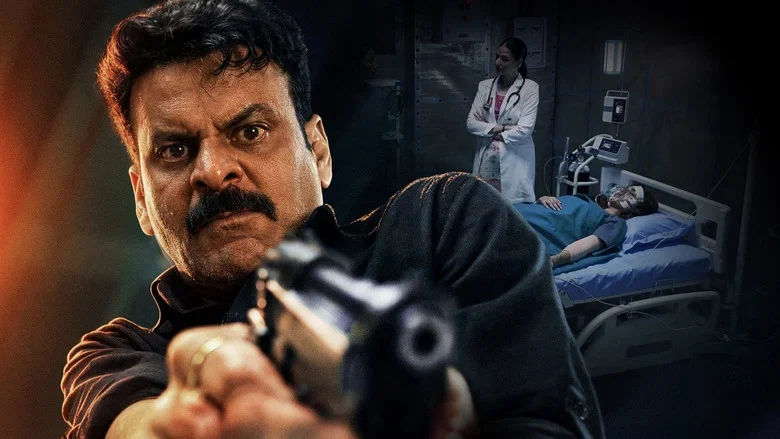
A wounded woman is shoved from a moving car into the Delhi dark, and the cop who finds her starts calculating the profit before he checks the pulse.
That is the engine of Ritesh Shah’s Gajab Raat, a one-night conspiracy thriller that hands Manoj Bajpayee a badge with no moral varnish on it.
A Corrupt Cop Is a Far More Interesting Detective Than an Honest One
Ajay Dikshit is not a man who stumbles into a case. He stumbles into an opportunity, and the screenplay lets us watch him price it.
Bajpayee plays the first beat with his hands, patting down pockets, checking the woman’s belongings before he checks her wounds. It is a small, ugly gesture that tells you everything about his priorities.
Shah’s script, co-written with Neeraj Pandey, understands that a compromised investigator generates tension an honest one cannot. Every clue Ajay chases is also a potential payday, and the film keeps those two motives grinding against each other.
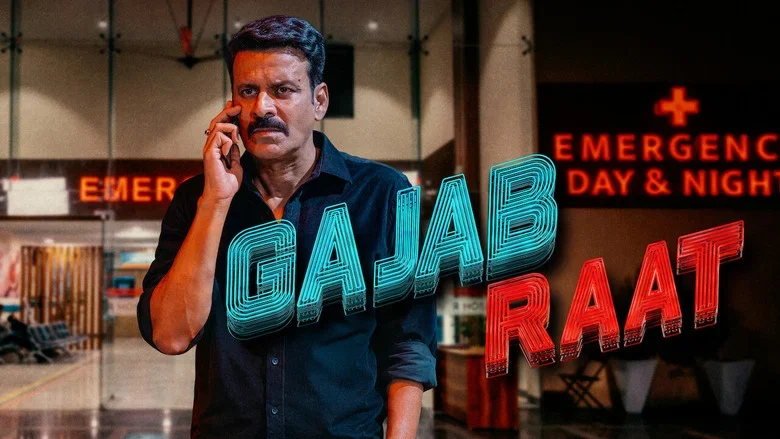
The Single-Night Structure Is the Film’s Smartest and Most Dangerous Choice
Compressed time is a thriller’s best friend and its worst enemy. It forces urgency, but it also exposes every lazy shortcut in the plotting.
Here, the clock works in the film’s favour for the first hour. Ajay moves through Delhi’s criminal and institutional layers, and the geography tightens around him as the night deepens.
The escalation from a street-level assault to a far-reaching conspiracy is where the seams start to show. The screenplay widens its scope faster than it deepens its logic, and the villain becomes a diffuse system rather than a face.
That choice is thematically defensible, corruption as an ecosystem, not a mastermind, but it costs the third act a physical antagonist to push against.
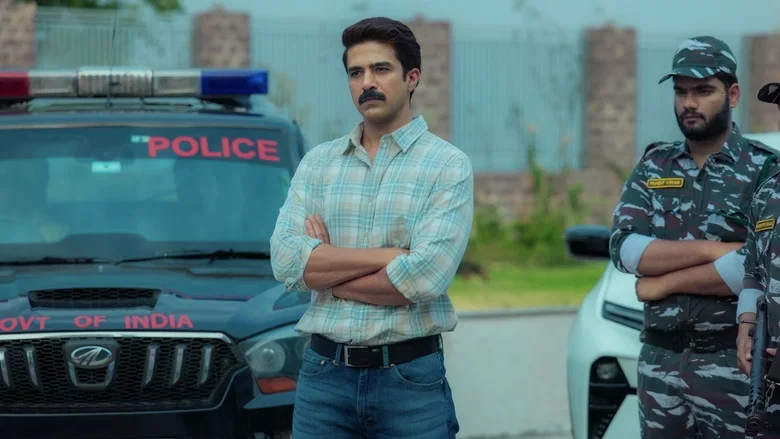
Bajpayee’s Stillness Does the Work His Dialogue Cannot
Watch how Bajpayee handles the moment Ajay realises the woman’s identity connects to something larger. He does not widen his eyes. He goes quiet, and his jaw sets, and the calculation behind his eyes shifts from rupees to survival.
It is the same instrument he used to such different effect in Last Man in Tower, where the performance carried a film that could not quite hold its own weight.
Here the material is sturdier, and Bajpayee’s restraint gives the conspiracy a human centre it otherwise lacks. His Ajay is never heroic, never redeemed, and that refusal to soften him is the film’s most honest instinct.
The Supporting Cast Is a Texture, Not a Structure
Divya Dutta appears in a handful of scenes with the kind of composed authority that makes you lean forward, and then the film does not quite know what to do with her.
That is the recurring problem with the ensemble. Nushrratt Bharuccha and Akshay Oberoi are present as faces in Ajay’s orbit, but the screenplay gives them function without interiority.
Shah directs the supporting players as pressure points rather than people, which serves the paranoid atmosphere but leaves the film emotionally thin whenever Bajpayee is off-screen.
Shah Directs the Night Like a Held Breath
The camera stays close and low, favouring the sodium glare of Delhi streets over any decorative sweep. Lensing is tight on faces, and the film trusts silence more than score.
There is a sequence in a corridor where the only sound is footsteps and a distant fan, and it generates more dread than any of the louder set pieces.
Where the direction falters is in the connective tissue between scenes. Transitions are functional rather than charged, and the film occasionally lurches where it should glide.
The tonal discipline recalls the controlled unease of Vibe, another recent Hindi thriller that understood atmosphere but struggled when the espionage machinery kicked in.
A Conspiracy Without a Face Is a Conspiracy Without a Punch
The film’s central gamble is that the system itself is the villain. It is a defensible thesis, and a timely one, but it leaves the climax without a body to confront.
By the time Ajay reaches the truth, the revelation lands as information rather than impact. The screenplay explains more than it dramatises.
That is a structural choice, not an accident, and it is the difference between a thriller that lingers and one that simply concludes.
The Box-Office Question Nobody Wants to Ask
A Manoj Bajpayee-led conspiracy thriller in the current exhibition market is a modest proposition, not a tentpole. The film’s commercial ceiling is set by its genre, not its quality.
What is at stake for the producing banners is the viability of the mid-budget Hindi thriller as a theatrical proposition at all, especially against the gravitational pull of streaming.
The film’s reported digital window is short, and that tells you what the distributors already believe about its theatrical legs.
This is the same tension playing out across contemporary hindi thrillers, where the theatrical release is increasingly a launchpad rather than a destination.
The Verdict: A Lean, Uneven Night That Earns Its Star
Gajab Raat is a film built on a single excellent idea, the corrupt cop as investigator, and it executes that idea with more discipline than most of its peers.
It stumbles when it mistakes scale for stakes, and it never quite finds a face for its evil. But Bajpayee’s quiet, unsentimental work gives the film a spine it would otherwise lack.
By dawn, Ajay has not been redeemed, and the film does not pretend otherwise. That refusal to flatter its protagonist is the most radical thing about it.
Gajab Raat (2026): Manoj Bajpayee Anchors a Lean, Corrupt-Cop Nightmare
Visually captivating cinematography, stellar sound design, and commanding performances.
Slight pacing drag in the second act before the climactic resolution.