Haiwaan (2026): Saif Ali Khan’s Blind Caretaker Fights a Hollow Villain

In the corridors of Judge Pradhan’s apartment building, Shyam Rane identifies a neighbour by the sound of their footsteps before they speak. By the time that building becomes the scene of Pradhan’s murder, that half-second advantage is all that stands between a framed blind man and a killer nobody else can smell coming.
Saif Ali Khan Finds the Man Before the Film Finds Its Villain
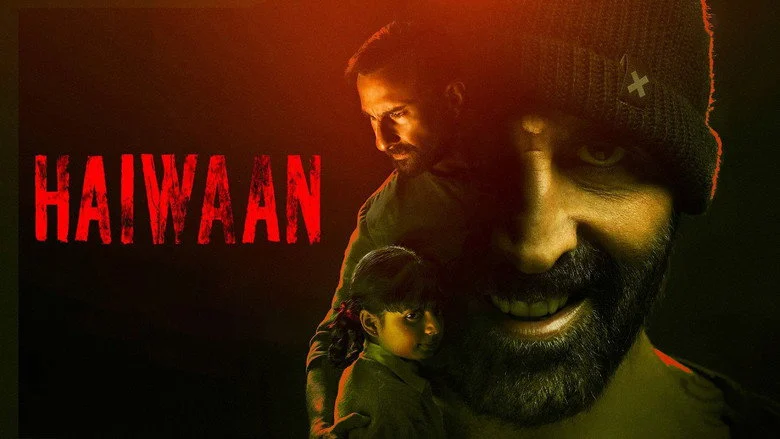
Saif Ali Khan treats Shyam’s blindness as an inventory of small skills rather than a handicap, a sniff, a tilt of the head, a hand that already knows the room. The building demonstration, where he names scents and sounds before anyone else speaks, is the film’s one genuinely authored stretch.
In the climax he uses that same radar to shield the judge’s daughter, and it is the most convincing he gets. Put him opposite Akshay Kumar, though, and the shared frames go quiet in the wrong way; neither man is given anything to push against. That is a problem the screenplay created, not the casting.
Priyadarshan Builds the Trap, Then Forgets to Spring It
Priyadarshan sets up the sensory premise with real care, then spends the second half undoing it with subplots nobody asked for. The Hindu described Saif “labouring in a defanged Priyadarshan thriller”, and that criticism lands on the direction before it touches the actor.
The screenplay stays linear and faithful to Oppam, which is the safe choice and mostly the right one. But every added police thread and family beat opens a hole the climax has no time to close. Critics averaged 2.5 out of 5, with Indian Express and Deccan Herald both sitting in that band.

The Building Demo Works; The Subplots Dissolve
Crime thrillers run on withheld information, and this one hides its MacGuffin well enough, the judge’s secret daughter is why anyone dies. The tension comes from Shyam’s nose and ears instead of his eyes, and the murder-and-framing sequence uses that inversion cleanly. For twenty minutes, this is a genuinely tense film.
Then the procedural machinery takes over: inspectors, subplots, comic asides. Indian Express summed up the result as “more uff than ole ole”, and that is the arc here, a strong premise slowly exhaling into noise. The middle hour drifts; nothing is badly staged, exactly, it is just staged too many times.
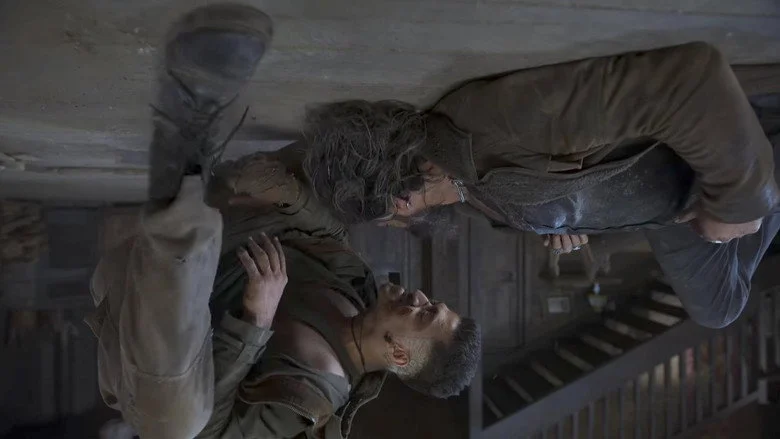
The climax leans on action, Shyam navigating by sound to shield the child while Parshuram hunts through the same building. It should be the payoff, but the confrontation ends fast and the sensory gimmick does a villain’s work. Deccan Herald settled on “a passable crime-thriller”, which is roughly the ceiling of this final act.
Films built on one sensory trick are a small, unforgiving niche, and these Hindi Thriller reviews keep track of the ones that actually pull it off.
Akshay Kumar’s Parshuram Arrives Without Dialogue and Leaves Without Impact
Akshay Kumar’s Parshuram Gokhale is written as a revenge machine with almost nothing to say, and the star offers little to fill the silence. Critics flagged those sequences as the film’s weakest, and the shared frames with Saif only expose how little the two are given to do together.
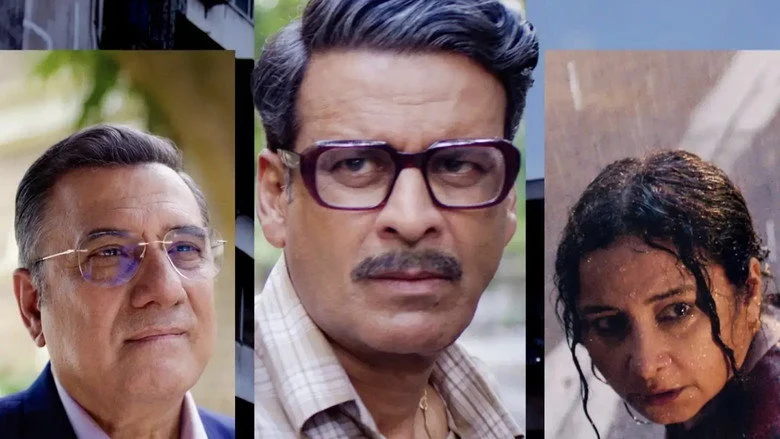
Boman Irani gives Judge Pradhan a weariness that makes his secret feel earned rather than plot-mandated. He anchors the early proceedings, and the film’s best tension walks out of the building with him. Shriya Pilgaonkar and Saiyami Kher get subplots that never develop past function, and both performers look stranded inside them.
Rajpal Yadav’s Chandu and Sharib Hashmi’s Inspector Shinde are drafted for comic relief that does not land; the timing is off and the material thinner than the performers deserve. When the funniest men in the cast cannot raise a laugh, the thriller around them has already loosened. Neither actor is the problem here.
CBFC Softened the Language, the Box Office Did the Real Damage
The CBFC asked for a sentence replacement and a softened “kamina”, so the film’s roughest edges arrive pre-sanded. Audiences were no gentler than the critics: 4.6 out of 10 across 10, 212 IMDb votes, with complaints circling the hollow villain and the subplot pile-up. That is the only friction this release generated.
Opening day brought ₹3 crore in India net and roughly ₹4.6 crore worldwide, per India Today, against a budget reported at ₹100–115 crore. I’ve seen enough star-led misfires to recognise this arithmetic. Haiwaan is a flop, and no cameo, not even Mohanlal’s at the close, changes the maths.
If you are here for Saif Ali Khan building a blind man’s physical vocabulary, the first hour justifies a ticket, and a regular screen is plenty, nothing here needs IMAX. Everyone else can wait for streaming. Fans of the original Oppam should walk in with lowered expectations, not nostalgia.
The same imbalance, a lead performance outrunning a narrative that keeps losing its grip, shapes Last Man review.
Haiwaan squanders a strong premise and a committed lead, and 2 out of 5 is a fair reckoning.
Toxic runs a similar experiment at a bigger scale, letting a star’s Toxic verdict hold up a script that keeps dropping the thread.