Ramayana: Rise of a Legend (2026): Ranbir Kapoor and Yash Collide in a Mythic Epic Split in Two
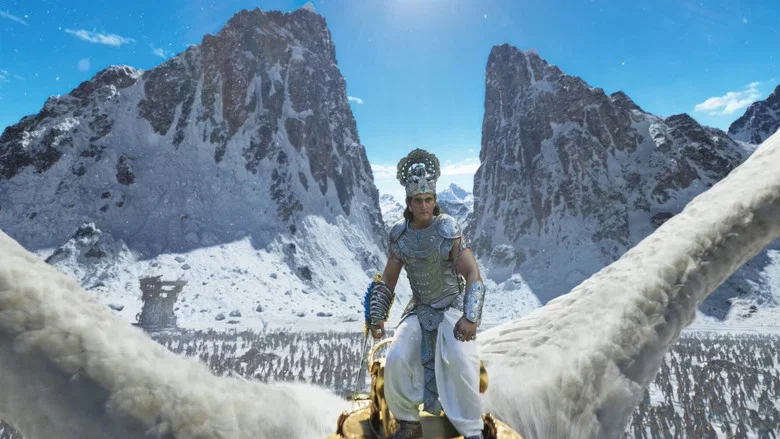
Nitesh Tiwari opens his Ramayana not on Ayodhya’s spires but on a demon child watching his people buckle under Deva boots. It is a strange, shrewd entry point for the most expensive mythological gamble in Indian cinema.
Entering the Epic Through the Villain’s Wound
That inversion carries the film further than its spectacle does. Ravana is introduced as an Asura leader demanding liberation for his enslaved clan, his rhetoric sharpened by grievance rather than born of cartoon malice.
The screenplay then tracks his drift from liberator to conqueror. Opposing one empire, he builds another, and the contradiction gives the first act an ideological charge most mythological blockbusters never bother to attempt.
The Devas answer by petitioning Vishnu, who descends as Rama, one of Ayodhya’s four princes. The cosmic war is thus rerouted into a family drama of duty, marriage, and exile, and the film’s two halves begin pulling in different directions.
When A Liberator Becomes An Emperor, Empathy Becomes The Trap
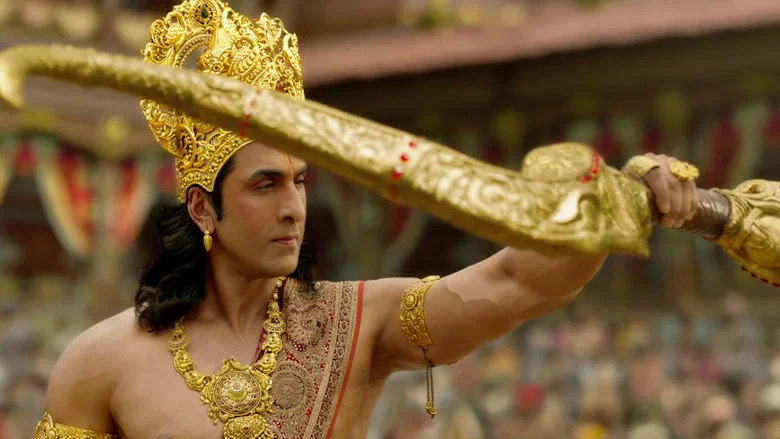
Yash builds Ravana from the voice outward. He plays the early scenes in a low, measured register, letting his jaw tighten before his tone rises, so the character’s escalation reads as conviction curdling rather than villainy arriving on cue.
His physical bearing does the rest. The long, unhurried walk toward his throne, shoulders squared as if carrying the weight of every enslaved Asura behind him, sells a king who believes his own mythology.
The performance deliberately echoes the grandeur he brought to Toxic, but here the swagger is anchored to a political grievance instead of pure style. It is the film’s most complete piece of acting.
Ranbir Kapoor’s Restraint Is The Film’s Quiet Risk
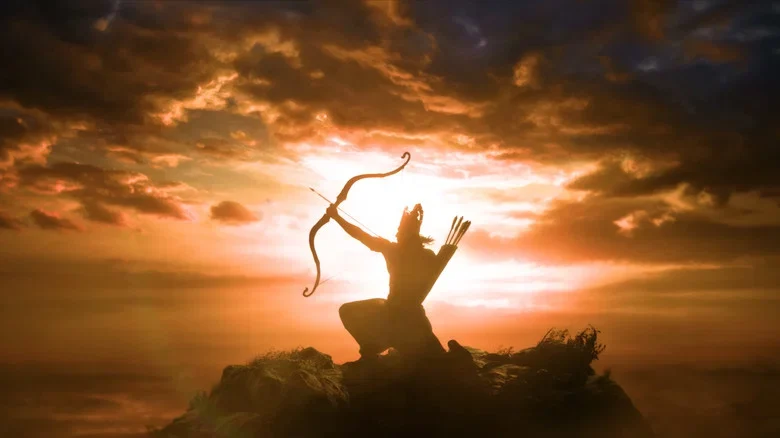
Ranbir Kapoor plays Rama as a prince who listens more than he speaks. In the Ayodhya palace scenes, his stillness and lowered gaze suggest a man already carrying a destiny he has not been told about, a careful choice that keeps the divine subtext humming beneath the human surface.
The risk is that restraint can read as vacancy, and there are stretches where the film mistakes composure for characterisation. His Rama is most alive in the smaller gestures, a hand steadying a bow, a glance toward Sita before a formal exchange.
Sai Pallavi matches him with an alert, watchful presence, her eyes tracking every political current in the room. The marriage scenes work because she plays Sita as a partner evaluating a man, not a symbol waiting to be placed on an altar.
Between Ayodhya’s Intimacy And DNEG’s Digital Scale
Tiwari’s instincts for family conflict, sharpened across a career that includes Munna Bhai 3‘s gentler register, serve him well whenever the camera stays inside a palace chamber. Those scenes breathe.
The trouble arrives when the film cuts to the Deva-Asura war. The digital armies are enormous and weightless, and the camera pulls back so far that scale replaces stakes. A sacred epic starts to resemble a superhero franchise wearing temple jewellery.
Hans Zimmer and A.R. Rahman’s score is the film’s most reliable emotional engine, swelling under exile and thinning to near silence during Ravana’s early scenes. The sound design, not the effects, carries the mythic dread.
The Subtitle Problem And The Two-Part Bargain
Calling this instalment “Rise of a Legend” is a marketing decision with narrative consequences. The film ends where a chapter ends, not where a story does, and audiences arriving for a complete Ramayana will leave with a cliffhanger they were not sold.
The exile material is positioned as a threshold rather than a conclusion, and the closing stretch feels like a runway being built for a second film. That structure is honest to the source’s scale but dishonest to the ticket’s promise.
The mythological-fantasy space has been crowded lately, from the divine cameos teased in Sunny Deol's Lord Hanuman reveal to the effects-driven epics flooding contemporary Hindi fantasys, and this film’s incompleteness sits awkwardly beside them.
The Studio Bet: ₹4, 000 Crore And A Divided Faith
Prime Focus Studios, DNEG, and Yash’s Monster Mind Creations have staked a reported ₹4, 000 crore across two films, with Sony handling international distribution and Dharma covering the Hindi market. That is not a film budget; it is an industrial wager on Indian mythology as a global franchise property.
The commercial logic depends on the second instalment arriving before audience patience expires. A part one that ends on a threshold must generate enough goodwill to carry a sequel two years out, and the CGI-heavy reception suggests that goodwill is not guaranteed.
For Ranbir Kapoor, this represents his second swing at mythological-fantasy scale after Brahmāstra, and it will test whether his box-office leverage extends beyond urban multiplexes into the mass devotional audience. For Yash, it is a calculated re-entry into pan-Indian visibility.
The Verdict: A Beautifully Acted Incomplete Sentence
Ramayana: Rise of a Legend is strongest where it is smallest, in the palace rooms where Kapoor and Pallavi negotiate a marriage under the shadow of exile, and weakest where it is largest, in digital wars that flatten divinity into pixels.
Yash’s Ravana is the film’s genuine achievement, a villain whose political wound makes his tyranny legible without excusing it. The film around him, however, is a prologue wearing the costume of a complete epic.
What lingers is not the spectacle but the silence, the moment Rama accepts exile without raising his voice, and the uncomfortable realisation that the most sacred story in the culture has been packaged as a franchise pilot. The legend rises; the story waits.
Ramayana: Rise of a Legend (2026): Ranbir Kapoor and Yash Collide in a Mythic Epic Split in Two
Visually captivating cinematography, stellar sound design, and commanding performances.
Slight pacing drag in the second act before the climactic resolution.