Meethe Mein Kya Hai (2026): Ritwik Bhowmik Anchors a Diwali Grief Comedy That Never Quite Earns Its Silence
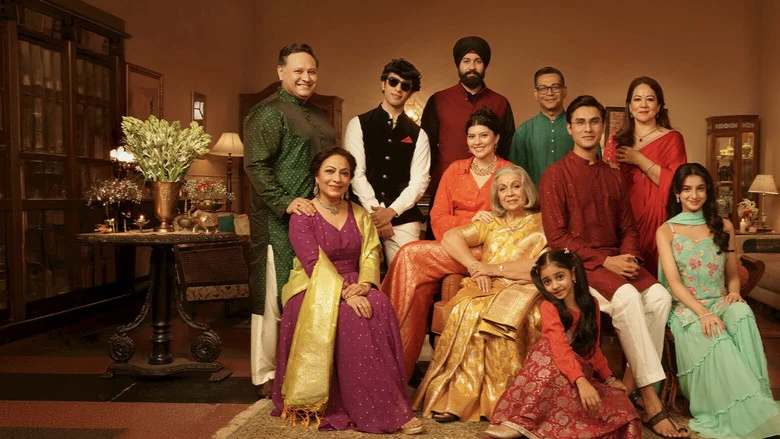
Netflix drops Radhika Bansal’s Lucknow-set family drama into a market already saturated with festival reunions and widower arcs. The question, from the first crowded frame, is whether this one has the discipline to say something new.
A Widower Returns Home, and the Film Refuses to Let Him Breathe
Jai walks back into his grandmother’s house mid-Diwali with grief still lodged in his shoulders, and the film immediately buries him under relatives. It is a deliberate choice: the camera keeps him boxed inside doorways, half-visible behind aunties and cousins, never granted a clean frame.
That visual grammar carries real intelligence. Bansal understands that a widower in a joint family is not allowed a private moment, and she stages his mourning as a public performance he keeps failing.
Ritwik Bhowmik plays that failure quietly. His Jai answers questions half a beat late, holds eye contact a fraction too long with his late wife’s photograph, and shrinks his posture whenever Rohini Hattangadi’s Nani shuffles into the room.
The contrast with the boisterous ensemble around him is the film’s best engine, even when the writing strains to keep pace with the actor’s restraint.
The Surprise Marriage Announcement Is a Sparkler, Not a Firecracker
When Jai’s sister announces her marriage mid-celebration, the film pivots from mourning to dispute in a single, well-timed beat. The table goes quiet, then loud, then louder, and the camera holds just long enough for you to feel the family’s old fault lines crack open.
But the escalation that follows is thinner than it should be. Long-standing secrets surface on schedule, generational arguments arrive on cue, and the screenplay starts to feel like it is checking boxes rather than excavating wounds.
That structural predictability is a real liability for a film that otherwise trusts its actors so much. The middle act coasts on domestic comedy when it should be twisting the knife.
Where the film does earn its tension is in the small interruptions: a relative’s casual cruelty at the dining table, a closed door in a hallway that nobody explains, a Diwali diya left burning in an empty room while the family argues elsewhere.
Rohini Hattangadi’s Stillness Is the Film’s Spine
Hattangadi’s Nani operates on a different register from everyone else. She speaks in short sentences, sits perfectly still in crowded rooms, and lets her eyes do the work of a dozen lines of dialogue.
There is a moment where she watches Jai retreat from the family and simply folds her hands in her lap, and it says more about the household’s grief than any monologue in the film.
The supporting ensemble around her is functional but uneven. Ayesha Raza’s Amrita carries real weight in her scenes, but the royal relatives and temple elders function as texture rather than characters, popping in to deliver exposition and then vanishing.
Bhowmik’s performance sits comfortably in the lineage of his Bandish Bandits work, though it asks for fewer pyrotechnics and more internal weather. He delivers the latter with a stillness that occasionally outclasses the material around him, much as the industry’s broader festival-season ecosystem rewards quiet ensemble craft over spectacle.
Bansal’s Camera Loves Clutter, and Sometimes Drowns in It
The film’s visual strategy is built around density. Diwali lights, marigold garlands, crowded dining tables, and overlapping conversations fill nearly every frame, trapping Jai inside a household that will not let him be alone with his grief.
That choice works beautifully in the first act. In the second, it becomes exhausting, because the film never gives the audience a clean visual breath.
The edit compounds the problem. Scenes arrive, deliver their beat, and cut away before the emotion can settle, which undercuts the very stillness Bhowmik and Hattangadi are working so hard to build.
The score, too, tends to arrive too early and too loud, telling us how to feel about a reconciliation the screenplay has not quite earned.
What This Film Is Really About, and What It Isn’t
Strip away the Diwali decorations and the ensemble comedy, and this is a film about how families metabolise grief by refusing to sit still with it. That is a genuinely interesting idea, and Bansal returns to it in her best scenes.
But the film’s resolution leans on a reconciliation that feels more therapeutic than dramatic. The family comes together because the screenplay needs them to, not because the preceding two hours have made that togetherness feel inevitable.
For a genre that has produced sharper, more painful portraits of family grief, this one lands in the middle of the pack. It sits closer to the emotionally unresolved territory of unresolved family reckonings than to the clean catharsis its final scene seems to want.
Netflix’s Family Drama Slate Gets a Competent, Not Essential, Entry
As a direct-to-Netflix release, this film carries no theatrical box-office burden, which is both its freedom and its problem. Without the pressure of a Friday opening, the film has room to breathe, but it also lacks the compression that theatrical storytelling often forces on a flabby middle act.
For Netflix’s Hindi drama pipeline, this is a serviceable addition rather than a flagship. The streamer’s continued investment in contemporary Hindi dramas is clearly paying off in volume, but volume is not the same as distinction.
Bhowmik remains a genuinely interesting screen presence, and his willingness to play quiet grief in a loud ensemble is the kind of choice that should be rewarded with better material next time.
The Verdict: A Grief Comedy That Trusts Its Actors More Than Its Script
Meethe Mein Kya Hai is at its best when it stops trying to be a family comedy and lets its actors sit inside the discomfort of a household that cannot process loss. Hattangadi and Bhowmik build something quietly affecting in those moments.
The film’s problem is that it does not trust those moments enough to build the whole movie around them. It keeps reaching for the next argument, the next laugh, the next reconciliation, as if stillness alone could not hold an audience.
It can. This film just does not quite believe it yet.
Meethe Mein Kya Hai (2026): Ritwik Bhowmik Anchors a Diwali Grief Comedy That Never Quite Earns Its Silence
Visually captivating cinematography, stellar sound design, and commanding performances.
Slight pacing drag in the second act before the climactic resolution.