Mirzapur: The Movie Ending Explained: The Jaisalmer Massacre, Beena’s Betrayal & the Salon Gunfire
The final image of Mirzapur: The Movie isn’t a corpse in the desert. It’s foam. Two grown men sit in salon chairs with face masks cracking around their mouths, and Guddu Pandit says a name: “Swaranjali.” Across the mirror, Munna Tripathi answers with the street version of the same woman: “Sweety.” The embarrassment of the shared confession barely registers before automatic gunfire shreds the soundtrack and the frame cuts to black. No muzzle flash. No visible target. Just the bang and the dark.
That off-screen bullet captures the film’s nasty arithmetic. The theatrical cut runs a punishing 197 minutes, most of it spent watching men try to kill one another under the Jaisalmer sun. Yet the cruelest shot in the entire movie fires after the credits, from a weapon the audience never even gets to see.
How Babban Yadav Turned a Handshake in Jaisalmer Into an Open-Air Grave
This story drops into the timeline between episodes 6 and 7 of the Prime Video series’ first season, when Mirzapur still looks like a machine that runs itself. Kaleen Bhaiya sits on the gaddi while opium flows as “barfi,” Bablu Pandit handles the books, and his brother Guddu handles the noise. The throne feels safe only because nobody has tested it lately. Then Babban Yadav slides in from Jaisalmer wearing the polite mask of a man offering a bigger pie instead of a stolen slice.
Babban’s pitch is all silk stretched over muscle. Backed by the politician JP Yadav, he invites Kaleen into the desert for a summit that should trip every alarm a crime lord owns. But Kaleen is an old lion who still believes his presence alone keeps the hyenas polite. He walks into the trap with his lieutenants trailing, and the moment the convoy stops, Babban’s men swallow it whole. Even the grudge over Guddu’s family heirloom watch, a trinket that sparks friction during the negotiations, reads differently on rewatch. Every object in that room was already being priced in blood.
The Jeep Rolled Over Guddu and the Movie Let Him Die Twice: Rescue, Revival, Revenge
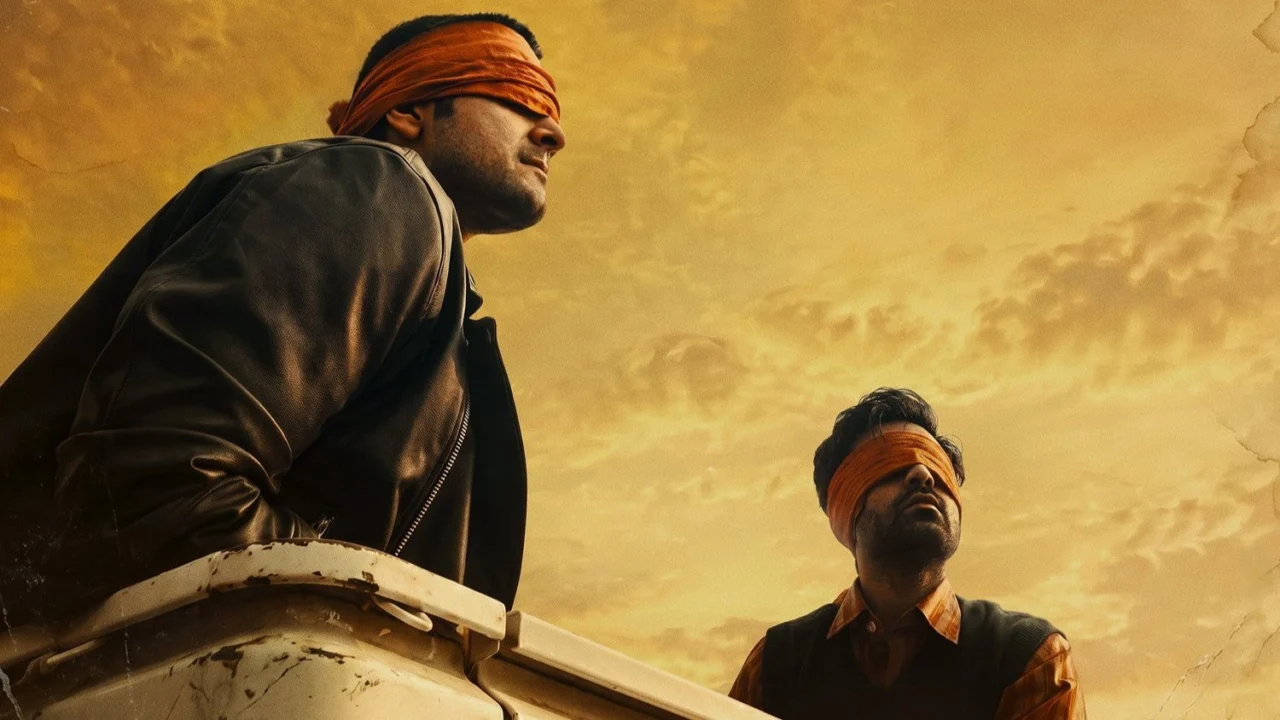
The rescue sequence is a hostage extraction that refuses to look heroic. No night-vision gloss. No slow-motion swagger. The camera holds wide shots of the convoy as specks on an empty horizon, then slams into tight, breathing handheld frames the moment the rescue party hits the compound walls. The geography is ugly on purpose: sand in the teeth, bare rock for cover, and long sightlines for every rifle in Babban’s arsenal.
The defining beat lands on Guddu. A jeep rolls over him mid-firefight, and the sound design drops into a dead underwater silence while dust settles on his open eyes. For a stretch that feels like minutes, the film lets the audience sit with the possibility that the franchise’s most beloved enforcer just died from vehicular manslaughter during a shootout. Then Bablu arrives with a needle full of folk remedy, a “camel-strengthening” drug borrowed straight from the show’s exaggerated lore, and yanks Guddu back from the other side. It’s hokey as medicine and perfect as drama. Guddu doesn’t rise like a hero. He rises like a man whose cracked ribs haven’t caught up with his adrenaline, and he kills Babban in the sand with his hands and his rage. No speech. No moral verdict. Just the body of a would-be king crumpling into dirt that will cover him before nightfall.
A local politician played by Sushant Singh materializes to pry Kaleen free, a convenience that doesn’t survive scrutiny but moves the plot fast enough to dodge the question. The extraction works. The Tripathi faction limps home intact, and the movie cuts away before anyone can ask why the desert made supposedly smart criminals so stupid.
Beena Tripathi’s Old Flame Was the Real Fire: The Mansion Mole Nobody Swept Out
The twist that rewrites half the film isn’t on the battlefield. It’s inside the Tripathi mansion, where Beena Tripathi has been playing a game so patient it makes Babban’s scheme look like a tantrum. She shares a history with Birju Lohar, a lover from before her forced marriage into the Tripathi family. Their inter-caste romance was crushed by the same patriarchal machinery that put Kaleen on the gaddi, and that grudge ripened for years into a quiet assassination plot.
Birju makes his move against Kaleen while the king is distracted, using Babban’s chaos as cover for a vengeance the desert war never knew existed. But Beena, sensing the plan unraveling in the mansion’s narrow corridors, shoots Birju herself before suspicion can crawl toward her. It’s the coldest gesture in a film full of cold gestures. She doesn’t pull the trigger to protect her husband. She pulls it to protect her position inside the house that ruined her.
The clues sat in plain sight the whole time. Beena’s flickering gaze at family meals. The servants she dismissed at odd hours. Her total lack of surprise when news of the Jaisalmer betrayal arrives. On a first watch, those moments play as a bored housewife’s detachment from male violence. On a second watch, they play as a woman timing an explosion she spent years building.
The Gaddi’s New Math: A Survivor Audit of the Tripathi Throne
- Kaleen Bhaiya survives, keeps the gaddi, and returns to Mirzapur with a new dependency. His life now belongs to Guddu, and a king who owes his enforcer is already a king losing ground.
- Guddu Pandit walks out of the desert as the faction’s apex predator. The near-death experience doesn’t soften him. It strips away whatever civility Mirzapur had installed in him.
- Munna Tripathi survives, a major deviation from the series timeline, and enters an uneasy alliance with Guddu. The two men circle each other like stray dogs over the same scent.
- Bablu Pandit survives with his ambition quietly upgraded. He watched his brother die and return in one afternoon. A man who sees that kind of power doesn’t stay a bookkeeper for long.
- Babban Yadav dies in the sand, his alliance with Jaunpur’s Rati Shankar snapped before it could bear fruit. Beena remains exposed but unpunished, and Birju Lohar lies shot and breathing, a question mark the sequel will have to answer.
No one in that ledger earns redemption. The film is too old and too tired for that fantasy. What shifts is the balance of fear inside the operation: the Tripathi faction held, but the men standing beside the gaddi now know exactly who bled for it and who only watched.
Dead Sun, Dark Wood: How the Desert and the Mansion Define the Stakes
The film argues through visual contrast rather than dialogue. Jaisalmer is shot with the sun left to overexpose the lens, faces half-bleached into anonymity under a sky that offers no shelter. The mansion interiors are all dark wood and warm lamp light, the colors of a womb that has quietly become a tomb. Cross-cutting between the open-air massacre and Birju’s intimate assassination attempt lands without a single line of thesis dialogue. There is no safe room in this empire. The kitchen cabinet holds as many knives as the desert truck.
The opium business, rendered so matter-of-factly in the opening acts, becomes the real subject of the climax. Every deal in Mirzapur is a contract signed in powder and blood, and the desert showdown is what happens when one party decides the agreement was never binding. The sand doesn’t stand in for anything nobler. It’s simply the most honest ground these men could choose, no walls to hide behind and no servants to soak up the blame. Just a man, his weapon, and the empty horizon swallowing both.
The Salon Gunfire and the Alternate-Timeline Problem: Fans Pick Their Victim
The post-credits gunshots are engineered to stay unanswered, and the fanbase has already split into armed camps. One theory holds that the bullets kill one of the two rivals, finally pushing Sweety Gupta or her sister Golu into the revenge seat the franchise loves to fill. Another camp argues the whole salon scene is a staged fakeout orchestrated by Bablu, whose phone sits in his hand the entire time, a younger brother clearing the board while the two lovesick idiots confess their shared obsession. A third theory leans on the film’s alternate-timeline logic. Since the movie already lets characters live who died in the series, the salon shootout may be a bridge into a theatrical Part 2 that runs parallel to Season 4 on Prime Video without shattering either continuity.
The editing tilts toward the violent reading. The frame cuts away before the glass even shatters, which suggests the filmmakers want a sequel to own the consequences rather than tease them cheaply. But the movie has left itself one clean escape hatch: we never see who fired, who fell, or whether the bullets were aimed at men or mirrors.
White Foam and a Text to Golu: The Post-Credits Promise of Mirzapur Part 2
The post-credits sequence earns its placement by inverting the desert’s rugged violence into domestic farce. Guddu, Munna, and Bablu sit in salon chairs with faces slathered white, guns nowhere in sight. Bablu casually texts Golu while his brother and Munna bicker, then the two men trip over their shared confession in the same breath. The tone shifts from screwball to horror on a single beat, and the gunfire lands like a slammed door.
Reports confirm this story was never built to be self-contained. The theatrical release, distributed by AA Films on September 4, 2026, in Hindi and Telugu, is the opening move in a longer arc. The salon scene’s final shot is essentially a receipt for future commerce: a love triangle with automatic weapons and a survivor whose identity the studio is banking on audiences paying to discover. The gaddi’s next war won’t start in a desert meeting room. It’ll start in the space between two men who said the same woman’s name.
The desert swallowed one challenger and spat out two rivals who now share a secret neither can act on. The foam dries. The mirror stays cracked. Mirzapur’s next bullet just hasn’t chosen its target yet.