Mirzapur: The Movie (2026): Big-Screen Blood Feud Tests Franchise Faith
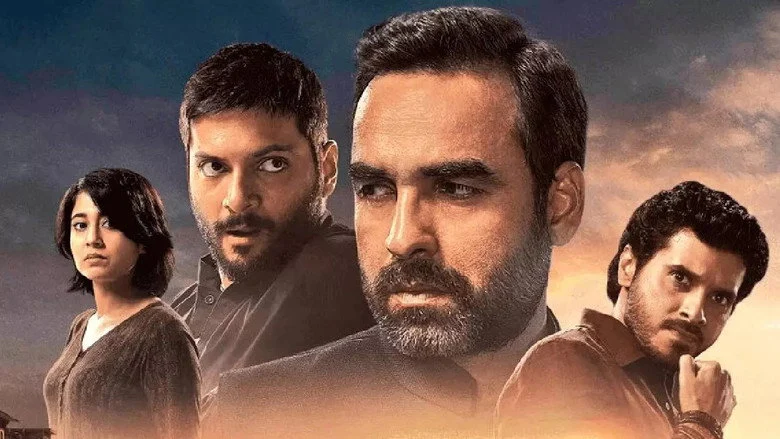
Pankaj Tripathi walks back into the frame as Akhandanand Tripathi, and for a moment, the familiar menace of the series feels intact. The 197-minute runtime announces itself early: this is not an extended episode but a theatrical event built on franchise muscle.
The question hovering over this expansion is whether a streaming saga’s intricate web of betrayals can survive translation to the big screen without losing its intimate cruelty.
Tripathi’s Silence Still Carries the Film’s Weight
Pankaj Tripathi remains the gravitational center, his measured calm more threatening than any outburst. Launch coverage consistently frames his return as the film’s primary continuity anchor, and that positioning feels earned.
His performance operates in the spaces between words, where Kaleen Bhaiya’s calculations happen in micro-expressions. The actor understands that power in Mirzapur is less about shouting than about the terrifying quiet before a decision lands.
Ali Fazal and Divyenndu: The Fractured Heirs of Violence
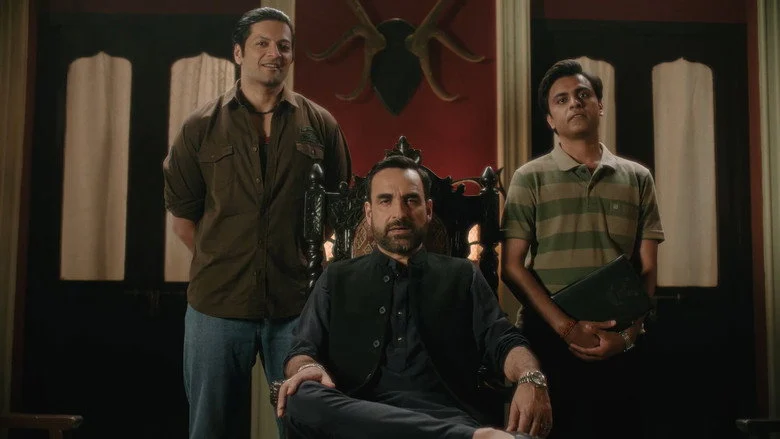
Ali Fazal’s Guddu Pandit returns as the principal opposing force, hardened by everything the series has thrown at him. Trade coverage places him at the heart of the power struggle, and his arc carries the film’s revenge momentum.
Divyenndu Sharma’s Munna Tripathi remains the volatile wildcard, unpredictable in ways that keep the succession drama alive. His instability contrasts sharply with his father’s composure, creating the central tension that drives the narrative forward.
Gurmmeet Singh’s Direction: Scale Without Sacrifice
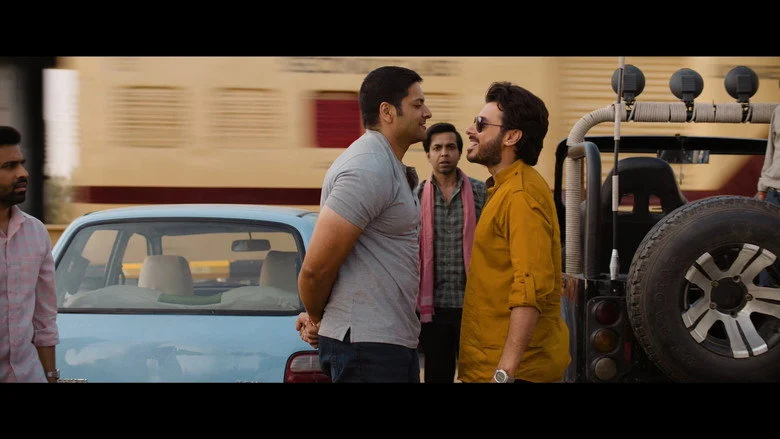
Gurmmeet Singh faces a peculiar challenge: delivering spectacle while preserving the serialized texture that made Mirzapur distinctive. Early coverage credits him with maintaining franchise continuity through returning characters and conflict structures.
The theatrical format demands escalation, and Singh responds by expanding the canvas rather than compressing the story. Yet the screenplay, credited to Puneet Krishna, sometimes strains against the episodic roots, leaving subplots that feel sketched rather than fully realized.
Genre Execution: Crime Machinery in Theatrical Gear
The crime engine here runs on hierarchy and succession stakes, with loyalty shifts and retaliation driving every major beat. The ensemble structure supports intersecting subplots, each faction circling the others with predatory patience. This is gangland politics played on a wider board, where every alliance carries the seed of its own destruction.
The A-certificate signals an uncompromising approach to violence, aligning with the franchise’s established tonal vocabulary. Action sequences presumably escalate in scale, though the film’s true currency remains psychological dominance rather than mere spectacle. The power plays unfold in rooms where words are weapons and silence is ammunition.
What distinguishes this from standard crime thrillers is the density of character history baked into every confrontation. Guddu’s grief, Munna’s desperation, Kaleen’s cold pragmatism – each emotion carries the weight of seasons past. The film banks on this accumulated investment, trusting that audiences arrive with the backstory already embedded in their bones.
For those who have followed the blood-soaked journey from the beginning, this feature-length continuation offers a familiar descent into Mirzapur’s moral void. For the uninitiated, the 197-minute runtime may feel like walking into a conversation already in progress.
If the shifting power dynamics of this crime family intrigue you, explore more Hindi Thriller reviews for similar deep dives into cinematic violence and ambition.
Shweta, Rasika, and the Women in the Shadows
Shweta Tripathi Sharma’s Golu Gupta and Rasika Dugal’s Beena Tripathi anchor the ensemble’s female perspective, though scene-specific analysis remains thin. Their presence signals the franchise’s commitment to characters who navigate power from positions of perceived weakness.
Ravi Kishan’s unspecified role adds another layer of regional gravity to the proceedings. The casting choices suggest an intent to preserve the show’s texture while expanding its theatrical footprint.
The Long Road from Streaming to Cinema
Audience expectations for this transition run high, with returning cast and character continuity cited as primary draws. The expansion of the Mirzapur universe to feature format represents a bet on the franchise’s cultural penetration beyond its streaming base.
Yet the 3-hour-17-minute runtime raises questions about whether the material justifies theatrical length or merely stretches episodic content. The film’s fate may well depend on whether fans accept this as a necessary evolution or question the format shift altogether.
Verdict: A Calculated Bet on Franchise Faith
Mirzapur: The Movie works best for those already invested in this blood-soaked world, offering the familiar pleasures of watching these characters scheme and destroy. The theatrical scale adds grandeur, but the soul remains rooted in the intimate betrayals that defined the series. Watch it on the biggest screen available, where the violence and the silences land with equal force.
For the uninitiated, this is not the entry point – the density of relationships demands prior investment. For fans, it delivers what the franchise promises: power, revenge, and the grim poetry of survival in Mirzapur.
Mirzapur: The Movie (2026) earns a guarded 3 out of 5 – a faithful expansion that respects its source but struggles to justify its theatrical sprawl.
For another take on franchise storytelling that navigates similar structural challenges, consider Aakhri Sawal review.
If you prefer crime dramas that balance multiple narrative threads with sharper economy, Mollywood Times verdict offers a contrasting approach to ensemble storytelling.
Mirzapur: The Movie (2026): Big-Screen Blood Feud Tests Franchise Faith
Visually captivating cinematography, stellar sound design, and commanding performances.
Slight pacing drag in the second act before the climactic resolution.