Pyre (2026): Vinod Kapri’s Mountain Elegy Finds Terror in the Quiet
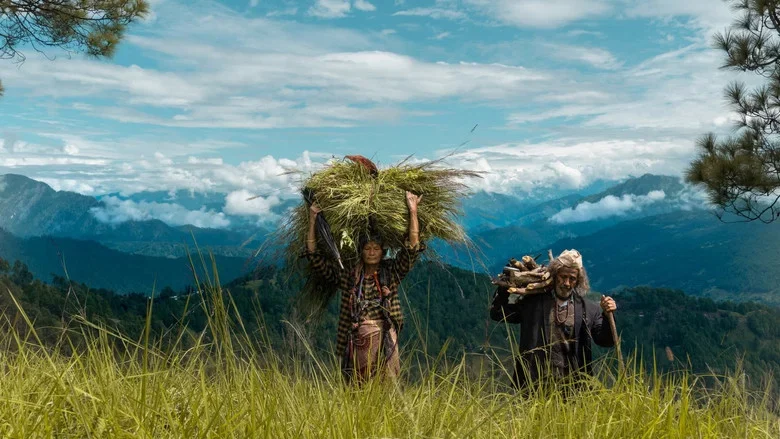
Vinod Kapri opens Pyre on a precipice, both literal and marital. An elderly goat herder named Padam leads his ailing wife Tulsi toward the edge of a Kumaon ridge and proposes they step off together.
When Death Becomes a Domestic Proposal
It is the film’s most audacious gesture: staging a suicide pact as an act of tenderness rather than violence. Padam has done the arithmetic of his life, no money, no neighbors, no son, and concluded that the mountain should finish what time started.
Tulsi refuses. That refusal is the engine of everything that follows, a two-hour negotiation between a man who sees death as release and a woman who keeps finding reasons to stay.
The Absent Son as Off-Screen Antagonist
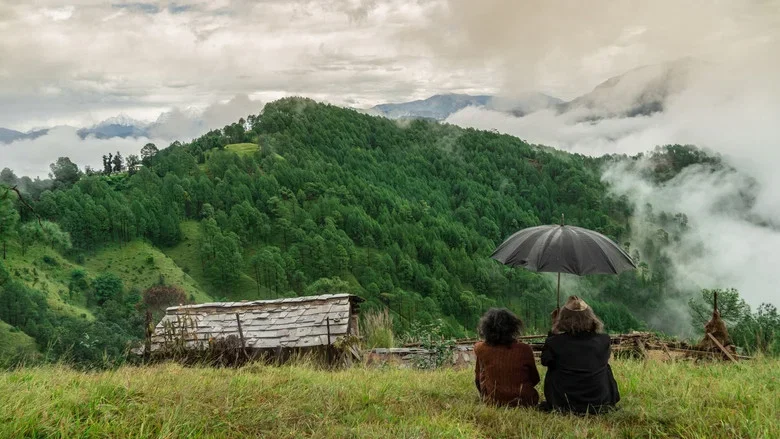
Kapri’s screenplay withholds its central wound with patience. Padam and Tulsi have waited nearly three decades for their son Hariya, who left for Mumbai and dissolved into the city’s indifference.
The film treats that absence as a physical condition, like altitude sickness. It shapes their posture, their silences, the way they glance at the road that leads nowhere.
When a postman finally delivers a letter announcing the son’s intended return, the shift is seismic and wordless. The couple’s daily routines acquire purpose overnight, and Kapri resists the urge to sentimentalize it.
What he does instead is quietly devastating: he lets hope become another form of waiting, no less corrosive than despair.
Padam Singh Kapri and the Architecture of Fatigue
The film’s greatest asset is its lead performer’s complete absence of technique. Padam Singh Kapri, a non-professional actor, plays Padam with a body that has genuinely carried goats and firewood up these slopes.
Watch how he descends the mountain to trade livestock for his wife’s medicine. His gait registers every meter of distance, every rupee of loss.
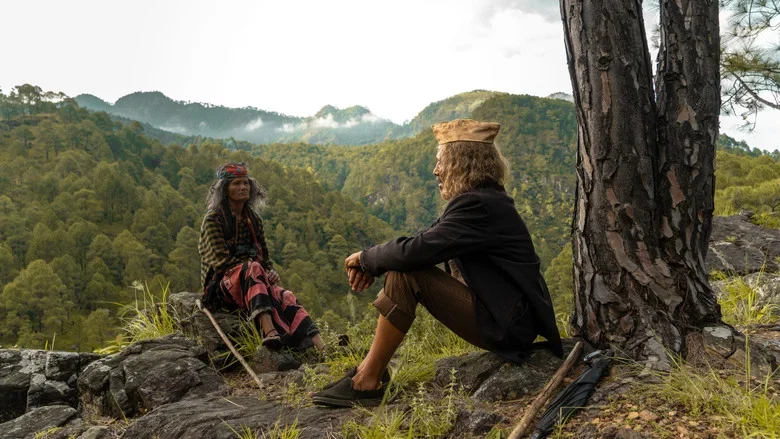
Hira Devi, as Tulsi, provides the counterweight. Where Padam’s despair is practical, her resistance is instinctive, she refuses to surrender not out of optimism but out of stubborn attachment to the ordinary.
Their scenes together have the texture of long marriage: neither performs affection, yet it saturates every exchange of glances and shared chores.
The supporting ensemble, Sadab Khan as Bishan, Subhash Chandra as Laxman, functions as a shrinking social network, the last neighbors in a village that is emptying out.
The Mountain as Co-Author of Fate
Kapri’s direction treats terrain as narrative infrastructure. The distance to the hospital is not a plot obstacle; it is a daily calculation that determines whether Tulsi lives or dies.
The cinematography, all exposed rock and indifferent sky, places two small figures against a landscape that will outlast them without ceremony.
This is where Pyre recalls the spatial discipline of Lynch’s Dune adaptation, which understood that hostile environments are characters, not backdrops.
The film’s weakness is rhythm. The middle passages accumulate hardship without escalation, and the editing fails to find a pulse in the repetition.
Where a tighter cut might have transformed stillness into tension, the film sometimes mistakes duration for depth.
The Horror of Dying Unwitnessed
There is a scene in which Padam prepares for a death that may come without rites, without family, without anyone to light the pyre the title promises.
It is here that the film connects to the broader anxieties of contemporary Hindi dramas grappling with grief and abandonment, though Kapri’s approach is more austere than most.
The emotional register recalls the wartime stoicism of Operation Safed Sagar, where duty and loss are processed through silence rather than speech.
What distinguishes Pyre is its refusal to resolve. The son’s return, when it comes, does not repair the damage of absence, it merely exposes it.
The Commercial Arithmetic of a Quiet Film
Produced on a modest scale and released without star currency, Pyre arrives in a market that rewards spectacle and franchises. Its theatrical footprint will be small, and its afterlife on streaming platforms is where it will find its audience.
This is the calculus facing contemporary Hindi dramas that prioritize observation over incident: the festival circuit, the critical conversation, the slow accumulation of regard.
Vinod Kapri has made a film that will not top box-office charts but will haunt those who seek it out.
The Uncomfortable Resolution
What lingers is not the reunion but the waiting, the years Padam and Tulsi spent rehearsing a grief that had not yet arrived.
Pyre is a film about the terror of being forgotten by your own children, and the quiet dignity of continuing to set the table anyway.
It asks whether love can survive without witnesses, and answers with a mountain that has seen everything and says nothing.
Pyre (2026): Vinod Kapri’s Mountain Elegy Finds Terror in the Quiet
Visually captivating cinematography, stellar sound design, and commanding performances.
Slight pacing drag in the second act before the climactic resolution.