Lakadbaggha 2: The Monkey Business (2026): Anshuman Jha’s Martial Arts Expansion Bites Off More Jungle Than It Can Chew
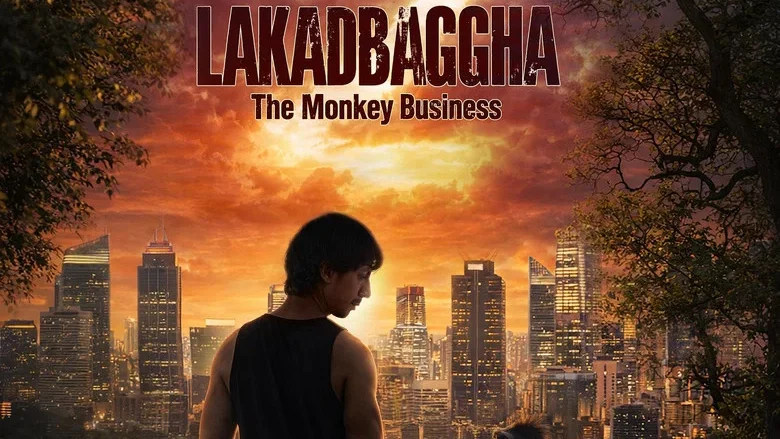
The sequel to 2023’s scrappy animal-rights vigilante thriller relocates its hero to the rainforests of West Java, trading Kolkata’s alleys for a transnational trafficking war. The announced November 2026 release has since been pushed, but the promotional blueprint suggests a filmmaker swinging for an international action canvas.
When A Local Vigilante Becomes A Global Tourist
Anshuman Jha’s Arjun Bakshi returns with the same moral metabolism: a man who fights for creatures that cannot file police complaints. The structural gamble is geographic, transplanting that intimate fury into an Indonesian jungle trafficking network.
That expansion is the film’s most legible ambition and its most obvious liability. A vigilante narrative thrives on proximity, the neighborhood, the known predator, the personal grudge, and the sequel’s premise asks us to believe that a Kolkata animal lover can credibly disrupt an international smuggling syndicate.
The franchise’s identity remains intact, but the scale shift risks converting a character study into a travelogue with roundhouse kicks. Whether the screenplay earns that leap is the central question the promotional material cannot answer.
The Casting Is The Argument, And The Argument Is Thin
Bringing in Tony Jaa, Sunny Pang, and Dan Chupong signals a deliberate pivot toward internationally legible martial-arts credibility. The gambit recalls the spatial discipline of 9-1-1 Season 10, where ensemble scale often overwhelms the intimate procedural engine that first made the property work.
Here, the ensemble is a promise of choreography, not character. No verified scene-level material establishes whether these performers are given dramatic function or simply serve as human obstacles for Jha’s protagonist to survive.
Adil Hussain’s reported replacement of Milind Soman is the only casting note with narrative texture, and even that remains unverified as anything beyond a production swap. The supporting cast, as a group, reads as texture rather than architecture.
A Hero Whose Body Must Carry The Thesis
Jha’s performance burden is unusual: he must embody both the gentle animal lover and the physical enforcer, and the sequel requires him to do it across a larger industrial threat. The first film’s charm was the friction between those two registers.
Without verified completed-film scenes, the assessment must rest on the premise’s inherent demands. A vigilante whose motivation is protecting voiceless creatures needs a performance that registers tenderness before violence, and the sequel’s expanded canvas gives that register less room to breathe.
The physical exhaustion required to anchor a jungle-set action film echoes the psychological weight of the bus-ride aftermath dissected in The Graduate Ending Explained, where a performer’s stillness carries more meaning than any chase sequence.
The Villain Problem: A Network Is Not A Face
Wildlife trafficking is a structural antagonist, not a person, and that is the screenplay’s most dangerous choice. Networks are diffuse, bureaucratic, and dramatically abstract; audiences need a face to hate, a voice to recognize, a body to confront.
No verified antagonist identity or actor-character pairing has been disclosed, which suggests either a deliberate withholding or a narrative that treats the syndicate as an environmental condition rather than a dramatic engine. The latter is a recipe for a climax that resolves a system rather than a character.
The genre requires a physical confrontation with a recognizable human monster; the premise offers a supply chain. That gap is where the film’s dramatic tension will either be manufactured or collapse.
A Director Expanding Scope Before Proving Control
Jha directs as well as stars, and the sequel’s expanded geography is a statement of intent: he wants the franchise to feel bigger, more international, more consequential. The risk is that scope outruns staging discipline.
The first film’s virtues were modest and legible, clear stakes, a sympathetic hero, a recognizable city. The sequel’s virtues are theoretical, international cast, exotic location, transnational crime, and theory is not cinema.
The film resists the kinetic sensationalism that overtook Batwara 1947, opting instead for a deliberate environmental-thriller register, but whether that patience translates into spatial clarity remains unverified.
The Release Calendar Is The First Review
The shift from a November 2026 slot to early 2027, reportedly to avoid a clash with Ramayana and secure a wider theatrical footprint, is a commercial decision that also functions as a critical admission: the film needs room to find an audience.
That positioning is honest. A niche animal-rights action sequel with international martial-arts casting does not belong in a tentpole collision, and the delay may be the smartest creative choice the production has made.
This patient repositioning signals a welcome tonal maturity across contemporary Hindi actions, where franchise builders are learning that a controlled release can outflank a crowded weekend.
The Verdict: A Franchise Betting Its Future On Geography
Lakadbaggha 2 is an ambitious expansion that has not yet proven it can carry its own weight. The premise is noble, the casting is intriguing, and the geographic leap is bold, but boldness is not the same as execution.
What lingers is the image of a hero who fights for creatures without voices, now shouting into an international void where the enemy has no face. If the film finds its villain and its rhythm, that image could become a franchise’s defining statement; if not, it remains a poster.
The jungle is a beautiful place to lose a story, and this sequel is still deciding whether it wants to be found.
Lakadbaggha 2: The Monkey Business (2026): Anshuman Jha’s Martial Arts Expansion Bites Off More Jungle Than It Can Chew
Visually captivating cinematography, stellar sound design, and commanding performances.
Slight pacing drag in the second act before the climactic resolution.