Jana Nayagan (2026): Vijay’s Political Gamble Stalled by Censorship Walls


A former police officer navigates the treacherous overlap of duty and ideology when a child’s terror pulls him into a larger political reckoning. The premise alone, a clash between those who fight for people and those who prosper through control, signals a film willing to excavate uncomfortable terrain in Tamil cinema.
Yet Jana Nayagan remains trapped in limbo, its January 2026 release indefinitely postponed after the CBFC raised unspecified objections. The timing matters: this is not mere administrative delay but a collision between artistic intent and institutional gatekeeping that has already cost the film dearly through an April 2026 leak.
Vijay’s 69th Film Carries Rs 275 Crore Weight
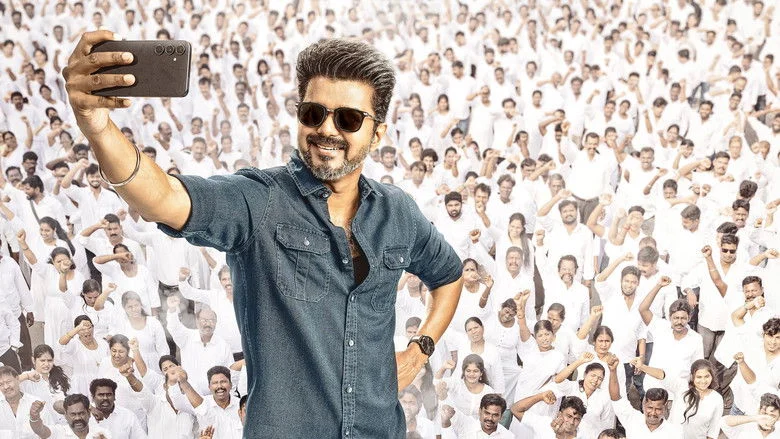
Vijay’s involvement anchors this as a statement piece, not mere star vehicle. His remuneration, Rs 275 crore, signals producer confidence in both his box-office magnetism and his willingness to carry a politically charged narrative. Without access to performance footage, the risk becomes evaluative: has he chosen material that demands range, or comfort that demands only presence?
The dialogue work available, speeches about preventing national ruin versus rants against political looting, suggests a screenplay interested in rhetoric over nuance. Whether Vijay navigates this tension with restraint or amplifies it remains the unanswered question.
H. Vinoth Directs Into Institutional Resistance
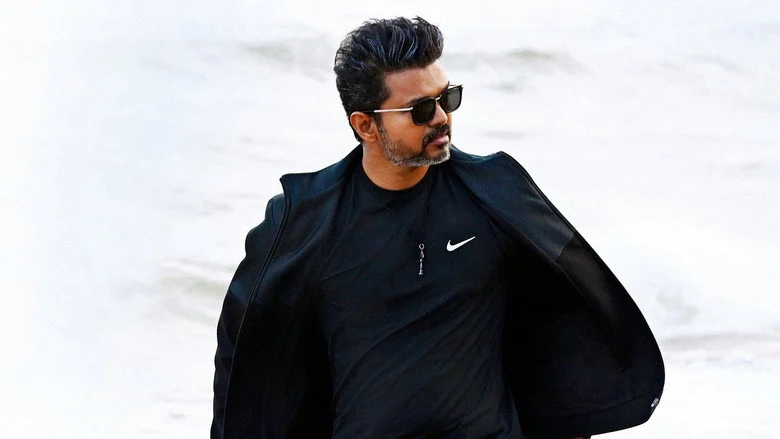
Vinoth’s choice to mount a political action thriller immediately after lighter fare shows directorial ambition, yet his screenplay leans on familiar ground: the story borrows structural DNA from Bhagavanth Kesari, already a police-officer-versus-corruption template. This is a flaw disguised as homage. The strength lies in what we can infer: cinematographer Sathyan Sooryan and composer Anirudh Ravichander suggest technical investment, though the CBFC resistance hints that Vinoth may have overestimated how far the institution would allow him to push.
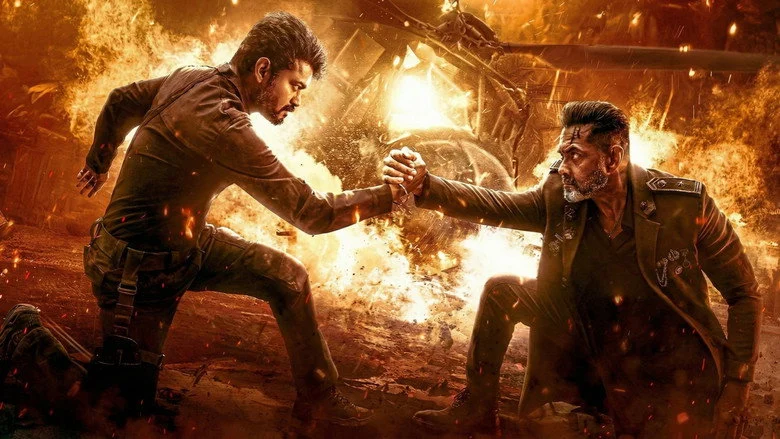
Political Action Thriller Ideology Over Setpiece
The genre demands collision, not just between hero and villain, but between competing visions of the state itself. Jana Nayagan’s central conflict frames this as ideological warfare, where the battleground is as much psychological as physical. This is riskier than standard action cinema.
Without completed footage available for analysis, the question becomes whether Vinoth commits fully to that risk or retreats into formulaic action sequences. A political thriller lives or dies on whether it allows its politics to reshape the action rather than merely decorate it. The film’s three-hour runtime suggests ambition; the CBFC’s blocking suggests institutional doubt about what that ambition actually contains.
Anirudh Ravichander’s score was composed to underscore this tension, though no specific musical moments are available for assessment. The real test would have been audience witnessing, whether the action grammar shifts to accommodate political substance or remains comfortably genre-standard.
Discover more Tamil Thriller reviews exploring how political themes shape cinematic violence.
Bobby Deol and Ensemble Cast Shadowed by Delay
Bobby Deol’s casting as a counterforce to Vijay raises immediate questions about register and star dynamics. The supporting ensemble, Prakash Raj, Priyamani, Narain, and Mamitha Baiju, suggests serious acting depth, yet with the film unreleased, their specific contributions remain speculative. Gautham Vasudev Menon’s involvement particularly intrigues: his presence typically signals auteur-adjacent projects, hinting that even supporting roles carry thematic weight.
Pooja Hegde’s ₹6 crore fee positions her as romantic-political balancing act rather than secondary player. Whether her character serves the political argument or softens it cannot be determined without viewing. The gap between casting intention and actual execution widens with every delayed month.
CBFC Censorship Becomes the Real Antagonist
The institutional blocking of Jana Nayagan transforms it from unreleased film into document of creative suppression. The CBFC’s refusal to certify, combined with the April 2026 online leak and producer attempts at legal recourse, reframes the entire project. What was meant as political provocation became political evidence, that even in 2026, certain speech remains intolerable to gatekeepers.
This is not mere controversy; it is systemic rejection that suggests the screenplay cuts deeper than standard political thriller rhetoric. Whether this blocking serves the film’s mystique or confirms artistic overreach depends entirely on whether the actual content justifies the institutional fear. Early audience fragments emerging from the leak cannot be verified as representative critical response.
For those invested in Vijay’s career trajectory and Tamil cinema’s political limits, Jana Nayagan becomes a proxy war between artistic risk and state control. The film itself may be imperfect, likely is, but its suppression transforms imperfection into defiance. If you can access bootleg versions, the leaked print carries historical weight now beyond mere cinematic evaluation. Theatrical release would have been the more honest venue, had institutions allowed it.
Jana Nayagan remains a 3-hour political action thriller caught between institutional walls, and while the film’s actual quality remains uncertain, its willingness to provoke authority reads as 3.5 out of 5 stars.
H. Vinoth’s earlier work shares the same Bhooth Bangla review beneath genre structures.
Rajat Kapoor’s approach to whodunit intrigue mirrors Vinoth’s Everybody Loves verdict in similar thriller registers.
Ankit Jaiswal is the Chief Author, covering Indian cinema and OTT releases with honest, no-filler criticism. An SEO strategist by background, he brings a research-driven approach to film writing, cutting through hype to tell you exactly what's worth your time.